Skip to content

Duties & Tariffs Included In the Price Shown

Baltzar

A Weekend in Abruzzo: Visiting Maglificio Gran Sasso

Factory Visits · July 31, 2026 · Christopher Gustafsson

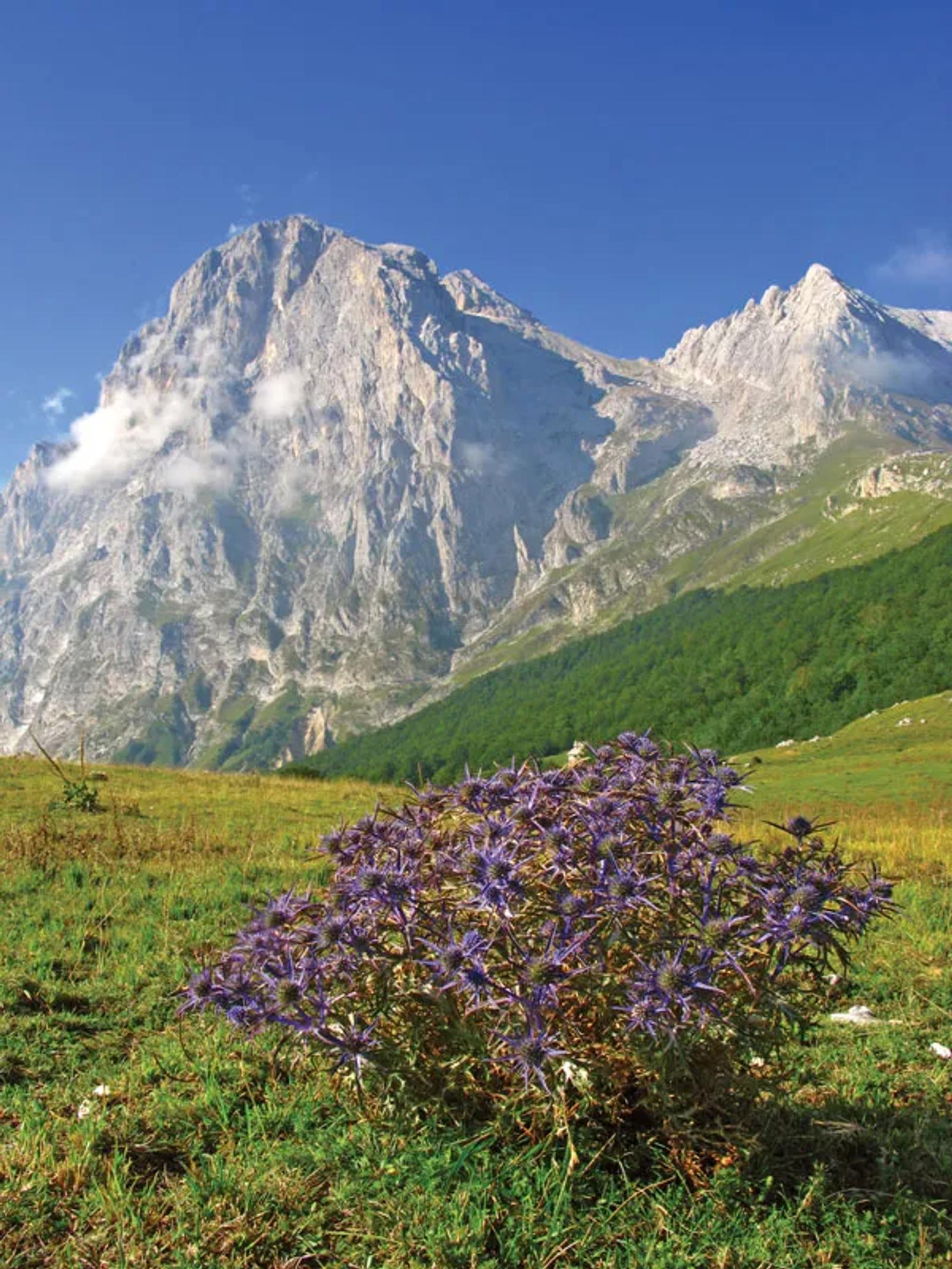
The Gran Sasso mountain range in Abruzzo with wildflowers in the foreground

The Mountain and the Thread: Gran Sasso in Abruzzo

There is a particular kind of Italian region that never quite advertises itself, and Abruzzo is the clearest example of it. East of Rome, past the point where the hills stop rolling gently and start rising into real stone, the land turns abrupt and a little unglamorous. The Apennines climb straight up out of the Vibrata valley, crowned by the pale, snow-streaked ridge of the Gran Sasso d'Italia — the "Great Rock of Italy" — and from certain roads it is possible to see, in the same glance, mountain peaks that hold snow into early summer and, far beyond them, a thin blue line of Adriatic coast. Nearly a third of the region sits inside national or regional parkland, more than anywhere else in the country, and the effect on daily life here is not subtle: towns remain small, industries stay close to the land, and very little is done for show.

It is against this backdrop — half wilderness, half quiet valley town — that Maglificio Gran Sasso has spent more than seventy years making the finest knitwear in the world.
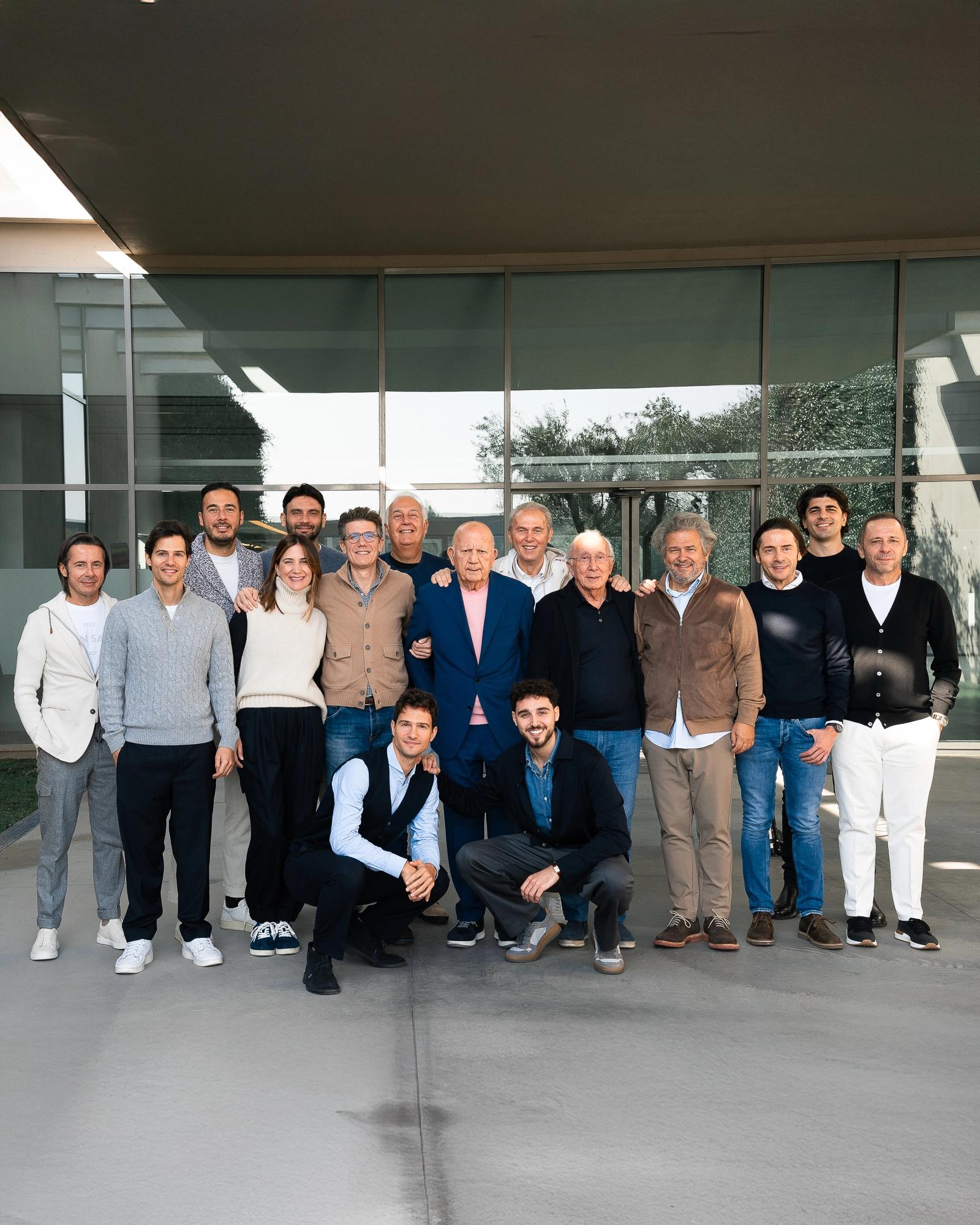
A group portrait of the Maglificio Gran Sasso team outside their factory

A Family Business Named After a Mountain

The company takes its name directly from the peak visible above its home town of Sant'Egidio alla Vibrata, a modest comune in the province of Teramo, sitting in the river valley that separates Abruzzo from the Marche. It was here that four brothers, Nello, Eraldo, Alceo and Francesco Di Stefano, set out with a fairly simple ambition: to make knitwear with real elegance and quality, and to build, from that, an understated but recognisable style of their own. The choice to name the business after the mountain rather than the family was itself telling — a decision to root the brand in the landscape rather than in any single surname, as though the Gran Sasso itself were a silent partner in the enterprise.

What began as a small operation grew steadily rather than suddenly, gaining real traction on both Italian and international markets and eventually settling into the identity of a consistent, respected global name. Today the label ranks among the leading players in knitwear and casualwear production, its reputation built almost entirely on the expert craftsmanship applied at every stage — every product still effectively handmade, so that each finished piece reads as distinct rather than uniform. A third generation of the Di Stefano family has since joined the company, working to preserve the same balance between tradition and innovation that has defined it from the beginning.

The valley's own character seems folded into that philosophy. This is not a region built for spectacle; even Teramo, the provincial capital nearby, wears its Roman ruins and its cathedral with a certain shrug, as though history here is simply a fact of daily life rather than something to perform for visitors. Gran Sasso's own approach to its craft carries a similar restraint — not chasing seasonal noise, but returning, collection after collection, to the same quiet standard.

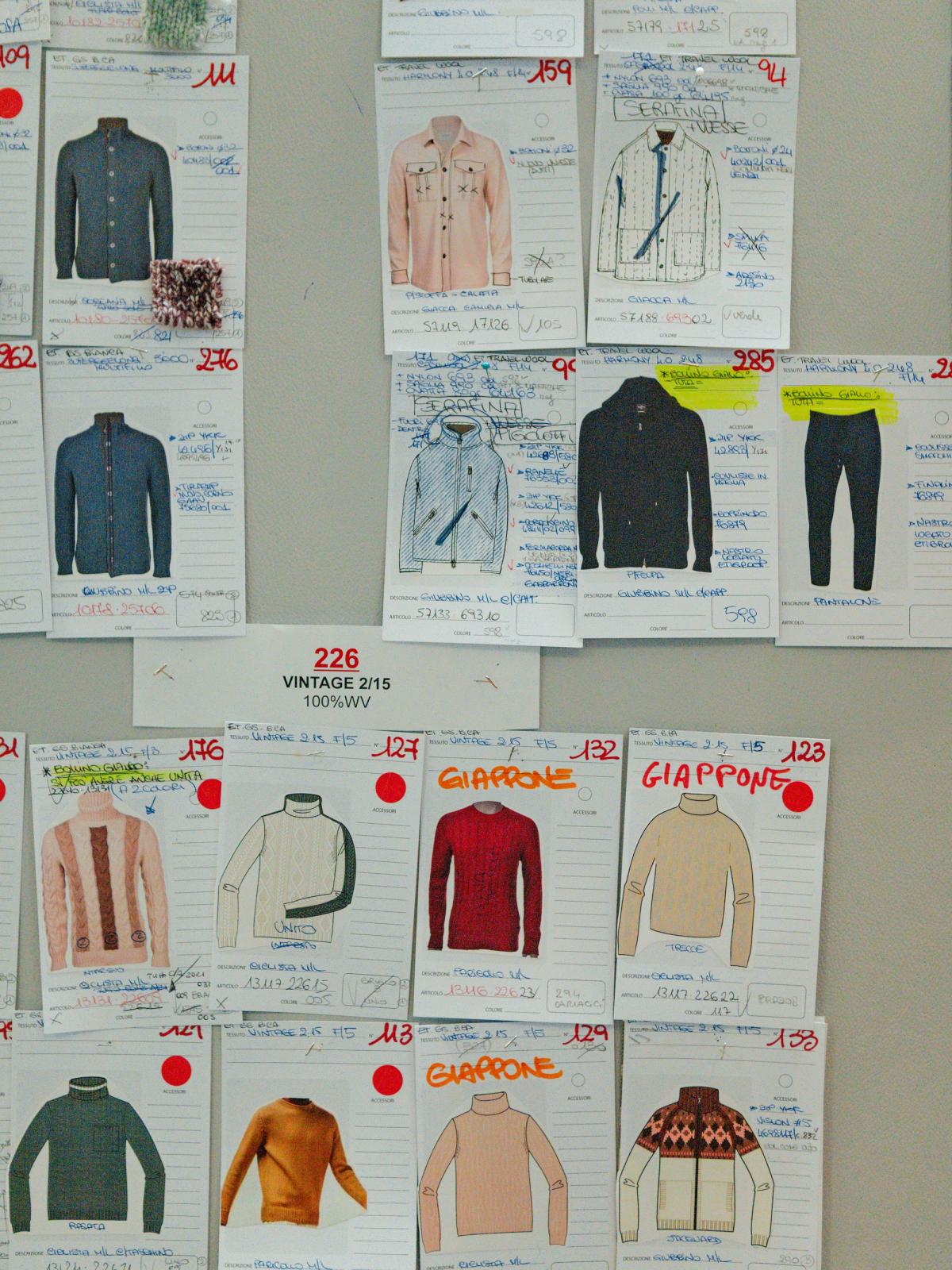
A wall board pinned with technical garment sketches and specification sheets
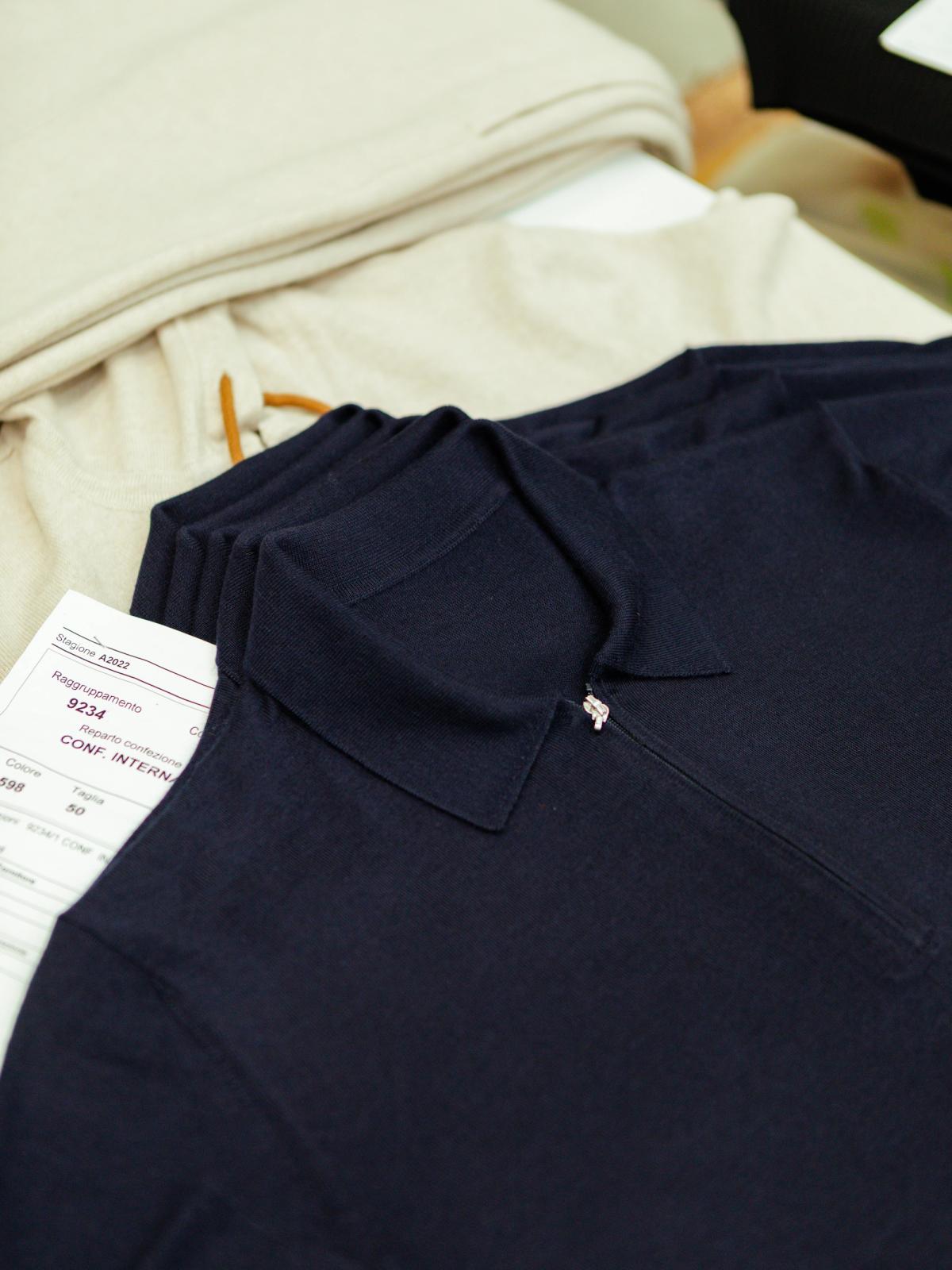
A folded navy knitted garment with a production tag resting on cream fabric
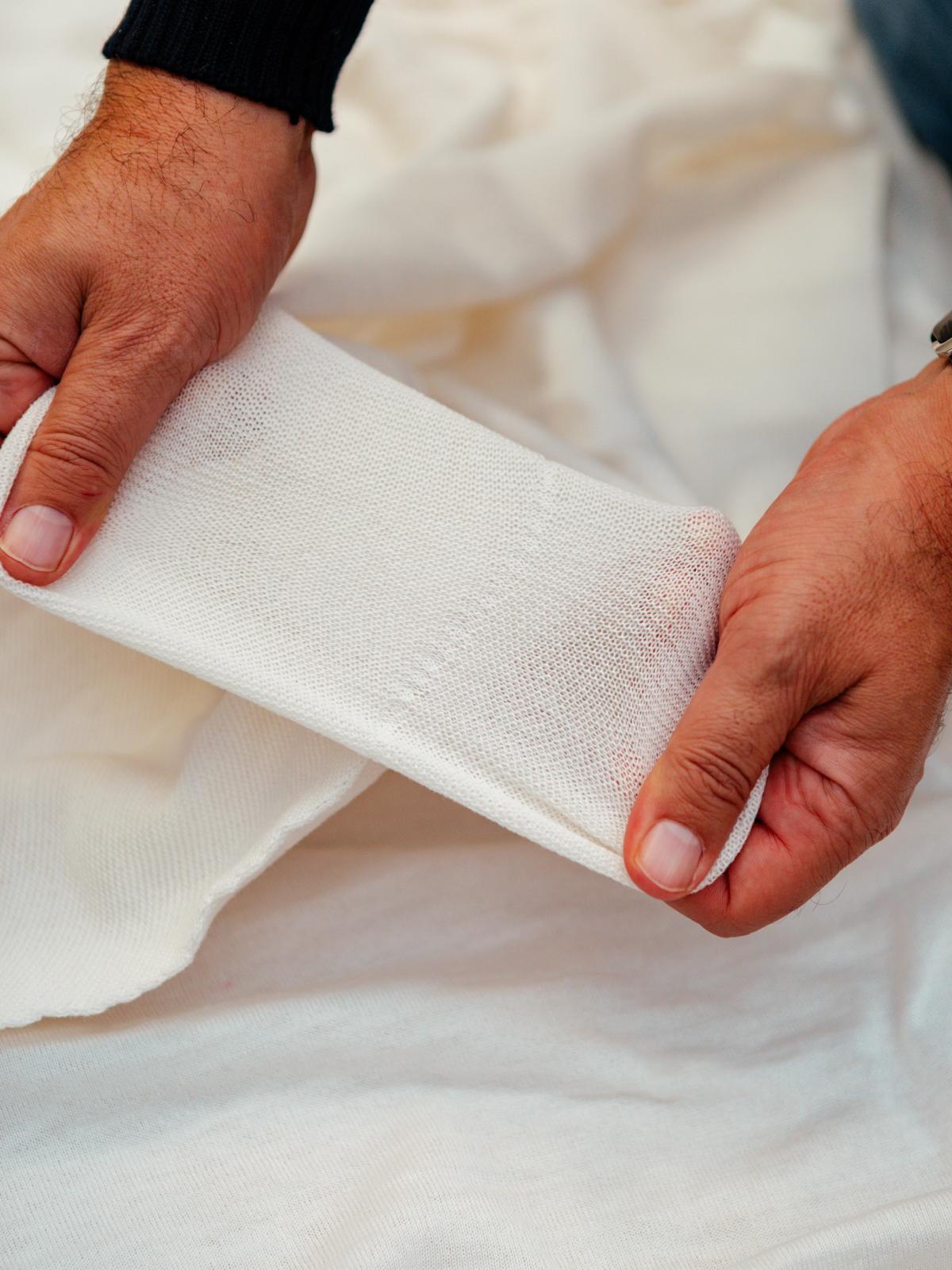
Hands inspecting a panel of white knitted fabric
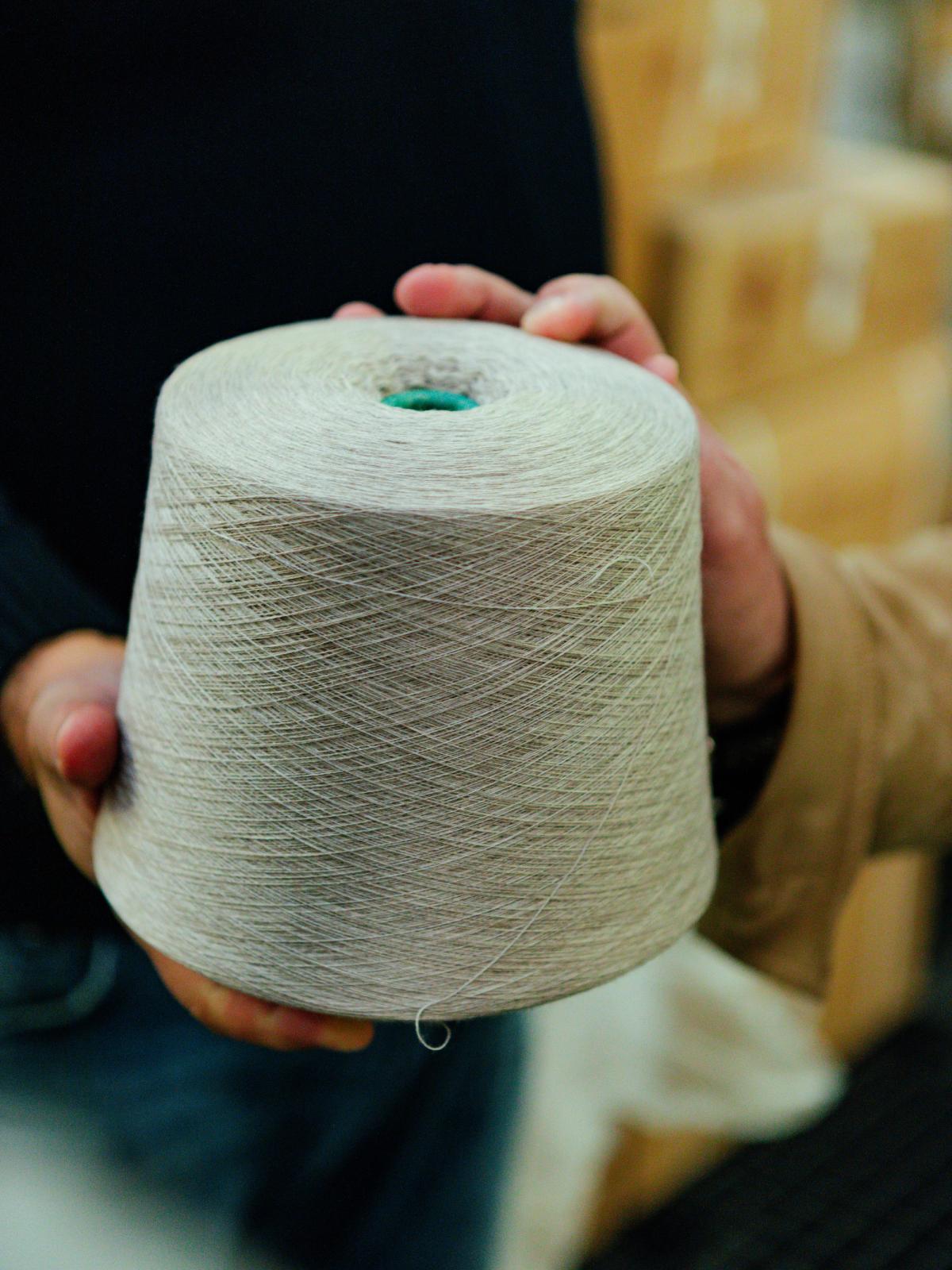
Hands holding a cone of undyed cream yarn
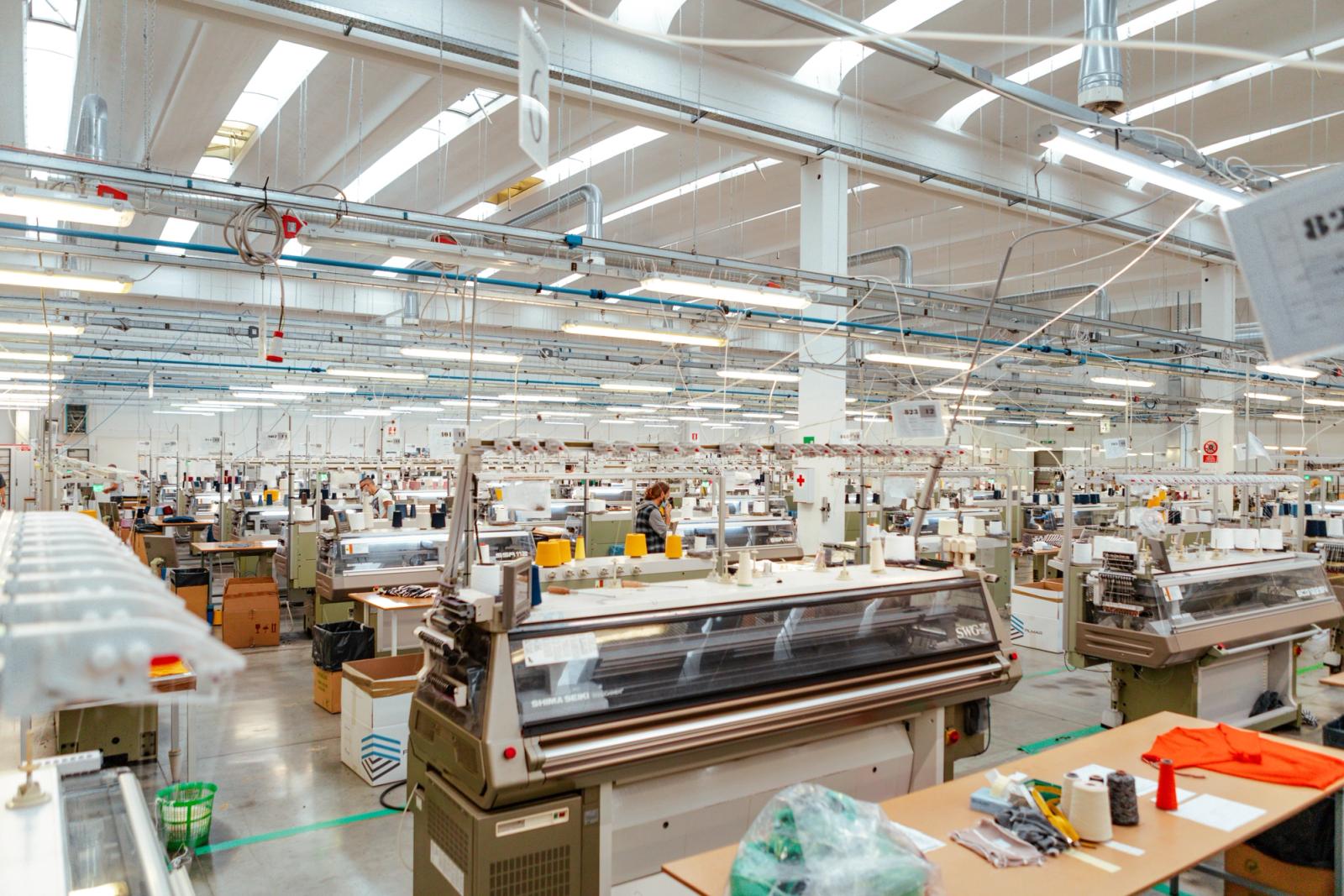
Rows of industrial knitting machines on a bright factory floor

Under One Roof, Beneath the Mountain

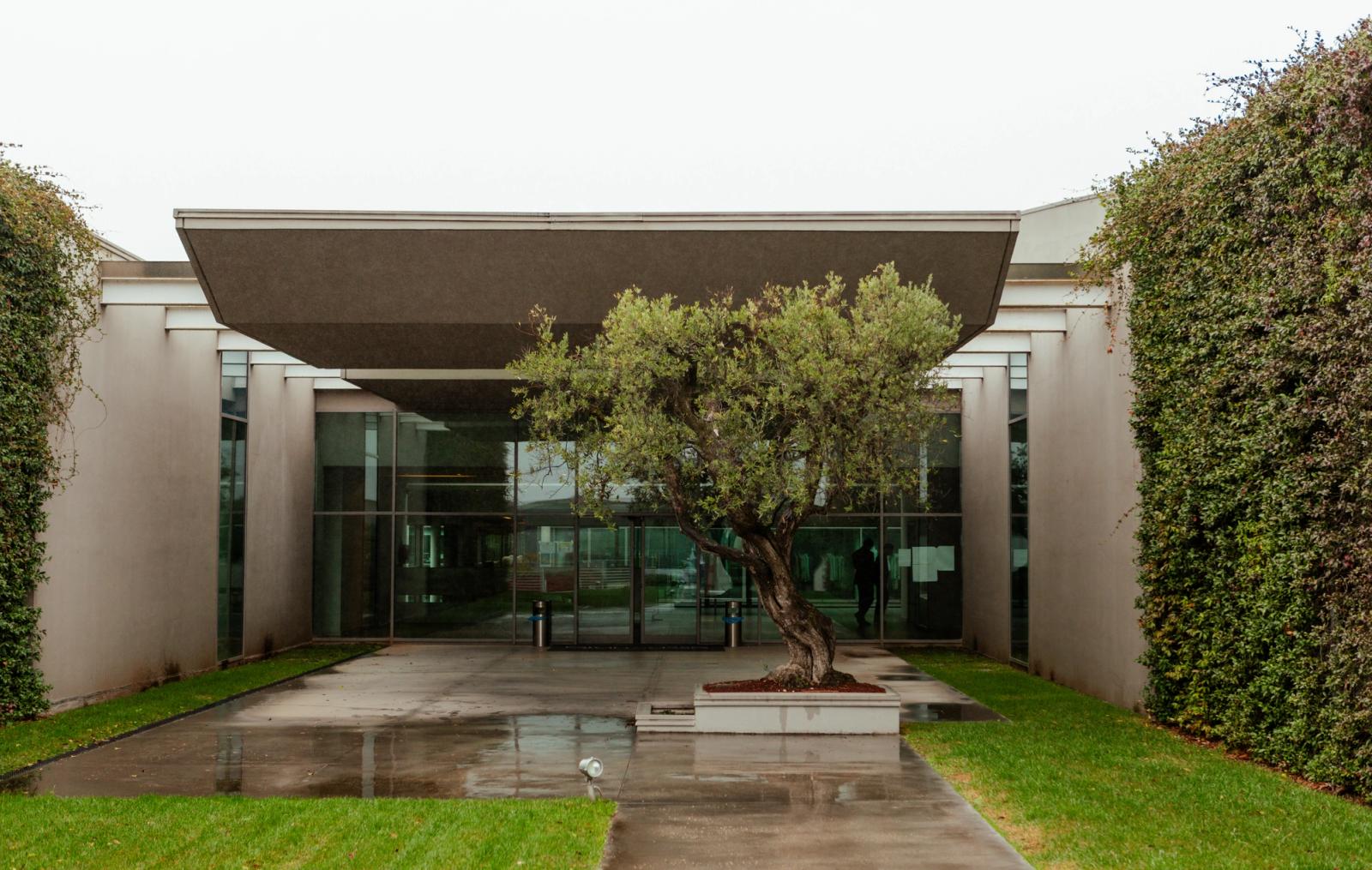
In the early 2000s, the company consolidated its operations into a single, purpose-built headquarters just outside Sant'Egidio alla Vibrata — a complex spanning more than 36,000 square metres, designed to bring together production, storage, and administration under one roof. Every stage of manufacture has remained in Italy since the company's earliest years, including its own dyeing facilities, a rarity in an industry that long ago began sending such work abroad. Around four hundred people now work across its production lines, in a building that has itself picked up architectural recognition for its design.

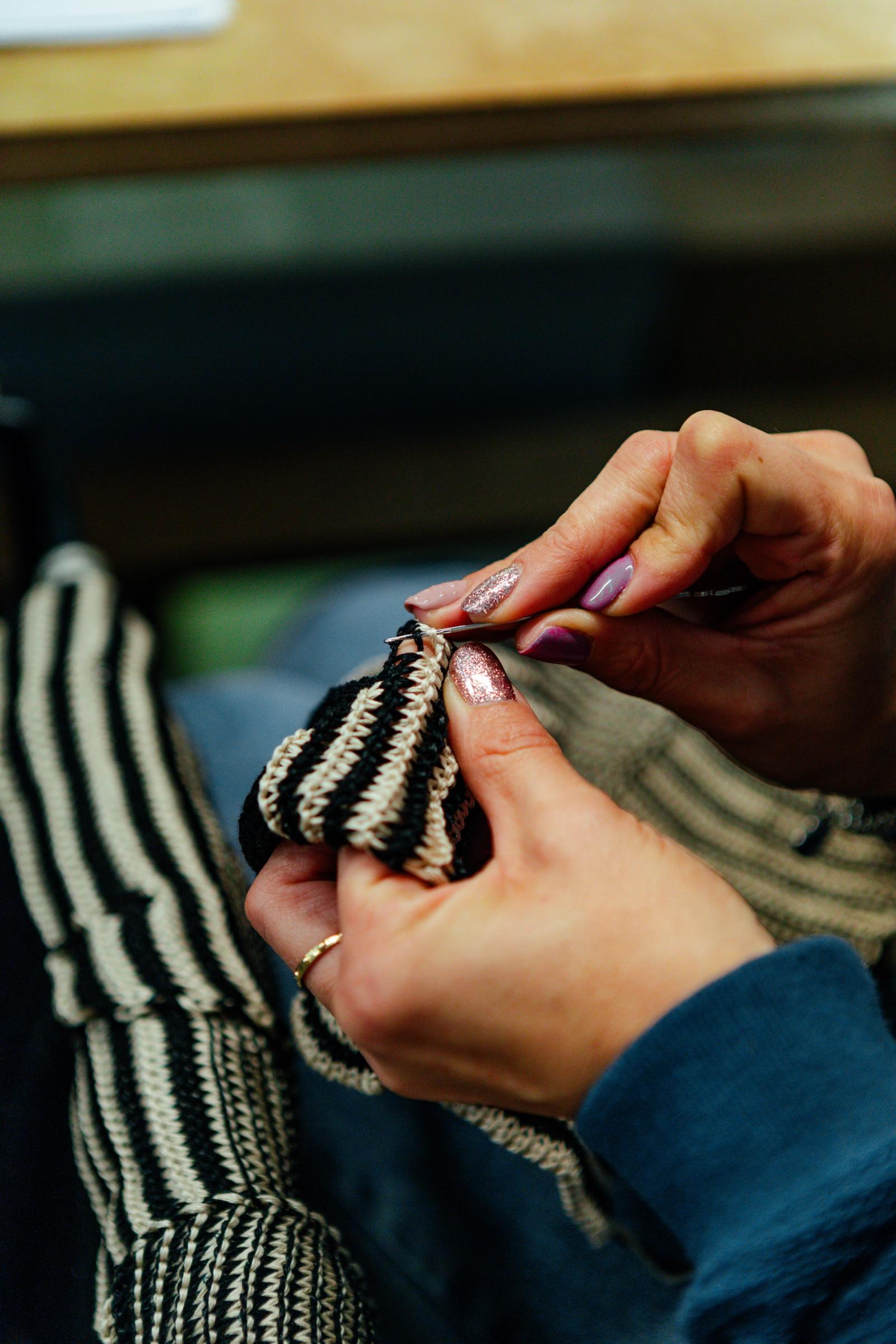
The scale of what happens inside is difficult to reconcile with the surrounding calm of the valley. Roughly one million garments leave the factory each year, distributed to more than forty countries across five continents. To make them, the mill works through something in the order of 3.6 billion metres of yarn annually — a length that could, in theory, circle the earth around ninety times over. Numbers like these tend to suggest an industrial operation running at a pace no single pair of hands could keep up with, and yet the finishing stages of the process remain stubbornly manual: seams checked by touch, collars inspected under natural light, each cashmere piece handled individually before it is ever folded for shipping.

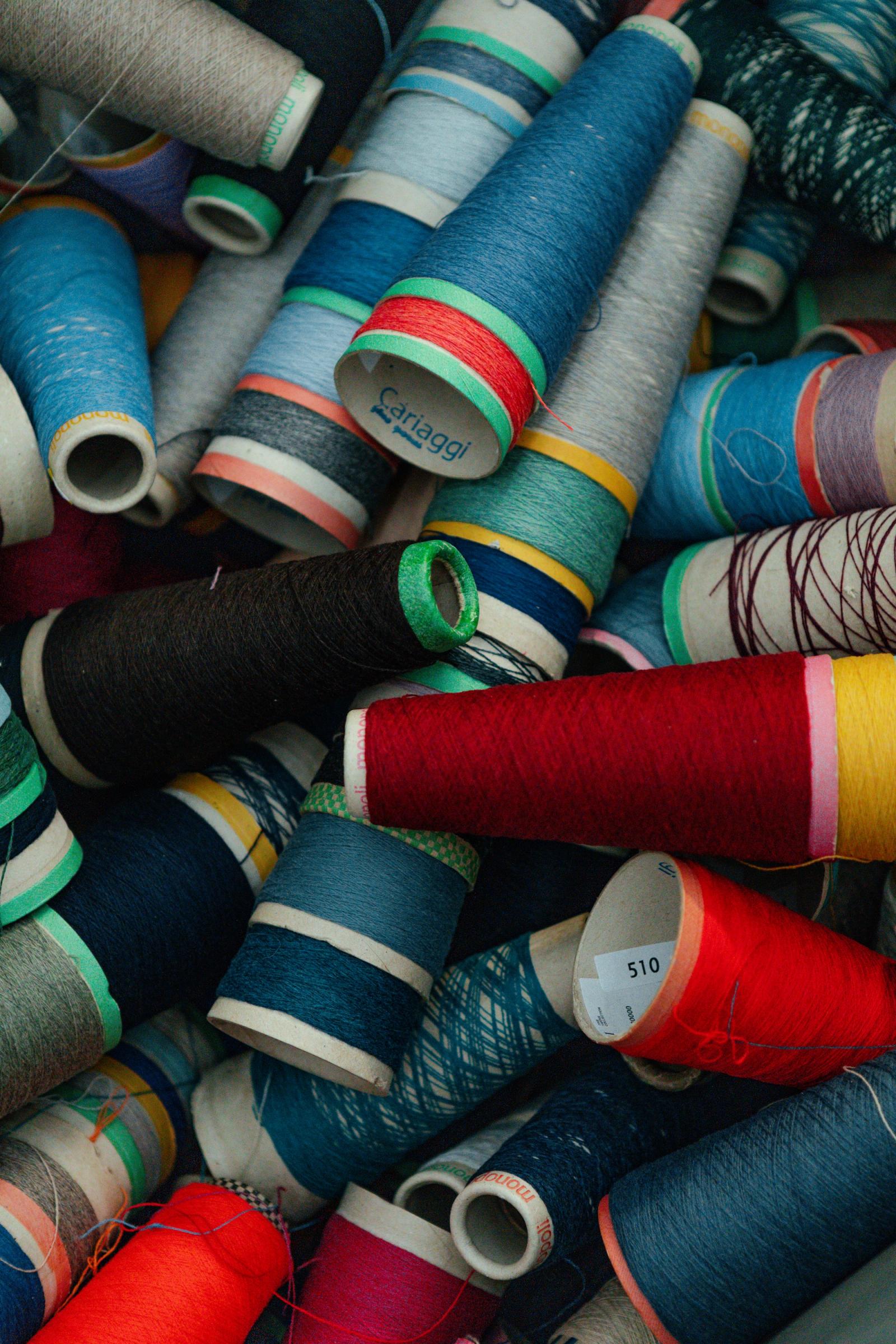
A pile of yarn cones in many colours

The Yarns that Make the Garment

If the mountain supplies the backdrop, the yarn supplies the substance, and Gran Sasso has built much of its reputation on an unusually wide and considered library of fibres.

Cashmere sits at the centre of the collection, sourced largely from Inner Mongolia's Alashan region, prized for fibres that run long and fine, and worked into both two-ply and four-ply constructions depending on the weight and durability a garment calls for. Alongside it sits extra-fine merino wool from Australia and New Zealand, typically in the 18.5 to 19.5 micron range — including Australian Super Geelong wool, taken from the sheep's first cut, which is loftier and more breathable than later shearings and prized for its next-to-skin softness. For lighter, summer-facing pieces, the mill turns to Sea Island cotton and lisle yarn, a tightly twisted, double-woven cotton usually of Egyptian origin that is mercerised to give it a smoother feel and greater durability. Silk and linen fill out the warm-weather range, often blended with other fibres — silk valued for its lustre, strength and temperature-regulating qualities, linen prized for its breathability and cooling effect.

Beyond these staples, the mill has developed a handful of proprietary yarns aimed at specific performance qualities. One, marketed as Rain Wool, carries a Teflon coating that makes it water-repellent and machine washable, typically used in the brand's athleisure-oriented pieces. Another, called Cash-Wool, is a pure merino engineered to mimic the hand-feel of cashmere. A third, Air Wool, holds microscopic pockets of air between its fibres to add warmth without adding weight. Whatever the specific yarn, fibres are inspected individually for length, fineness and colour consistency before they are ever fed into a knitting machine — a quality-control habit that mirrors, in miniature, the same attentiveness applied to the finished garment.

Hands finishing a blue and white striped knitted garment

Craft as the Region's Real Export

None of this exists in isolation from the valley around it. Abruzzo has never marketed itself as a fashion capital in the way Florence or Milan have, and there is something fitting in the fact that one of Italian knitwear's most respected names grew instead out of a region better known for shepherding routes, mountain parks and small agricultural towns. The same unhurried, undramatic attentiveness that shapes daily life here — the sense that things are worth doing slowly and doing well, without needing anyone to watch — runs directly through the factory floor, from the sorting of raw fibre to the final inspection of a finished sweater.

Seen this way, the Gran Sasso mountain functions as more than a namesake. It stands as a kind of shorthand for the whole operation beneath it: solid, unshowy, built to outlast changes in weather and in taste. A million garments leave the valley each year carrying that same quiet promise — that whatever else has shifted in fashion, the wool, the hands, and the mountain behind them have not.

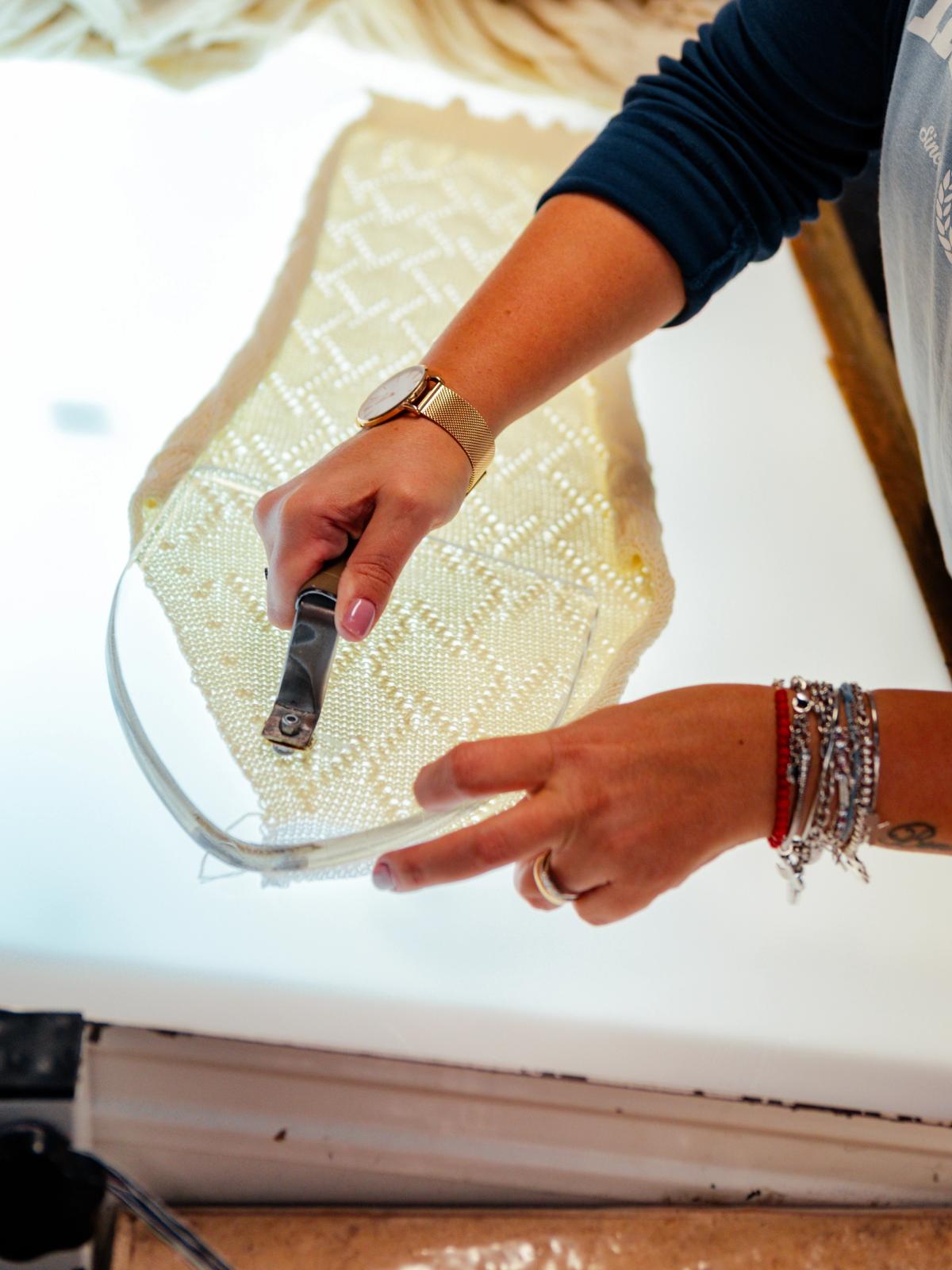
Hands marking a paper garment pattern on a light table
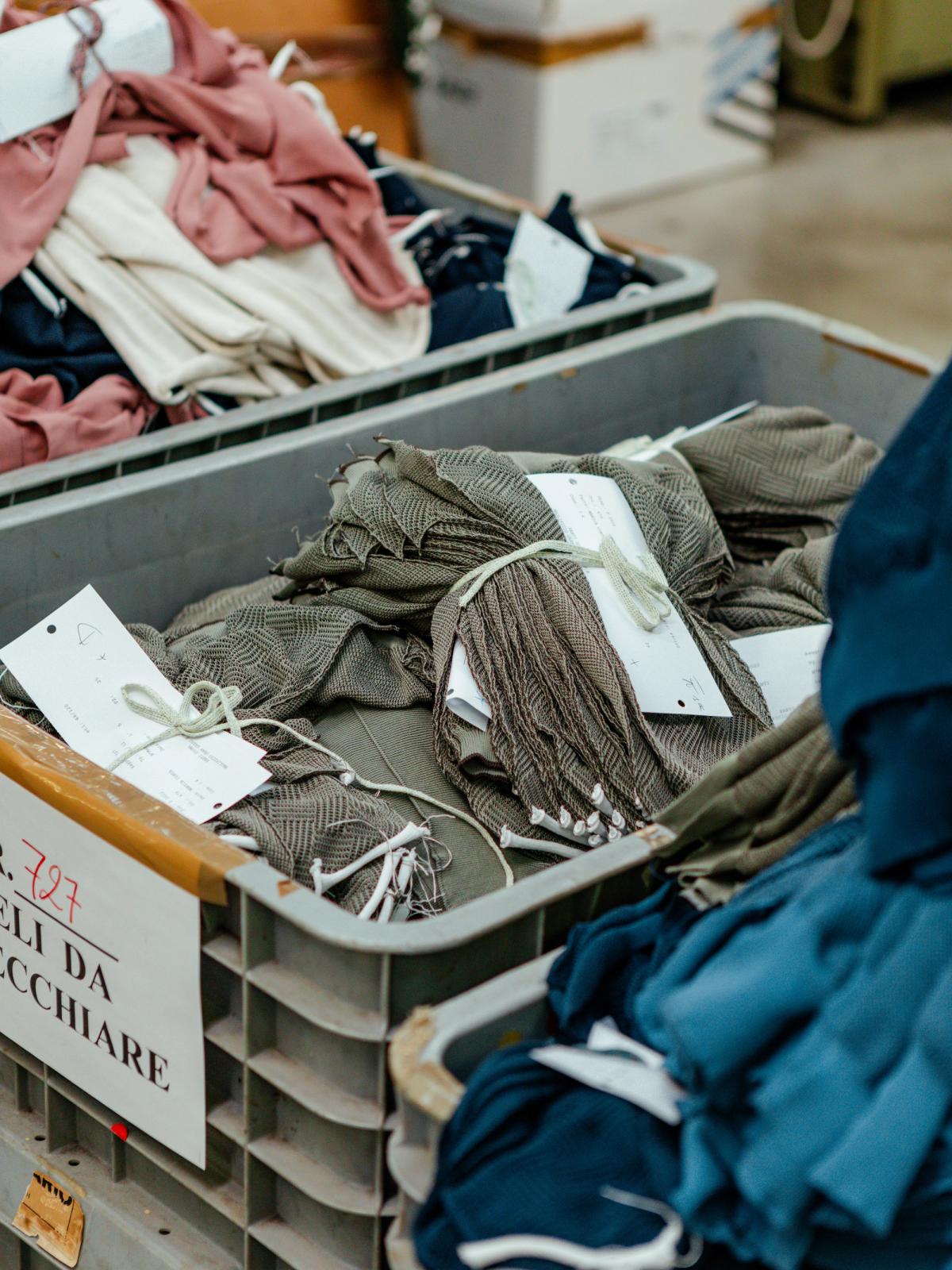
Factory trolleys stacked with folded garments and production tags
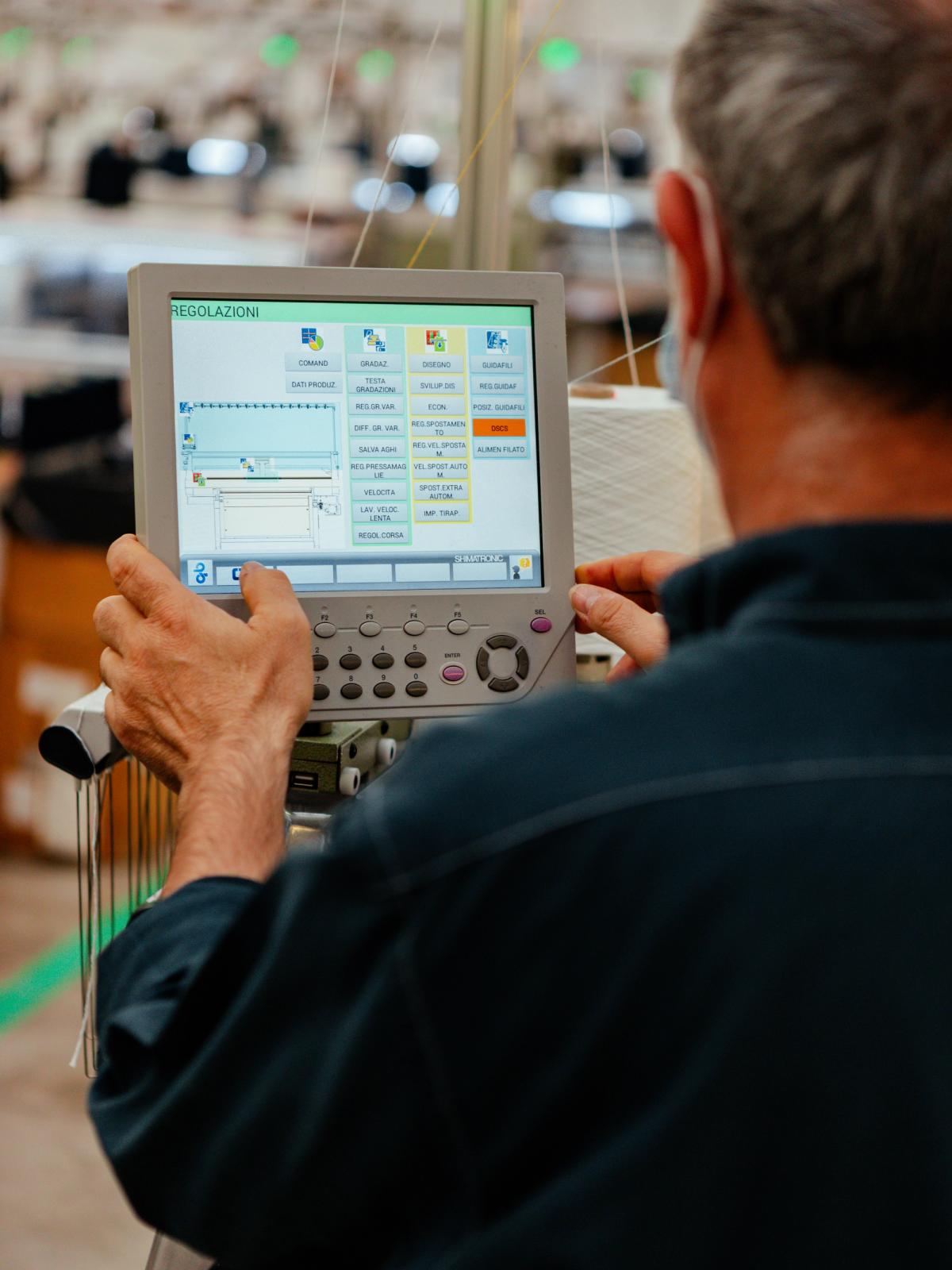
A technician operating the control panel of an industrial knitting machine
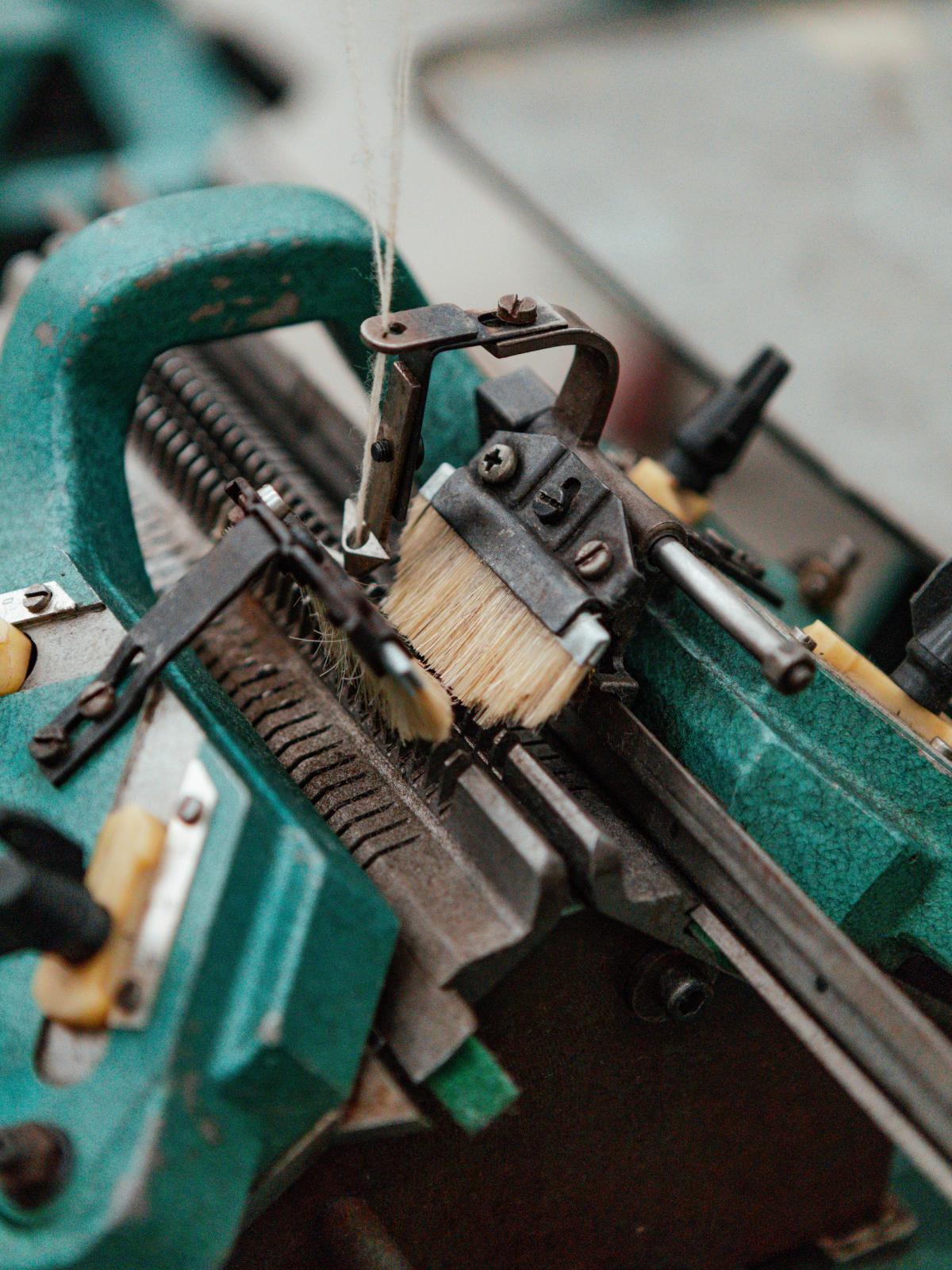
Close-up of the needle bed of a green industrial knitting machine

Gran Sasso

Discover the assortment from one of the world’s most renowned knitwear producers, Maglificio Gran Sasso. The brand produces its renowned knitwear using the finest yarns of extra-fine merino wool, organic cotton and luxurious cashmere.

Browse the collection
Tags:Made in Italy, Gran Sasso, Knitwear, Merino Wool, Cashmere, Cotton

Related Articles

A Day in Parma: Inside the Workshop that Anderson's Built

Factory Visits · July 26, 2026 · Christopher Gustafsson
Come with us to Parma and visit one of the world's most renowned belt makers, Anderson's. See inside the workshop and learn more about the craftsmanship and heritage behind the brand.
Read More