Skip to content

All taxes & duties included in the price.

Baltzar

At the End of the Silk Road: a Visit to Adamley Textiles

Factory Visits · October 9, 2026 · Christopher Gustafsson

The History of Macclesfield

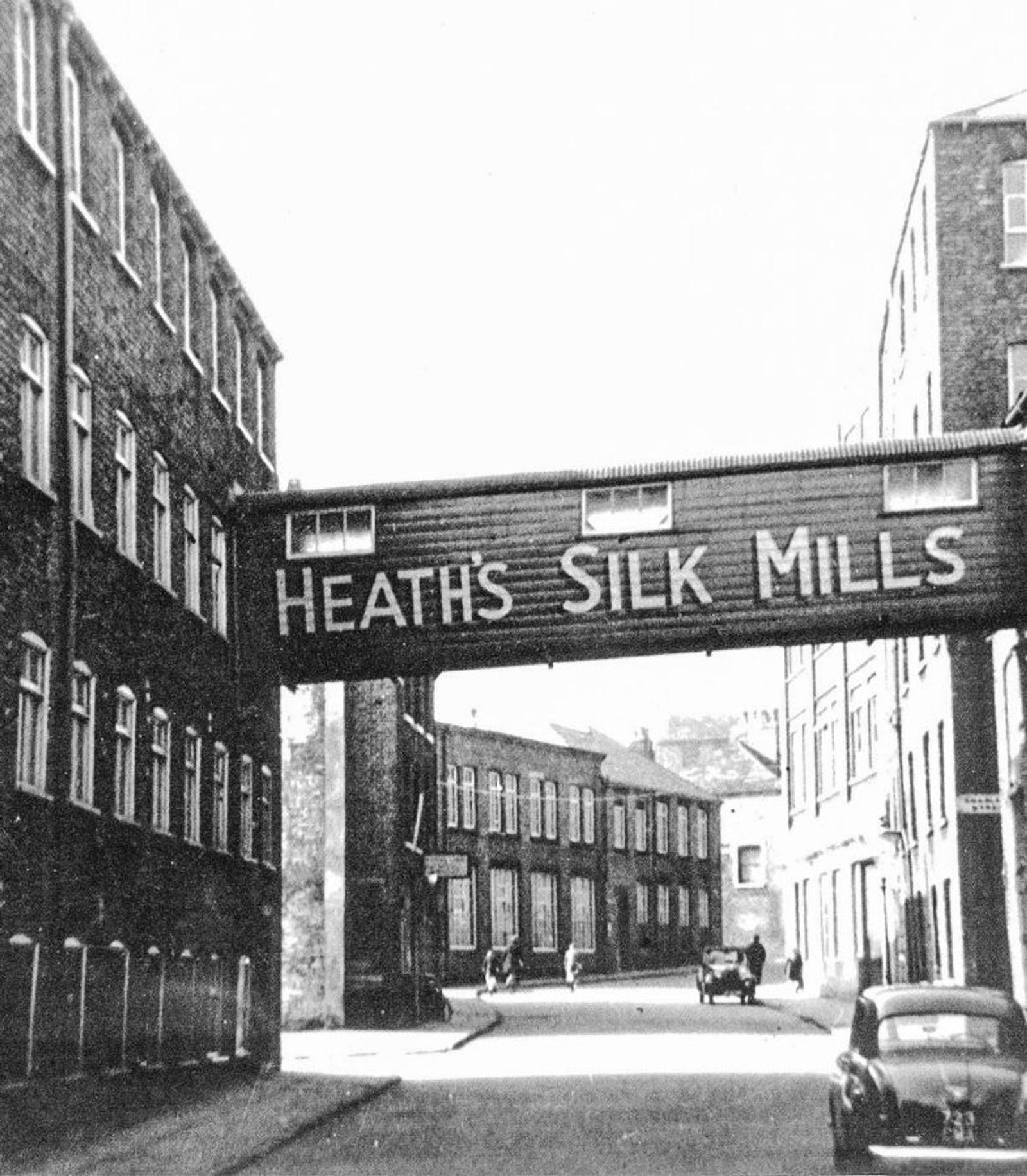
You notice the mills first. Driving into Macclesfield, you pass several crumbling buildings, the dilapidated mills of yesteryear, no longer functioning but a reminder of when “Silk Town” was lauded as the country’s biggest producer of finished silk. Then the road climbs out of town into a valley, and you find one that still works.

Silk has been part of life in Macclesfield since the 1700s, and the town was once the centre of the English silk-weaving industry and the world’s largest producer of finished silk. Geography helped. Good transport links, including the canal system that carried silk products to London, let the trade grow well beyond the local market. The surroundings mattered as well: Liberty’s account of the region credits the natural landscape for the supreme quality of local silk production.

The trade shaped the town’s identity. Records show Macclesfield boomed in the 18th and 19th centuries on its silk manufacturing, and the “silk capital of England” label stuck. Synthetic fabrics and industrial change eroded that dominance over time. Adamley is now one of Macclesfield’s last silk mills and one of very few hand screen printers left in Britain.

Arriving at Adamley

The factory sits in Langley, just outside the town. Its position near the River Bollin lets Adamley draw water from its own reservoir. That water is used throughout all stages of silk production.

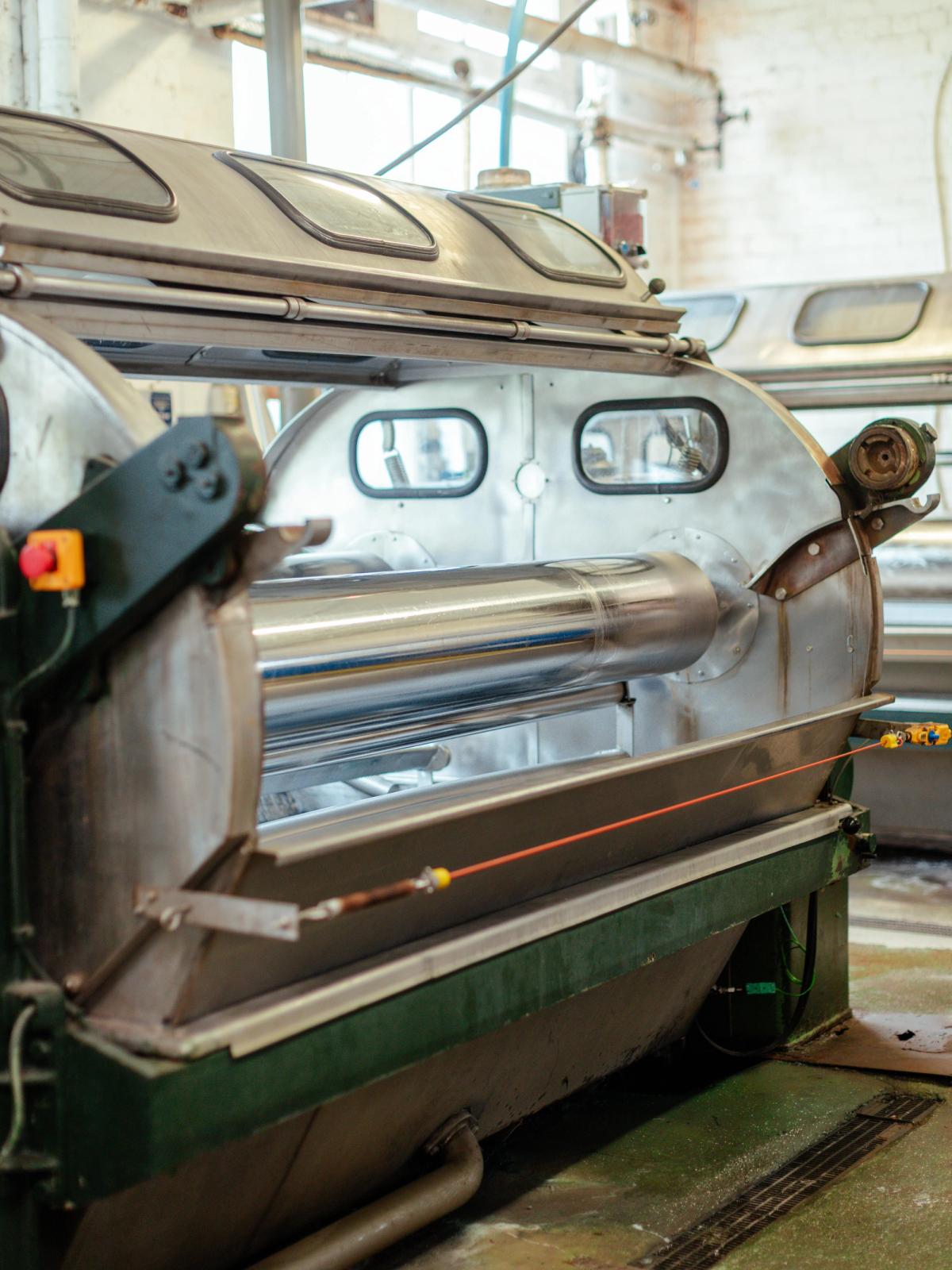
The company has been here a long time. Sources describe over fifty years of making luxury printed fabrics, and one profile puts it at the best part of six decades, and busier now than ever. Parts of the site are far older. In the oldest section, textiles have been washed and dyed for 200 years, and the windows look out on hills and sheep little changed since.

Adamley Textiles

Factory Visit

Adamley Textiles

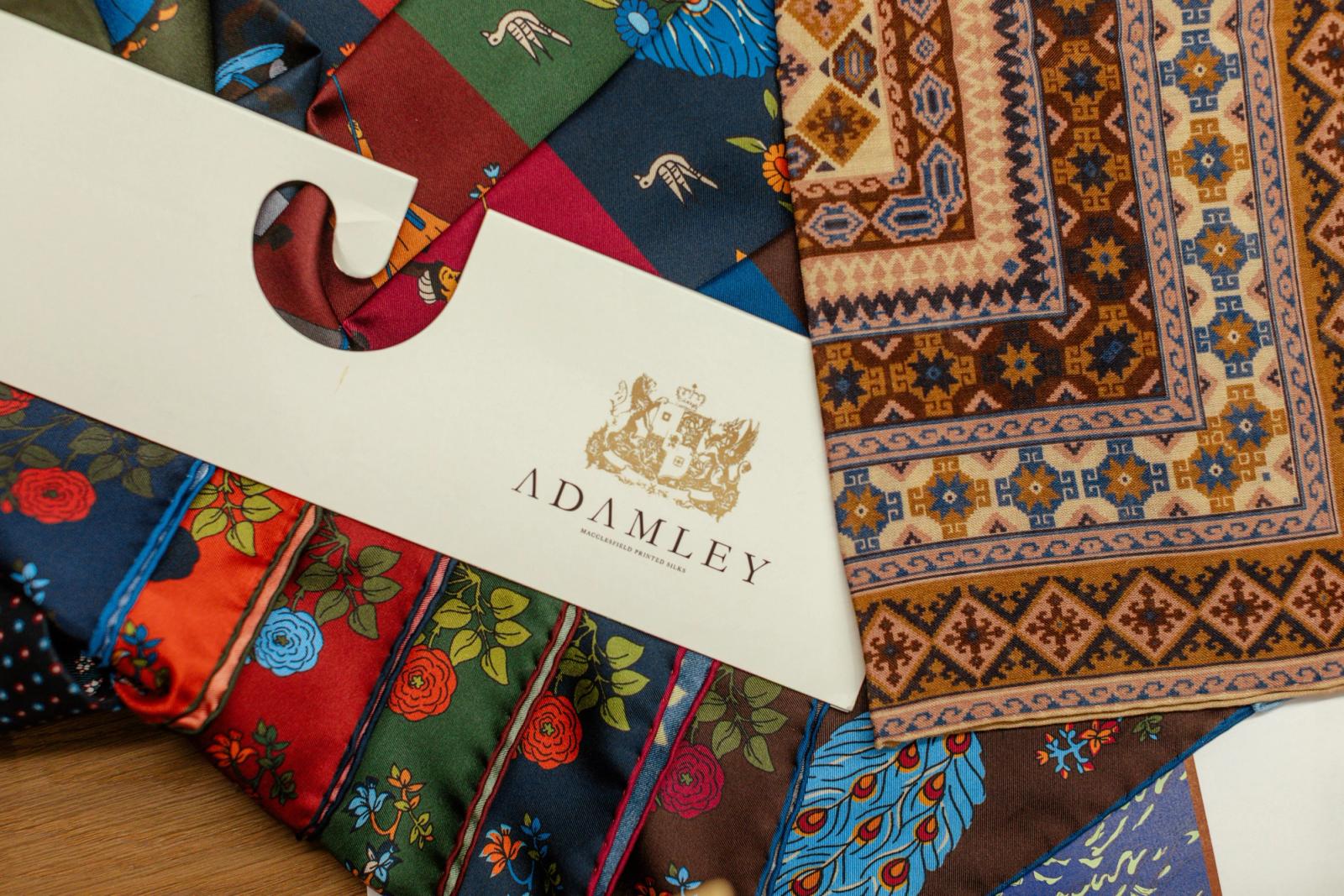
Adamley Textiles is a contemporary textile brand dedicated to delivering thoughtfully designed, high-quality accessories for modern applications. We are proud to offer a curated selection of the brand’s printed scarves and ties.

Browse the collection

Heritage & Tradition

What stands out is how much of the knowledge lives in people. Two staff members, a printer and a “layer”, have together worked at Adamley for more than 45 years. Others have spent decades building an instinctive sense of timing and touch that technology can’t replicate.

The mill also functions as an archive. Liberty’s (in London) connection with Adamley runs so deep that the mill holds its own private collection of Liberty print designs. Its Sales Director describes the company’s role as a guardian of tradition and heritage not only for them but for the whole industry, standing for the continued existence of a craft once widely practised in the area.

It is not a museum, though. The design team’s attitude is summed up as “how far can we push this idea?”, and its willingness to experiment with colourways and designs is part of why the mill stays busy.

Silk Printing Techniques

Adamley combines several techniques in its production.

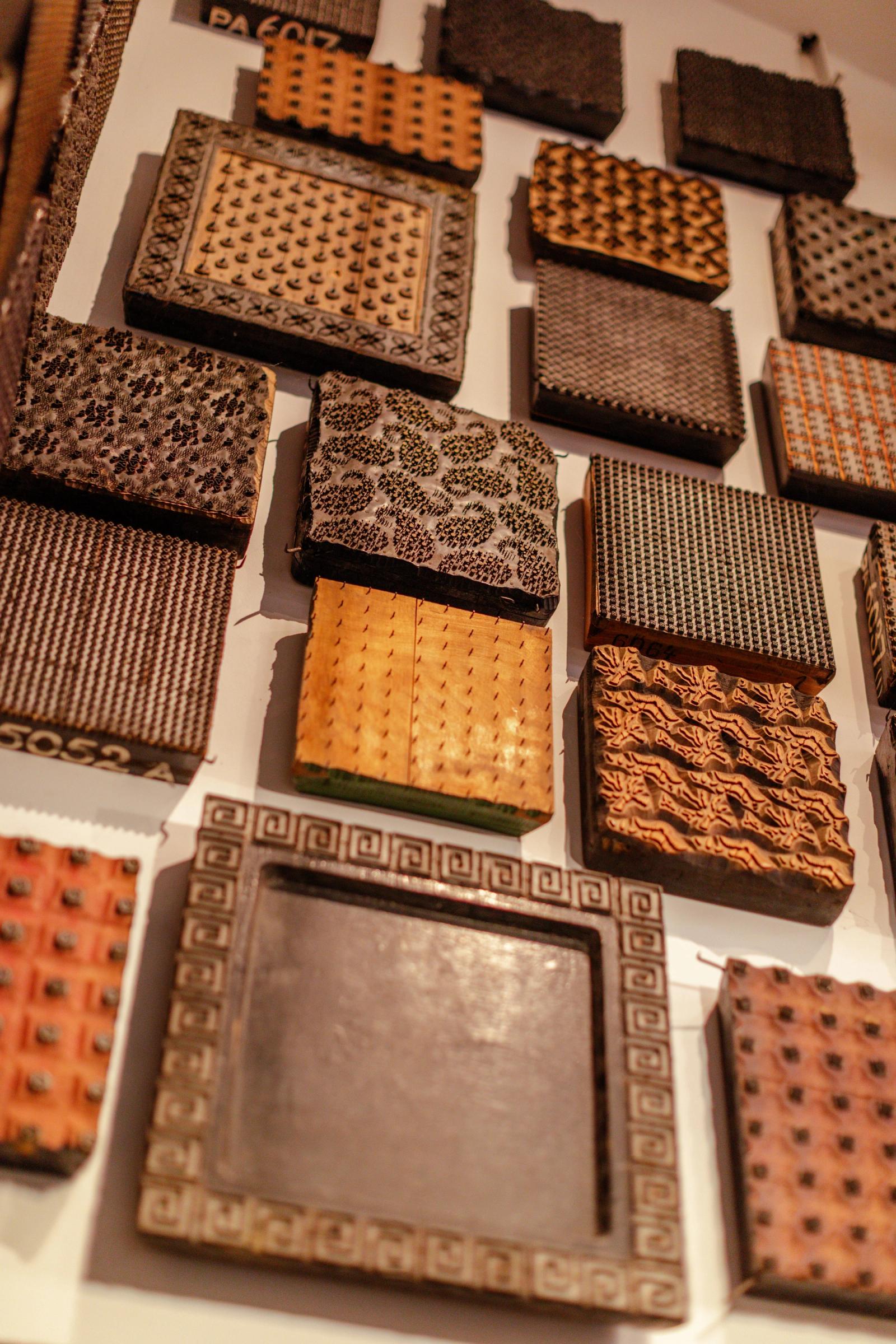
Block printing. The oldest method. Printing was once done with giant blocks and hand-carved designs made from wooden shapes or manipulated wire. The mill still uses traditional block printing.

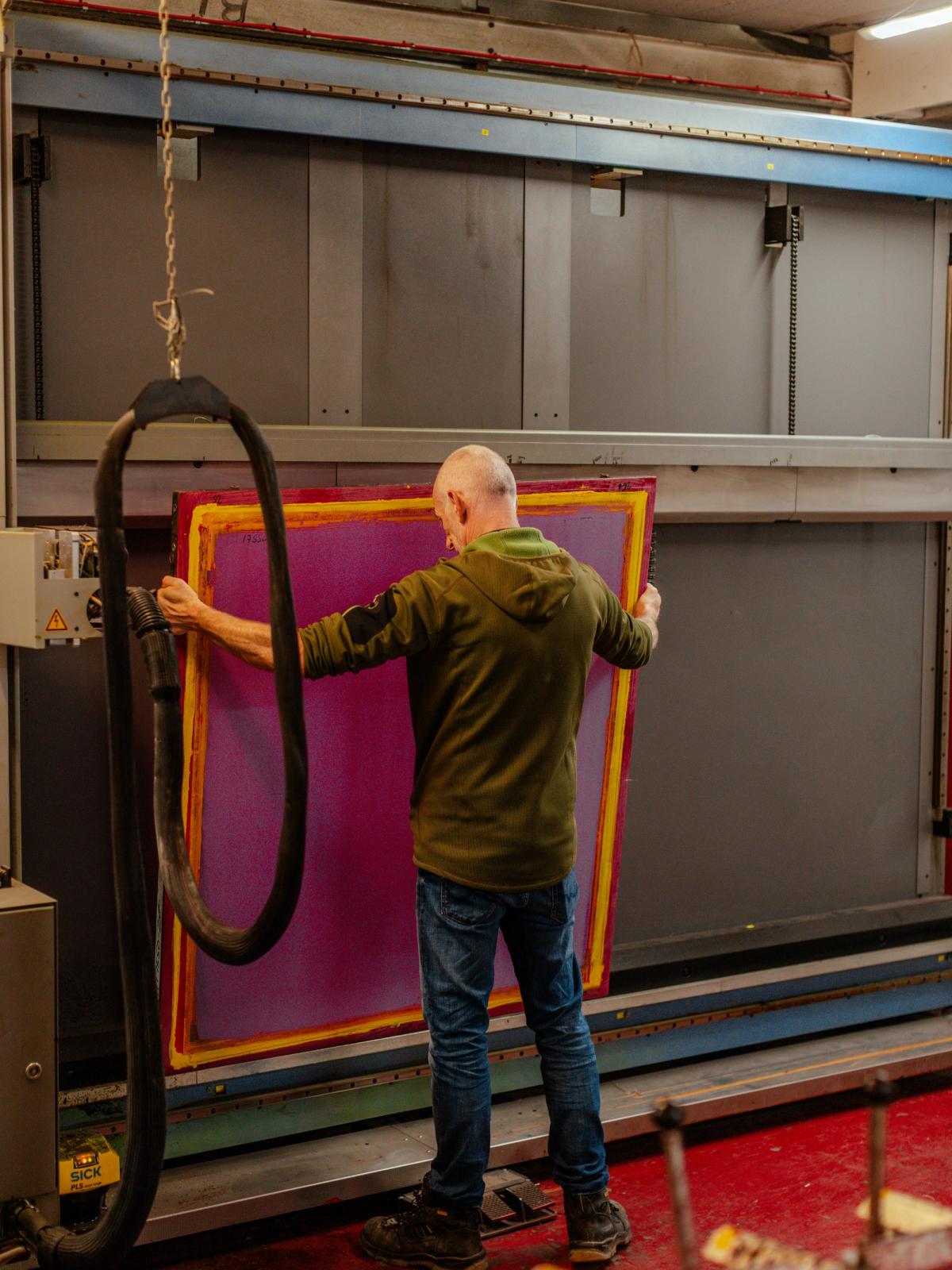
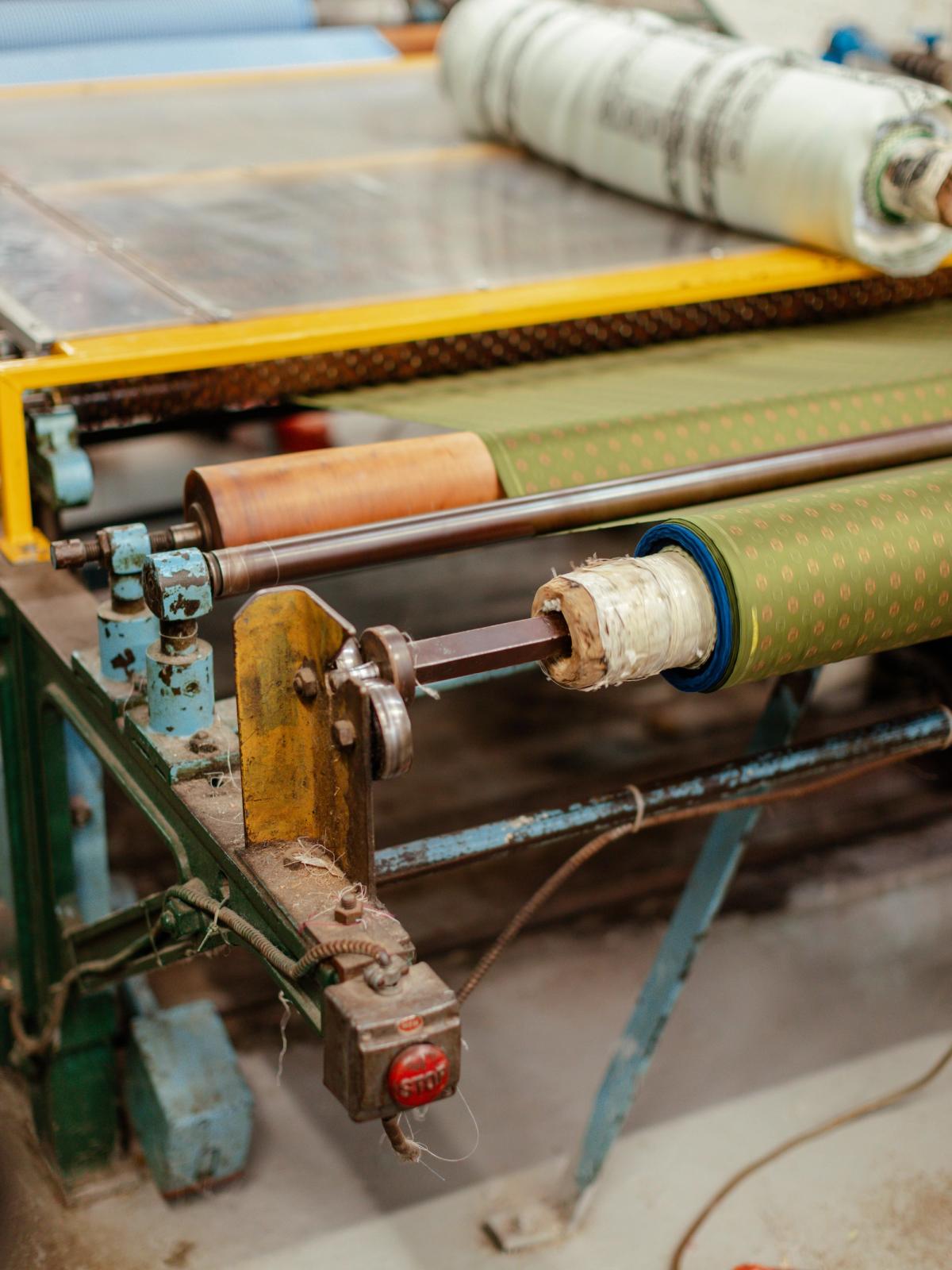
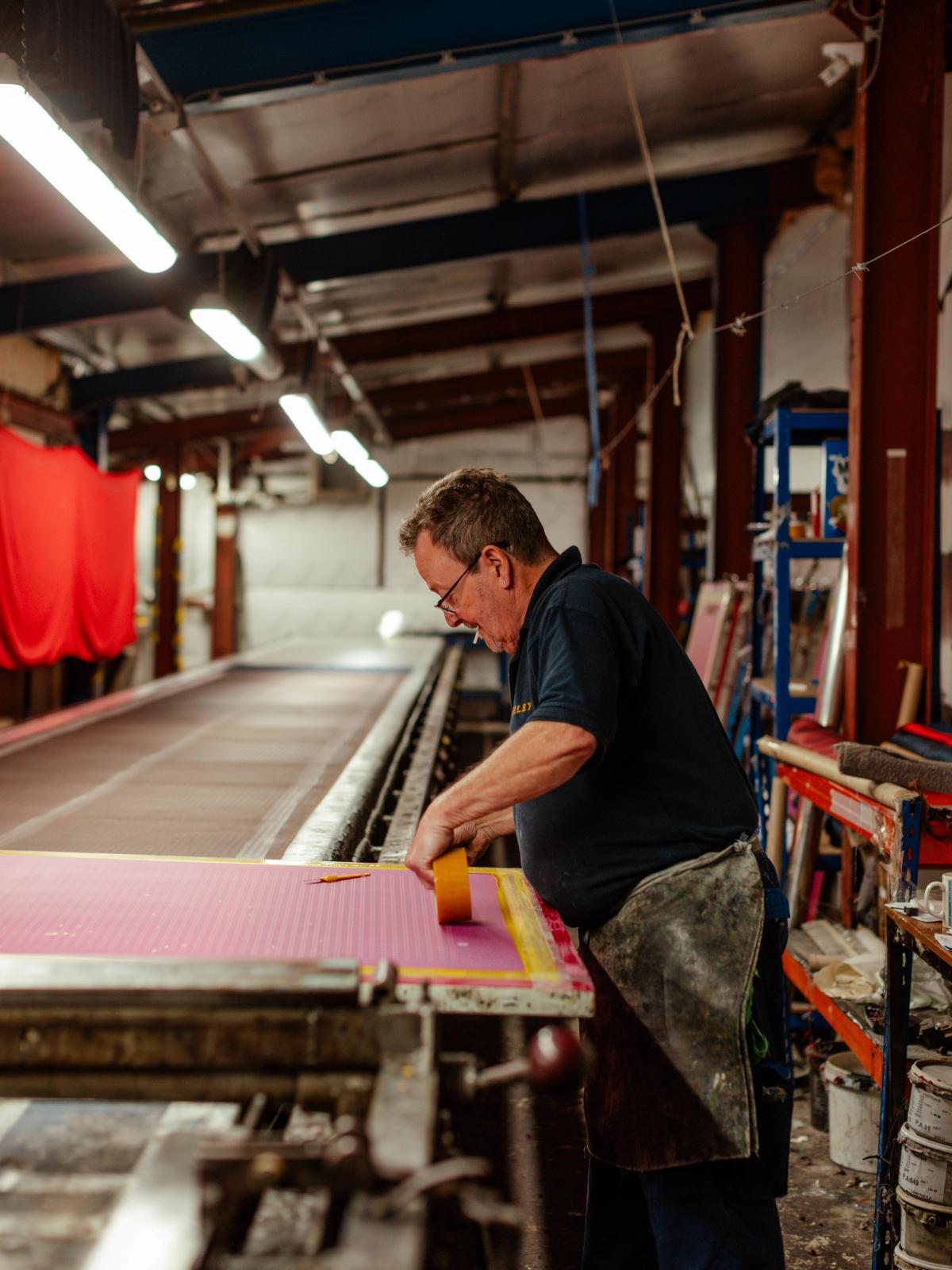
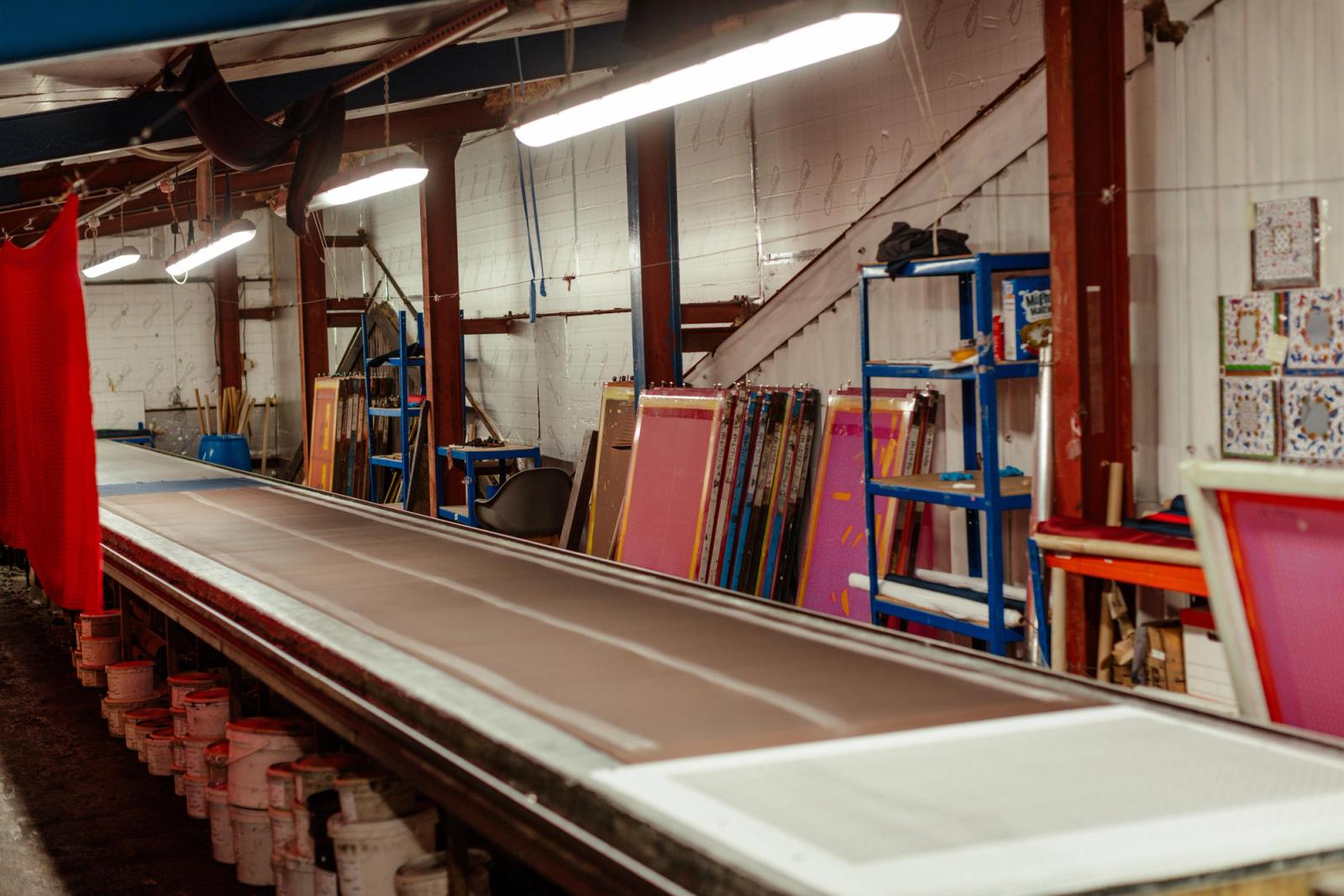
Hand screen printing. This is what Adamley is best known for. Colour is pushed through a prepared screen onto the silk, one screen per colour, so a multi-colour design needs careful alignment from layer to layer. Retailers describe the result as the distinctive authenticity associated with a Macclesfield print. After printing, silk is typically steamed to fix the colour and washed to remove excess dye.

Digital printing. The mill has added cutting-edge digital technology that allows almost photographic designs. Adamley offers both modern digital methods and traditional screen printing.

The mill works only with natural fibres. Much of its silk is imported, and its CEO has said the company imports most of its silk fabrics from East China’s Zhejiang province. That echoes the old trade, when Macclesfield factories imported large quantities of silk from China.

A man in a navy double-breasted blazer, tie and grey trousers standing with his arms crossed

Frequently Asked Questions

Where is Adamley Textiles based?
In Langley, just outside Macclesfield, in the foothills of the Pennines.

How long has Adamley been operating?
Sources say over fifty years, and closer to six decades in some accounts. Textile washing and dyeing on the site goes back around 200 years.

What techniques does Adamley use?
Block printing, hand screen printing and digital printing, plus custom dye pastes made for each project.

Does Adamley weave silk?
It’s known for printing and finishing silk rather than weaving. Much of its silk is imported, including from Zhejiang province in China.

Tags:Made in England, Adamley Textiles, Macclesfield, Printed Silk

Related Articles

Crockett & Jones: a Day Inside Northampton's Shoemaking Heartland

Factory Visits · October 2, 2026 · Christopher Gustafsson
Walk through the doors of Crockett & Jones in Northampton, where English shoes have been made since 1879. Follow a pair from the clicking room to the welting machines, learn why Goodyear welting lets a shoe be resoled for years, meet the bestsellers and newer styles, and see what keeps Northampton's shoemaking tradition alive today.
Read More

Rain, Tweed and Steel: Visiting Corby & Chrysalis

Factory Visits · August 31, 2026 · Christopher Gustafsson
Chrysalis dates to 1985, when founder Chris Blackmore made what is credited as the first waterproof tweed shooting coat. Tweed had been the countryside’s cloth for generations, but it behaved like a sponge in a downpour. Making it weatherproof without ruining its handle and drape was a problem everyone complained about and almost nobody solved.
Read More

A Weekend in Abruzzo: Visiting Maglificio Gran Sasso

Factory Visits · July 31, 2026 · Christopher Gustafsson
Come with us to the beautiful Abruzzo region and visit Europe's largest knitwear company, Maglificio Gran Sasso. See inside the factory and learn more about the craftsmanship behind the brand.
Read More