Skip to content

All taxes & duties included in the price.

Baltzar

Crockett & Jones: a Day Inside Northampton's Shoemaking Heartland

Factory Visits · October 2, 2026 · Christopher Gustafsson

Arriving in the Town of Shoes

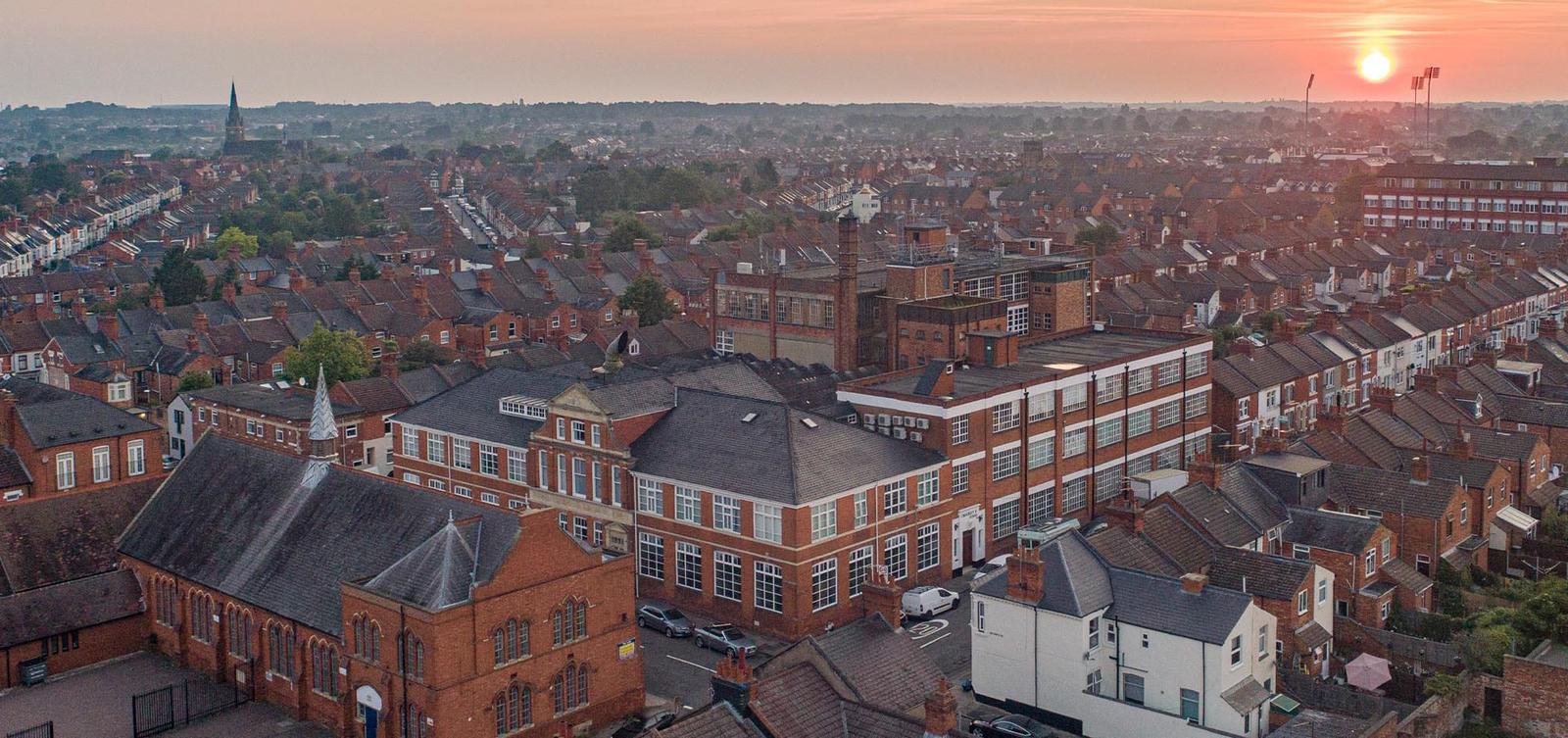
Northampton does not announce itself as a shoemaking capital, but it does not need to. Step off the train and walk towards the town centre, and the clues are everywhere: street names that nod to old trades, red-brick Victorian buildings with tall factory windows, and a skyline of chimneys that once belonged to dozens of workshops.

This part of the East Midlands has been making footwear for centuries. Local tradition holds that Northampton's cordwainers supplied boots to armies for generations, and the town's reputation grew with every war and every fashion. By the late nineteenth century, the district was a dense web of small factories, leather merchants and last makers. The Northampton Museum and Art Gallery still holds one of the largest shoe collections in the world, and a few of the great English names remain within a short drive of each other.

One of the oldest and most renown is Crockett & Jones.
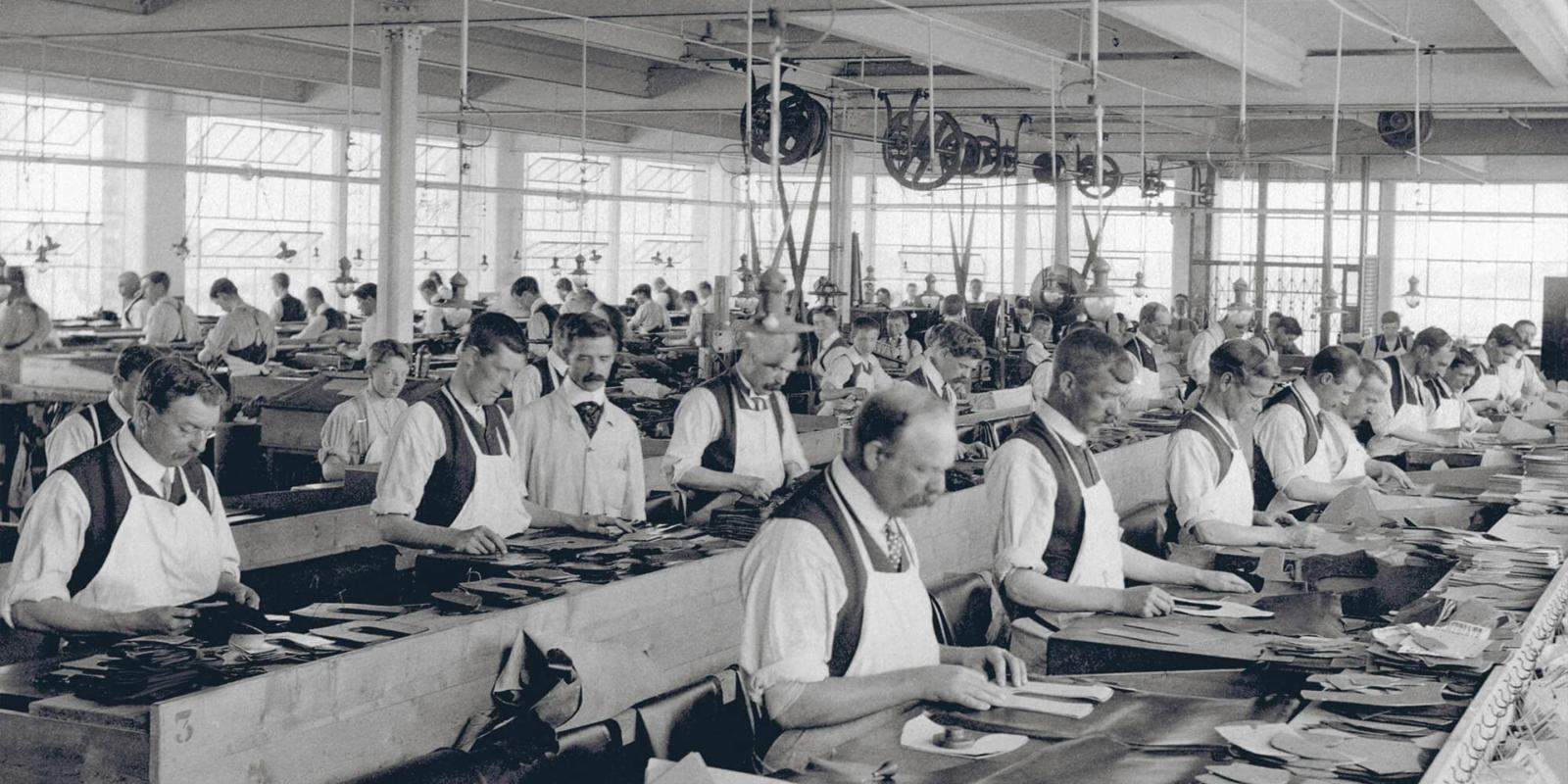
A Heritage Built on Stitching

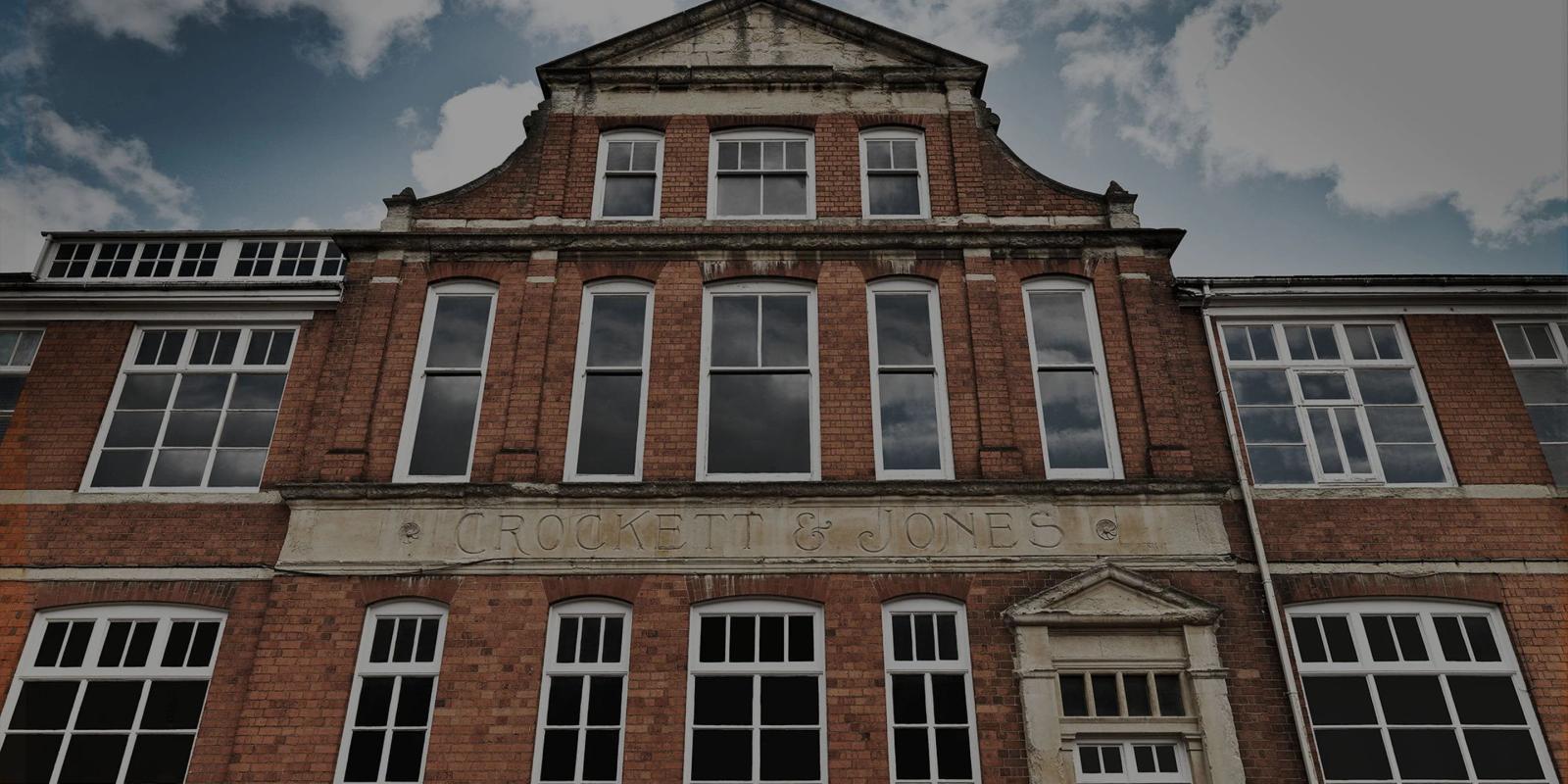
The firm was founded in 1879 by Charles Jones and his brother-in-law James Crockett, who set up on the town's Perry Street, where the company is still based today. Over the following century and a half, the business grew from a modest workshop into one of the most respected names in English men's footwear, and it has remained a family-led company throughout.

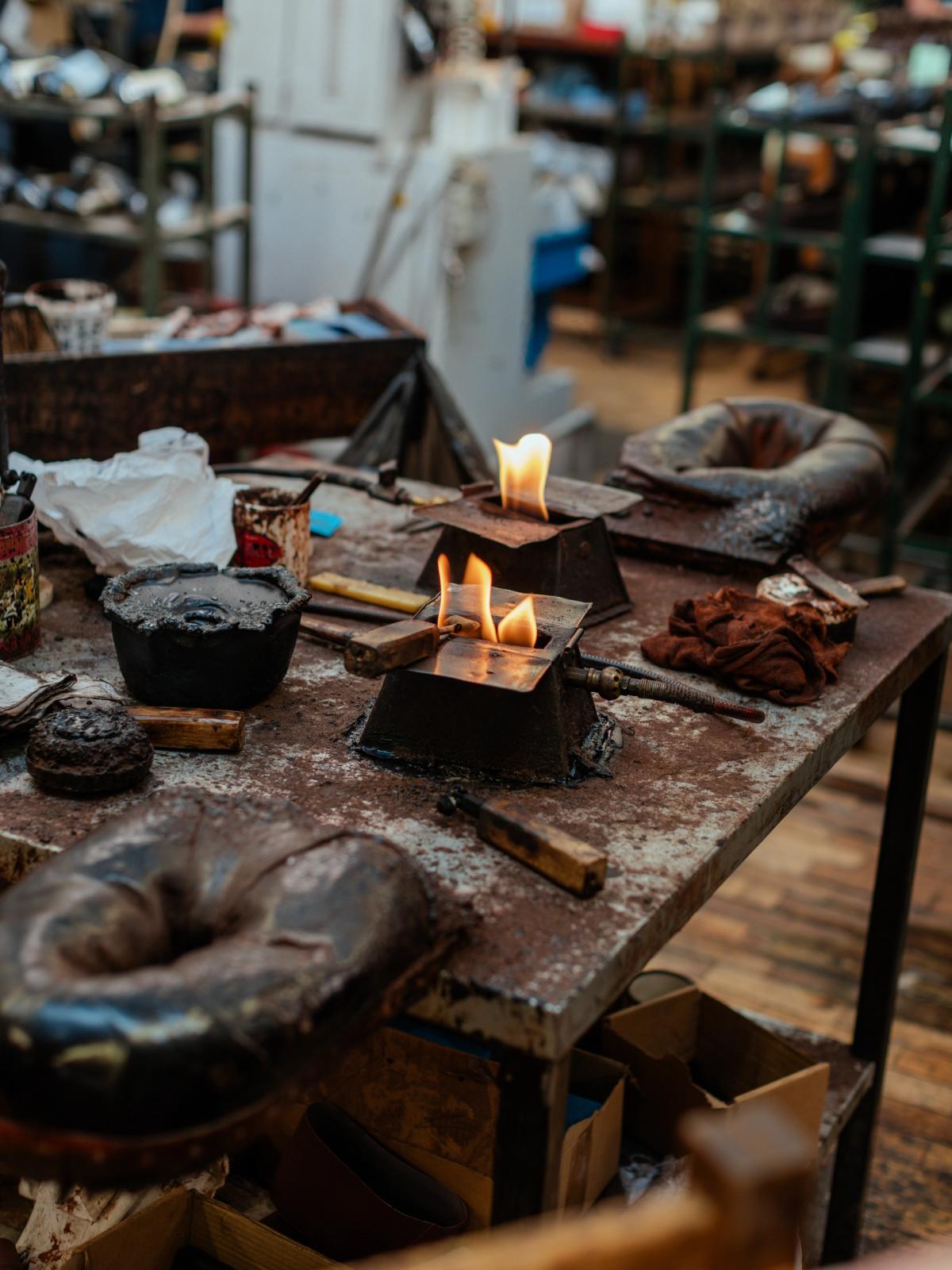
Our guide met us at the door of the red-brick factory, and the first thing we noticed was the smell: warm leather, wax, a faint sweetness of glue and cedar. The second was the sound, a steady rhythm of machines and hammers that felt oddly like a heartbeat.

The brand is renowned for classic English dress shoes and boots built to last, with a strong focus on quality leather, refined lasts and construction that can be repaired rather than discarded. Its shoes are sold worldwide and have long been a favourite of people who care how a shoe is made, not just how it looks.

They are also known for working with other labels. Many well-known fashion and heritage brands have had shoes made at Perry Street, which tells you something about how the industry regards the workmanship.

Crockett & Jones

Factory Visit

Crockett & Jones

The brand is renowned for classic English dress shoes and boots built to last, with a strong focus on quality leather, refined lasts and construction that can be repaired rather than discarded.

Browse the collection

The Journey of a Shoe

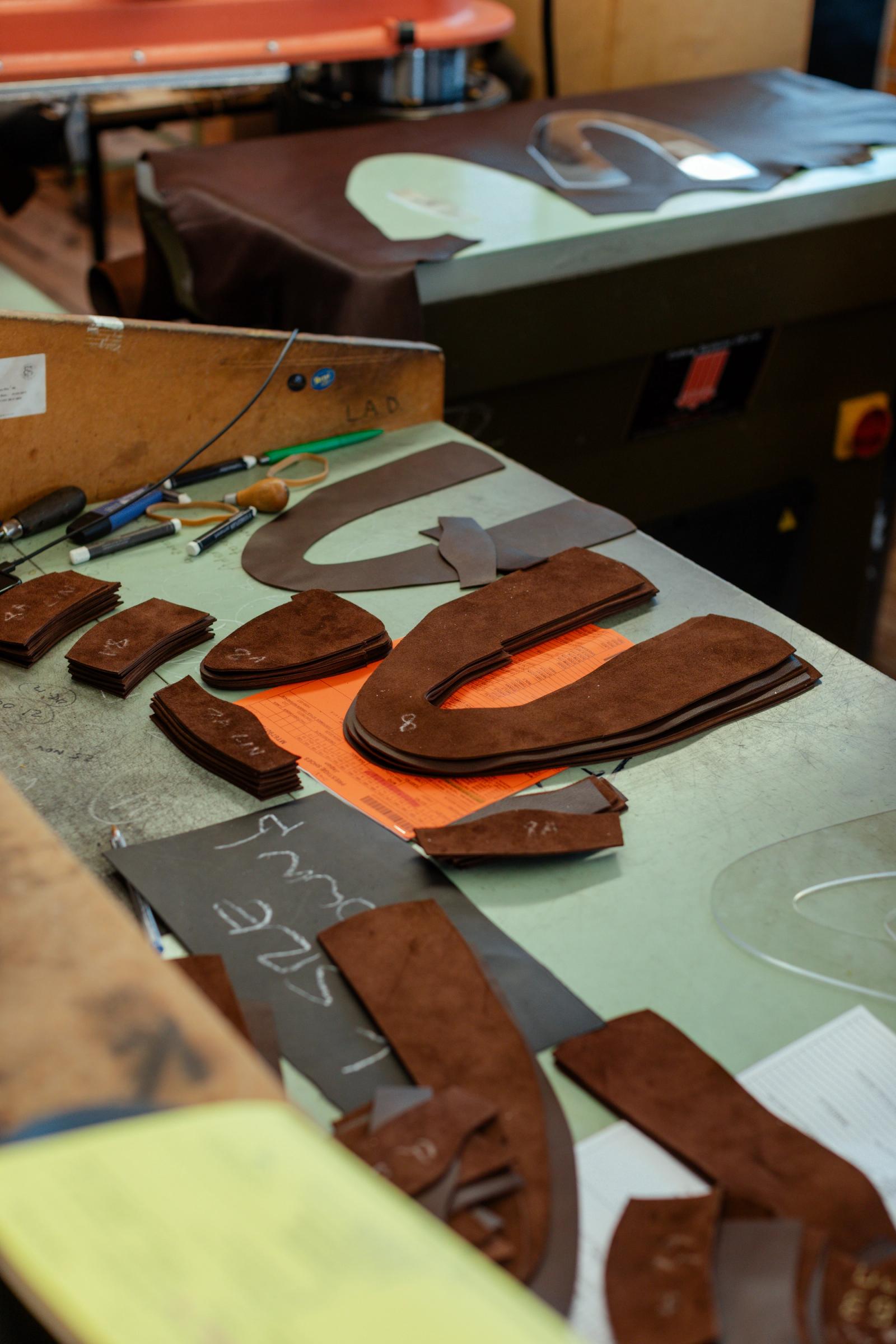
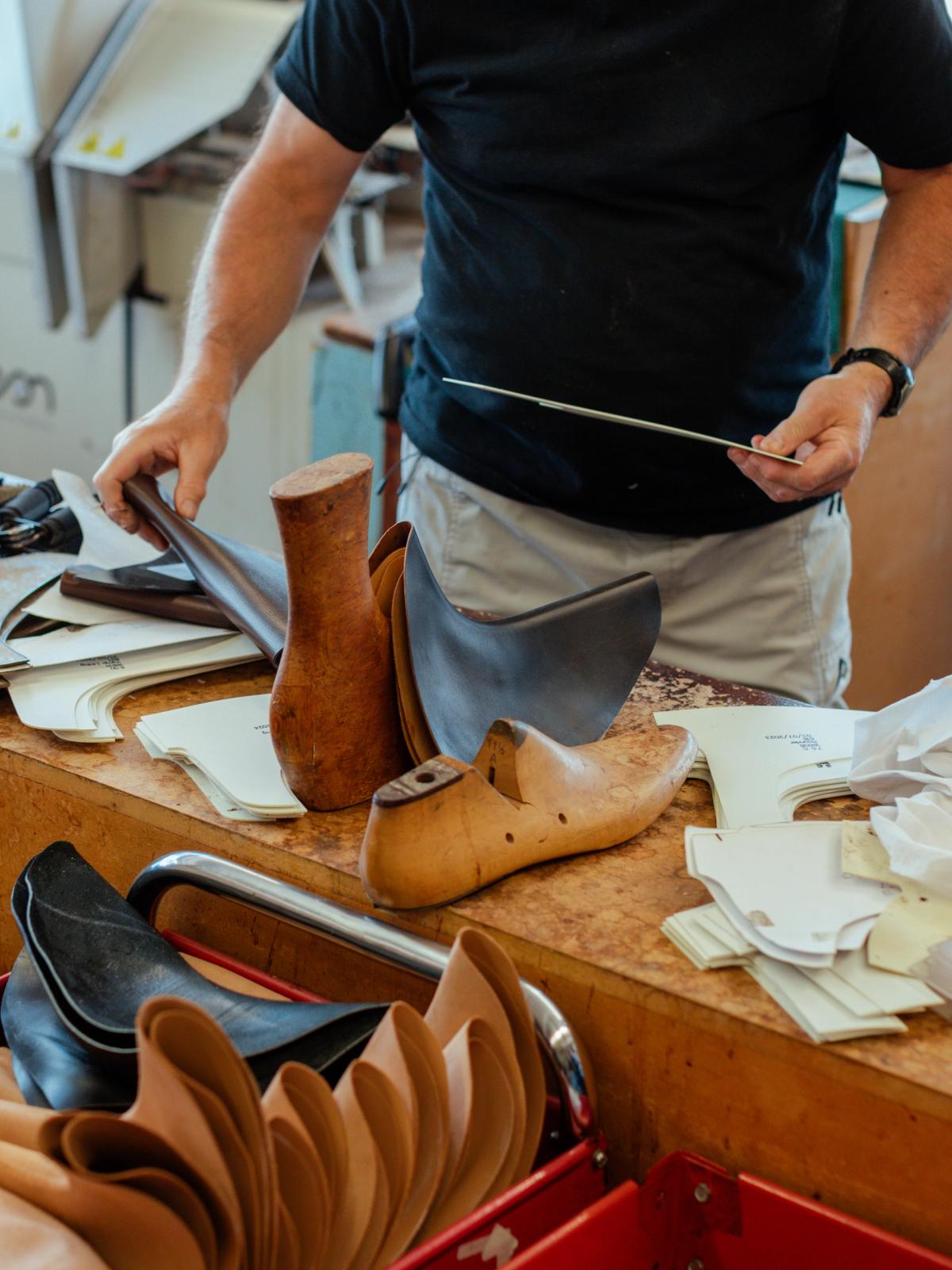
We began in the clicking room, where skilled cutters select and cut leather by eye and by hand, working around natural marks and flaws in each hide. It is slow, thoughtful work. A single wasteful cut cannot be undone.

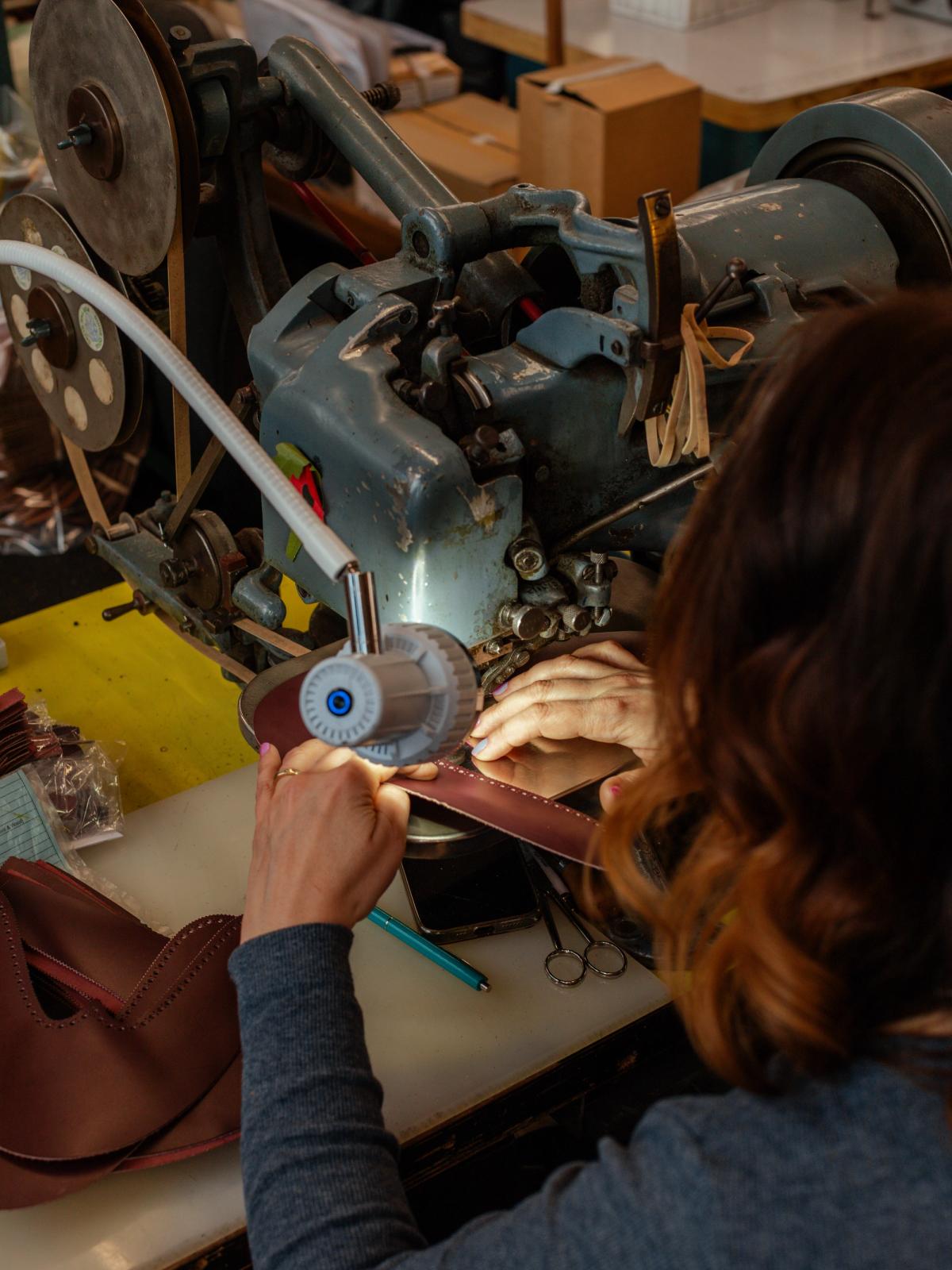
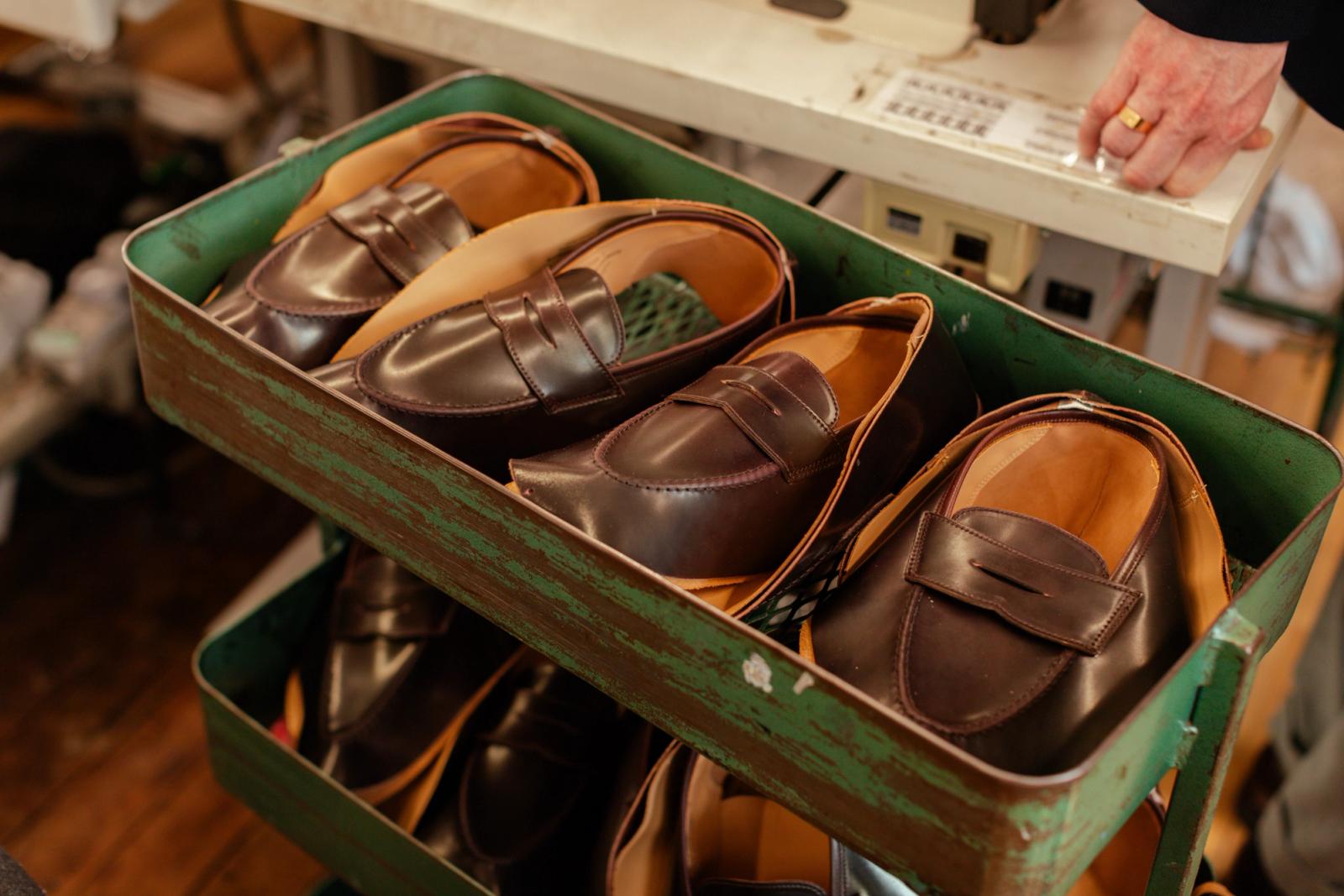
From there, the leather moves to the closing room, where the pieces of the upper are stitched together. Brogue patterns are punched and perforated; linings are added. Then we reached the part I had most wanted to see: the making of the shoe itself.

Goodyear Welting, Explained

Crockett & Jones is best known for Goodyear-welted construction, a method developed in the nineteenth century and named after the Goodyear family, whose machinery made it practical on a larger scale. Here is how it works in simple terms:

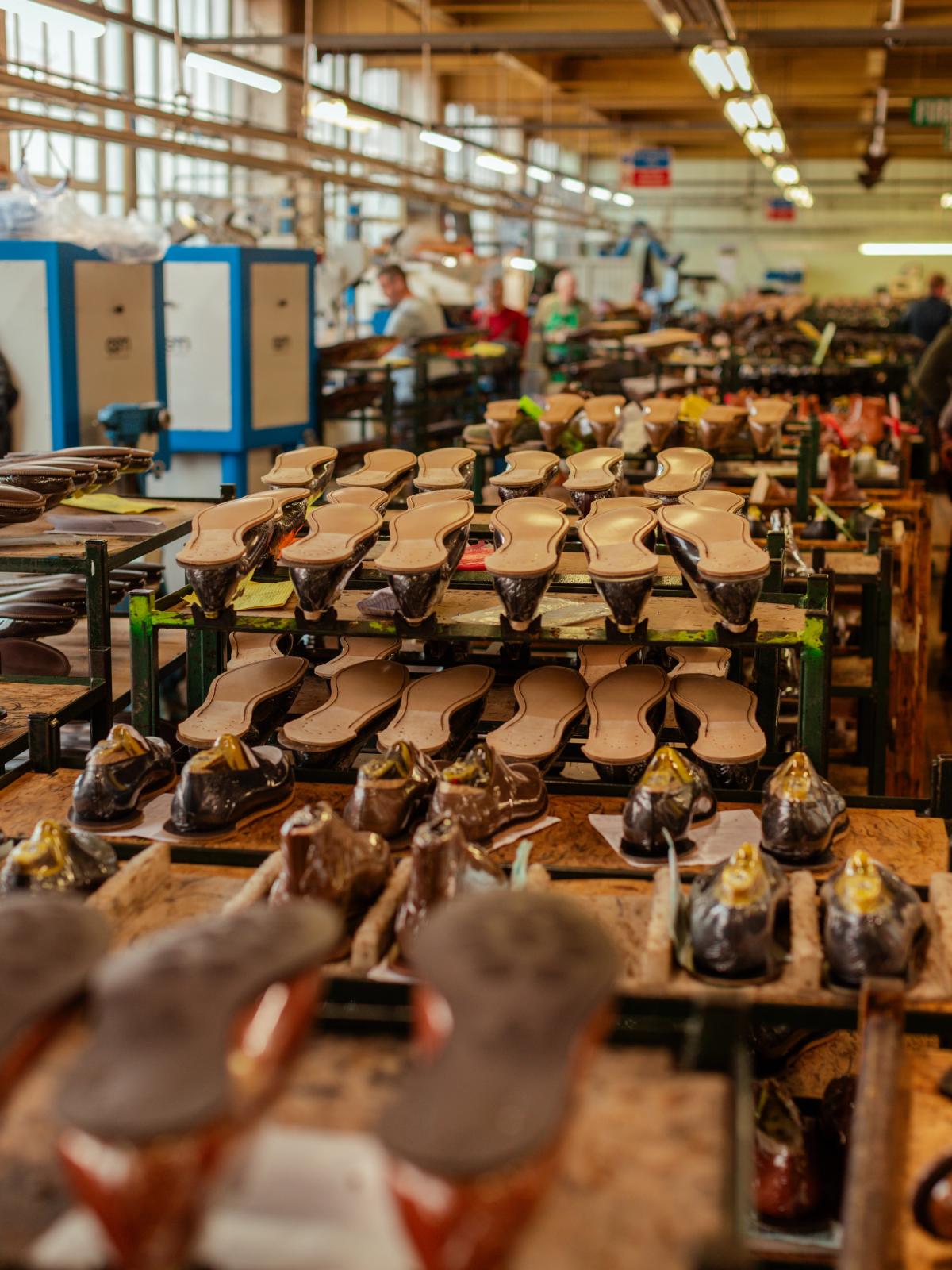
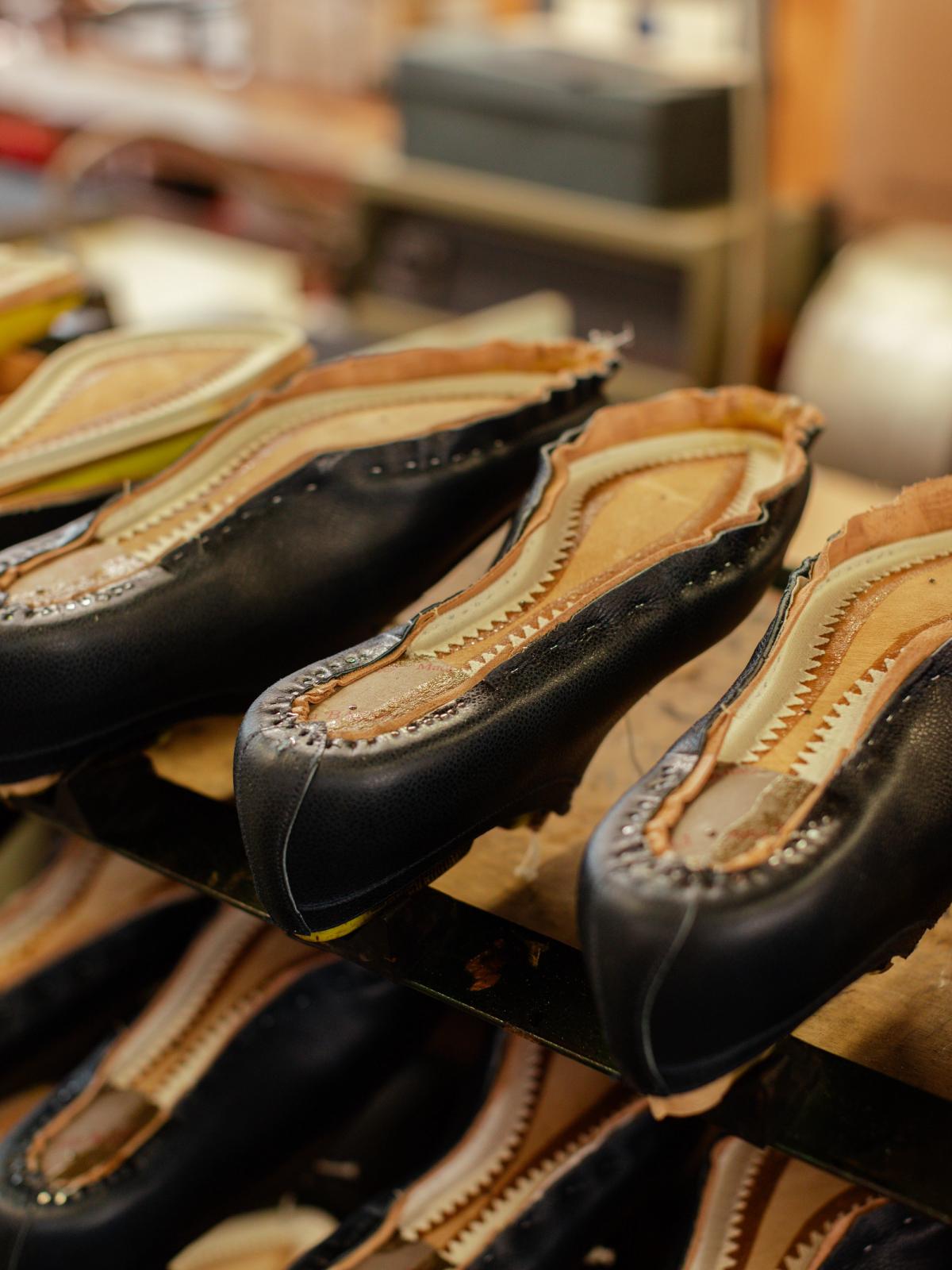
  1. Lasting. The upper is pulled tightly over a wooden last, a form that gives the shoe its shape, and attached to an insole that carries a thin rib.
  2. Welting. A strip of leather, the welt, is stitched through the upper, lining and rib around the edge of the shoe.
  3. Filling. The cavity beneath the insole is filled with cork, which gradually moulds to the wearer's foot.
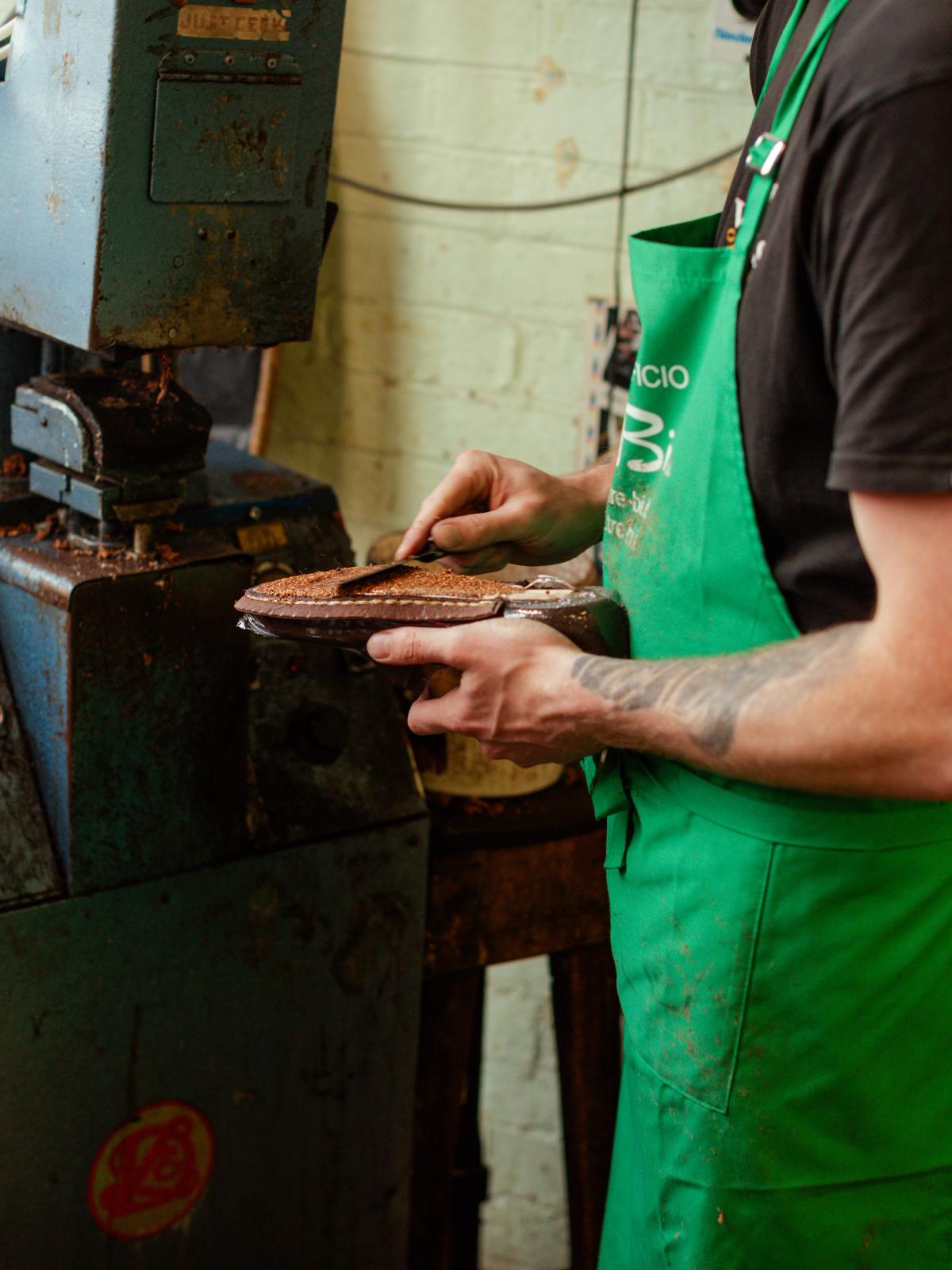
  4. Outsole. The outsole is then stitched to the welt, not to the upper itself.

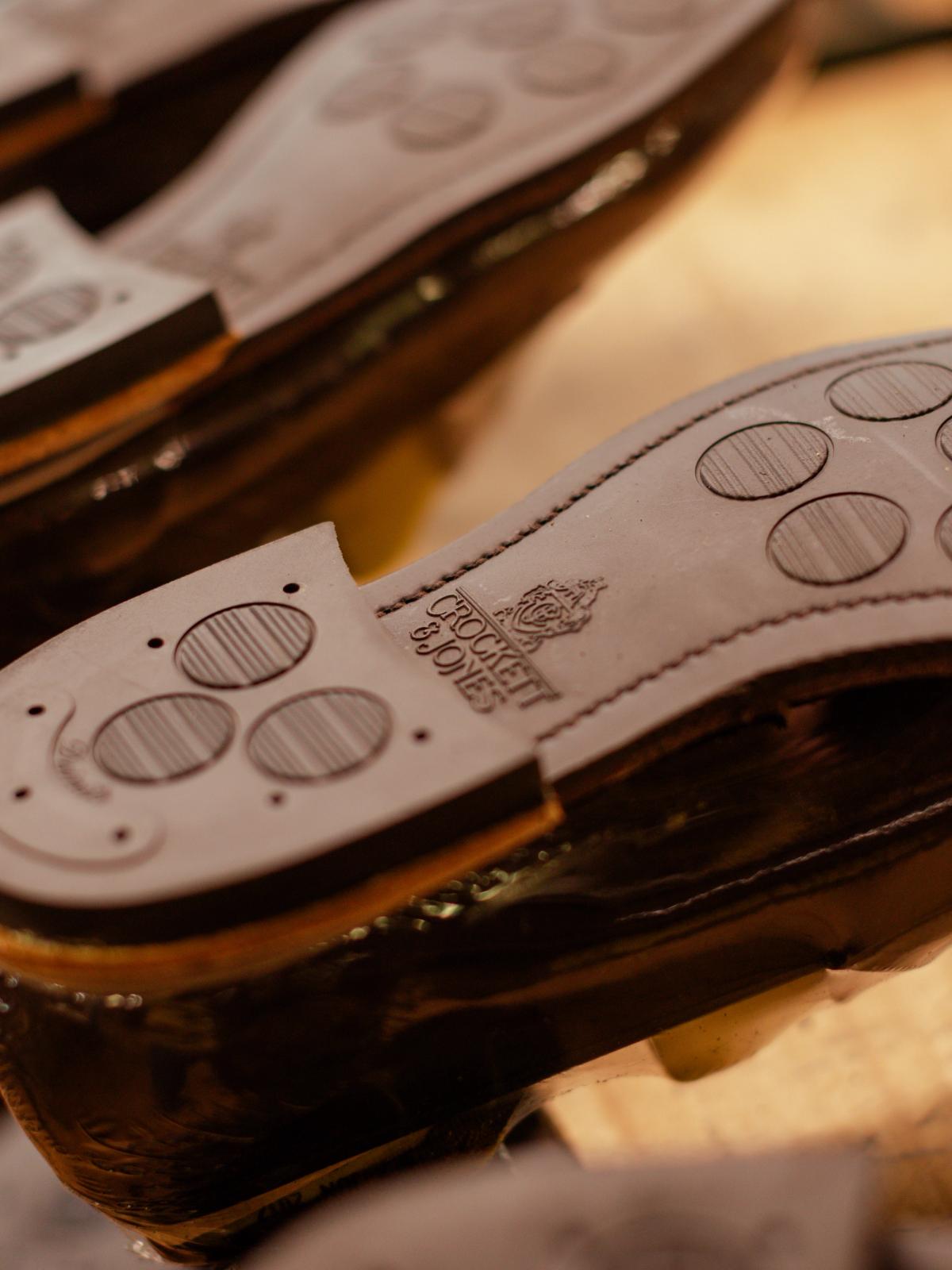
That last step is the secret. Because the outsole is stitched to the welt rather than through the upper, a worn sole can be replaced again and again without taking the shoe apart. A well-made pair can be resoled several times over many years.

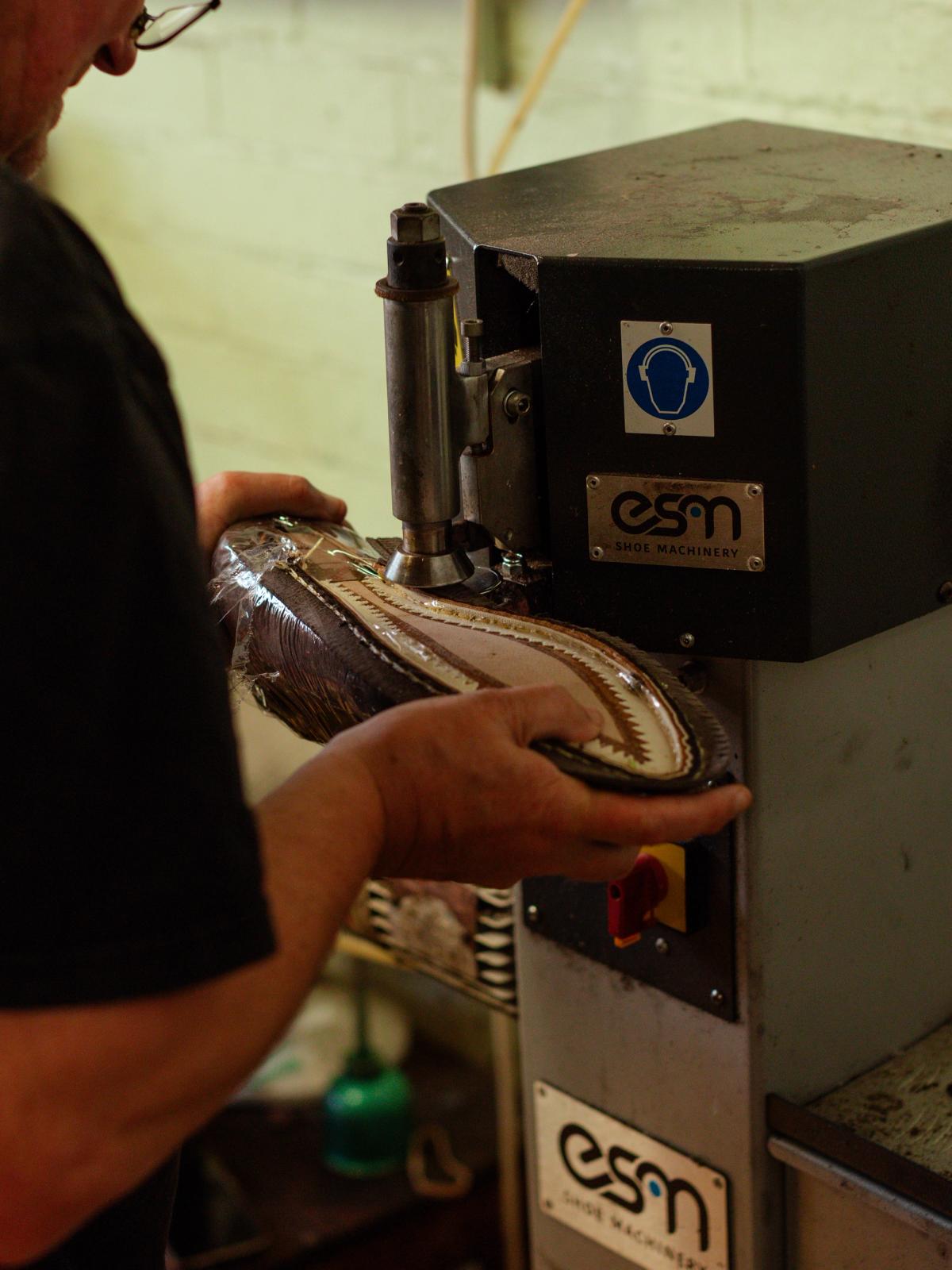
"People ask us why it takes so long," our guide told us, watching a welting machine at work. "The answer is that the shoe is meant to outlive the first owner's patience."

The finest shoes are made in the firm's Hand Grade range, which receives additional hand finishing across a very large number of individual operations, and takes weeks to complete rather than days.

The Collection: Classics and Bestsellers

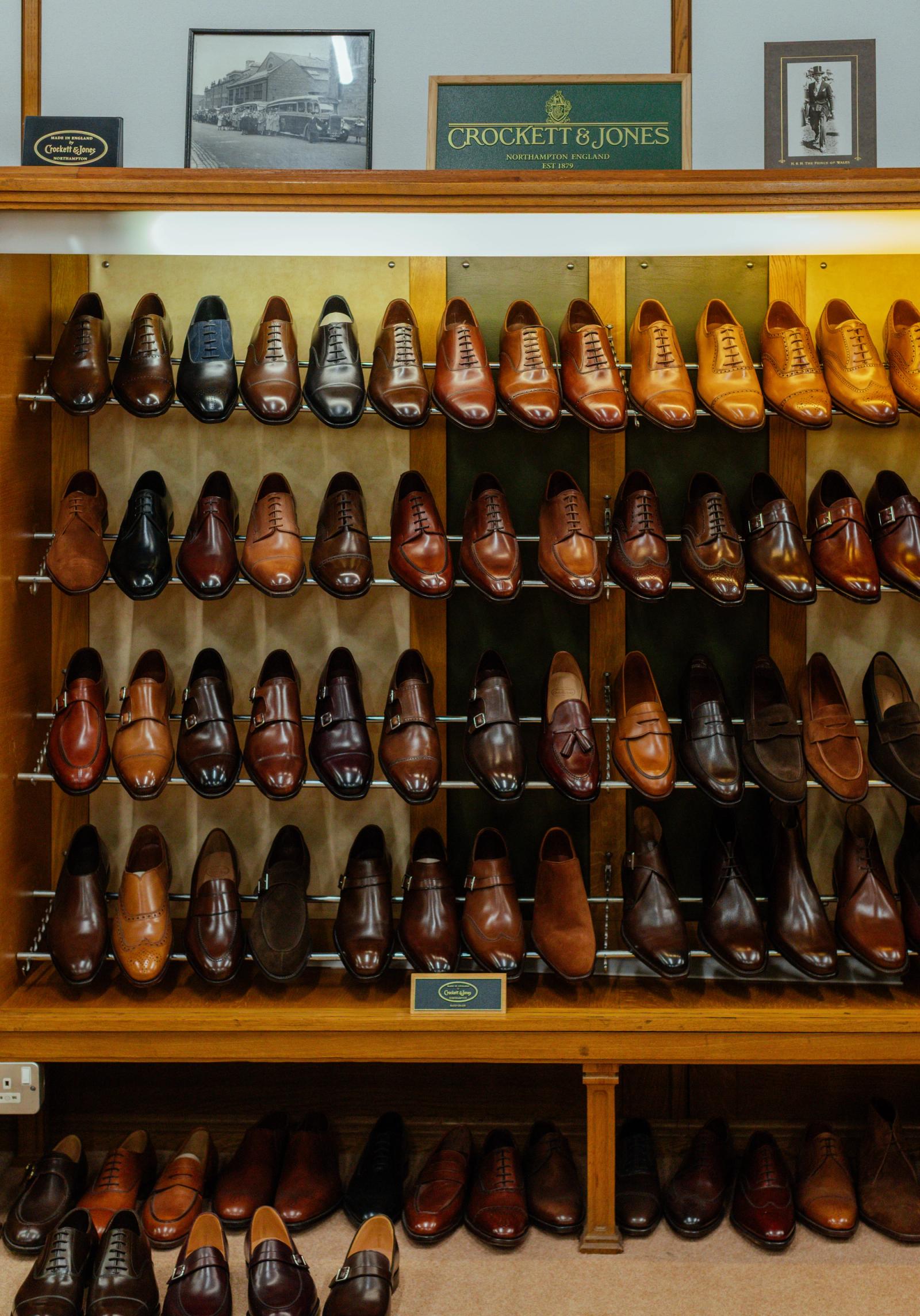
In the showroom upstairs, the shelves told the story of the brand in leather and rubber. There are traditional oxfords and derbies, brogues, loafers, monk straps and a range of boots, offered in calf, suede and other leathers.

The Connaught, a cap-toe oxford, is often named among the brand's signature shoes, and is widely regarded as a smart, versatile classic. The Chiltern, a refined Chukka boot, is another long-standing favourite, as is the Boston, a classic penny loafer with a more relaxed, rounded last. Alongside them sit the Hand Grade shoes, the most labour-intensive range, and a Main Collection that makes the house style accessible to more people.

Heritage does not mean standing still. In recent seasons, the design team has been developing lighter, more casual styles to suit modern wardrobes, including sneaker-inspired shoes built with the same attention to materials, and new colours and leathers that bring a fresh look to old shapes.

The brand has also further developed its classics by adding different soles, such as the Vibram Vi-Lite, in order to expand the areas where the shoes can be used.

Leaving Northampton

By late afternoon, we stepped back onto the street, and I found myself looking at Northampton differently. When Charles Jones and James Crockett opened their doors in 1879, this was a boomtown of the railway age, its streets crowded with workshops, leather merchants and last makers, and its boots marching off to the army. The twentieth century was harder. Cheaper overseas production thinned the industry out, and many of the old factories closed or were turned into flats, offices and studios.

The town reinvented itself rather than faded. From the late 1960s, Northampton was expanded as a new town, drawing in new housing, new employers and a much larger population. More recently, the University of Northampton moved to its Waterside campus beside the river, and the town centre has been working to find new uses for its Victorian brick. Northampton Town FC, nicknamed the Cobblers, still carries the trade in its name.

The shoes survived too, in smaller numbers and at a higher level of craft. Today the town is known for premium, long-lasting English footwear, made by a handful of makers who have kept the skills alive.

A man in a navy double-breasted blazer, tie and grey trousers standing with his arms crossed

Frequently Asked Questions

Where is Crockett & Jones based?
The company is based in Northampton, England, where it has been making shoes since 1879.

What is Goodyear welting?
It is a construction method in which the upper is stitched to a welt, and the sole is then stitched to the welt. It makes shoes durable, water-resistant and easy to resole.

Are Crockett & Jones shoes worth the price?
Many wearers think so. The combination of quality materials, careful construction and the ability to resole shoes spreads the cost over many years of use.

How long do the shoes last?
With proper care, including shoe trees, regular polishing and timely resoling, a pair can last for many years, often a decade or more.

What are Crockett & Jones' most popular models? The Connaught, Chiltern and Boston are frequently cited as signature styles, along with the Hand Grade range for those who want the highest level of finish.

How should I care for my shoes?
Use cedar shoe trees, rest shoes between wears, clean and condition the leather regularly, and have worn soles replaced by a skilled cobbler or the maker.

Tags:Premium Footwear, Northampton, Crockett & Jones, Made in England

Related Articles

A Weekend in Abruzzo: Visiting Maglificio Gran Sasso

Factory Visits · July 31, 2026 · Christopher Gustafsson
Come with us to the beautiful Abruzzo region and visit Europe's largest knitwear company, Maglificio Gran Sasso. See inside the factory and learn more about the craftsmanship behind the brand.
Read More

A Day in Parma: Inside the Workshop that Anderson's Built

Factory Visits · July 26, 2026 · Christopher Gustafsson
Come with us to Parma and visit one of the world's most renowned belt makers, Anderson's. See inside the workshop and learn more about the craftsmanship and heritage behind the brand.
Read More