
Skip to content

Fri frakt på alla ordrar.

Baltzar

11 Outerwear Pieces You Want to Have in Your Wardrobe

Lookbooks · November 4, 2026 · Christopher Gustafsson

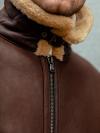
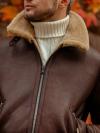
1. Gold Brown Leather Shearling Alim Flight Jacket

Every cold season deserves a statement piece, and the Alim flight jacket from Werner Christ makes the case effortlessly. It is cut from dark brown lambskin and lined with the characteristic golden-brown shearling, then finished with a zip closure and two front pockets. The regular fit and minimal detailing keep the look clean and modern, so the warmth does the talking.

The idea behind it is more than a century old. When aviators took to open cockpits during the First World War, they learned quickly that altitude is brutally cold. Leather, which blocks the wind, became standard flying gear, and sheepskin soon followed, since shearling traps heat in its dense fleece while the hide stays tough on the outside. By the 1930s, air forces had turned the idea into formal uniform. The American B-3 bomber jacket was built for crews in unheated, high-altitude aircraft, while the RAF relied on thick sheepskin flying jackets of its own during the Second World War. Slimmer leather styles such as the A-2, with knit cuffs and waistbands, ran alongside them.

After the war, surplus jackets walked out of the barracks and into civilian life. Pilots, motorcyclists, film stars and musicians all made the silhouette a symbol of adventure and a touch of rebellion. That heritage is why the Alim still feels right today. Wear it open over a knit and a collared shirt, or zip it up against a Nordic gale. Either way, you are carrying a piece of aviation history, softened by modern lambskin and made to last well into the colder winter months.

Shop Now

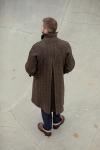
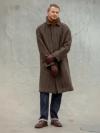
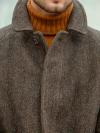
2. Chocolate Herringbone Wool Tweed Kensington Raglan Coat

The Kensington overcoat by Chrysalis stands as a timeless beacon of classic heritage outerwear. It is hand-cut at the brand’s factory in Corby, in the UK, from heavyweight British tweed in shades of brown, green and black, which gives the chocolate herringbone its depth. The shape is a comfortable balmacaan: long, with raglan sleeves and a tall collar that turns up against bad weather. A clean fly front and an inverted back pleat complete the picture. The coat is built to serve you for many years, and the brand suggests sizing up for its classic, generous fit.

The raglan sleeve has a story as colorful as the coat itself. It is named after FitzRoy Somerset, 1st Baron Raglan, the British commander in the Crimean War of the 1850s. Having lost his right arm at Waterloo decades earlier, he is said to have favored a sleeve that ran in one piece from collar to underarm, with no shoulder seam to restrict movement. Whether or not the tale is entirely true, the design caught on. With no set-in shoulder, the sleeve gives freedom of movement and slips easily over a jacket.


Raglan coats became a staple of British wardrobes, and the balmacaan, named after an estate near Inverness in Scotland, married the sleeve to rugged wool for the damp Highland climate. Chrysalis keeps that lineage intact. In heavy tweed, the Kensington is equally at home on a city commute or a windswept country walk, proof that a coat can be unfussy and unmistakably distinguished at the same time.

Shop Now

3. Navy Blue Wool Genova Long Peacoat

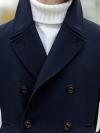
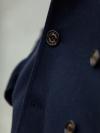
From the classic Italian brand Sealup comes the Genova, a long peacoat in navy, made from pure wool. It is double-breasted with a six-button closure, wide lapels and buttoned cuffs, and the interior is lined in black with gold piping. It works with almost everything: denim, formal trousers, chinos, you name it. Sealup’s label proudly reads Milano 1935, and it brings Italian polish to a coat with a distinctly salty past.

The peacoat was first worn by sailors in the European navies, with roots reaching back to the early sixteenth century. The name is often linked to the Dutch word “pijjekker”, a jacket made of coarse wool cloth. Everything about the design was practical at sea. The dense, tightly woven wool shrugged off wind and spray, the double-breasted front could traditionally be fastened on either side to face the weather, the wide lapels turned up to protect the neck, and the deep pockets sheltered cold hands.

The Royal Navy and the United States Navy both adopted versions, and after the Second World War surplus peacoats were sold off and found a second life with students, artists and city commuters. The traditional version was short, because a long hem gets in the way on deck. The Genova stretches the length towards an overcoat, which suits city streets far better than rigging. After five centuries, the formula needs very little fixing: navy wool, sturdy buttons and a shape that flatters nearly everyone. It is a true classic with a great heritage, and it will still look right in twenty years.

Shop Now

4. Army Green Cotton Denim WWII Type 1 Jacket

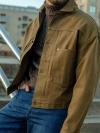
The ST117 WWII Type 1 Jacket from Standardtypes revives a 1940s military classic with a modern touch. It is woven in 100% cotton denim herringbone, a heavyweight and durable fabric, and finished with copper rivets and YKK buttons, true to its 1940s design heritage. A single large pocket and flat-felled seams round out the construction, while a drop-shoulder cut and a boxy, slightly cropped silhouette give it an oversized fit rooted in rugged authenticity. The army green shade and the cinch-back strap at the waist leave no doubt about its wartime inspiration.

The denim jacket began as workwear. Levi Strauss and Jacob Davis patented riveted work trousers in 1873, and Levi’s followed with its first denim jacket around the turn of the twentieth century, built for miners, railroad workers and ranch hands who needed clothes that could survive punishment. That early design, later known as the Type I, had a single chest pocket, a pleated front and a cinch-back. During the Second World War, material shortages and rationing led makers to strip back details, and herringbone twill, already familiar from American military fatigues, became a common sight in olive tones.

After the war, the jacket crossed into youth culture. Film stars and musicians made denim the uniform of rebellion in the 1950s, and later generations of rockers, punks and designers kept the torch burning. Today the Type I remains the blueprint for every denim jacket that followed. This version trades indigo blue for military green, which layers beautifully over knitwear and under heavier coats.

Shop Now

5. Rust Brown Wool Short Monty Duffle Coat

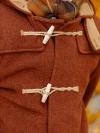
Gloverall presents a new take on its classic Monty duffle coat, here in a shorter, hip-length version in rust brown. It still features the signature wooden toggles and jute rope fastenings, along with two patch pockets and a generous hood. Crafted from an Italian wool-blend cloth, it is warm enough to withstand the colder temperatures of winter. A stitched label inside, with fields for name, rank and serial number, is a playful nod to the coat’s military past.

The duffle coat takes its name from Duffel, a town near Antwerp in Belgium that was known for a thick, coarse woollen cloth. In the late nineteenth century, the English outfitter John Partridge began making coats from it, and the Royal Navy adopted them for use on deck in the cold North Atlantic. The toggles and rope loops were practical, since they could be fastened with gloved or frozen fingers, and the hood was large enough to wear over a hat or helmet. In the Second World War the coat became an icon when Field Marshal Bernard Montgomery was photographed wearing one, earning the style the nickname “Monty”.

When the war ended, huge stocks of surplus duffle coats were sold off. Harold Morris bought up military stock and founded Gloverall in 1951, turning the coat into a civilian staple. Students, intellectuals and even a certain bear from Peru made it a beloved part of British life. The short Monty takes that heritage and trims it to fit modern life: less coat to trip over, all the character intact.

Shop Now

6. Camel Beige Loro Piana Rain System Wool Jacket

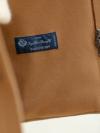
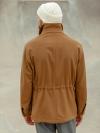
Baltzar Sartorial introduces the City jacket, a modern take on the traditional field jacket, made to be worn in the city and beyond. In camel beige, it comes in a regular fit with a combined zip-and-button closure, two generous outside pockets and a drawstring waist that lets you shape the silhouette. The real star, though, is the cloth: pure wool from Loro Piana, treated with the Rain System to withstand both rain and dirt.

Loro Piana is an Italian house with almost a century of expertise in wool and cashmere, and since 2013 it has been majority-owned by LVMH. Rain System is its water-repellent treatment, which can be applied to all of its fabrics. It works at fibre level, invisibly coating each individual fibre so that water beads up, while dust, dirt and water-based stains sit on the surface and can be wiped away instead of soaking in. Crucially, it preserves the look, softness and drape of the cloth, so a treated jacket never feels like technical outerwear. The newer generation of the treatment is also free of PFCs. It is the foundation of Loro Piana’s more extreme Storm System, which adds a breathable membrane for wind resistance.

For a jacket like this, that means the best of two worlds: the refined hand of fine wool and the practicality of a shell. A sudden drizzle, a muddy path or a coffee mishap simply does not stick. It is classic field-jacket utility, quietly upgraded with textile science.

Shop Now

7. Green Nylon Down Padded Ice Storm Car Coat

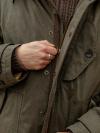
Ten C’s Ice Storm Car Coat is built to withstand the worst of the outdoors. Its outer layer is made from a patented blend of polyester and polyamide, boiled and waxed to produce a tough fabric meant to last a lifetime. A down-padded inner liner adds extra warmth, while a combined button-and-zip closure and several practical pockets handle the details. In olive green, with a high neck and a button storm flap, it looks as serious as it feels.

Waxing cloth to make it weatherproof is one of the oldest tricks in outerwear. Sailors and fishermen once treated heavy canvas with fish oil or linseed oil to keep out spray and rain, producing stiff, smelly but effective oilskins. In 1894, John Barbour began selling oilskin clothing in South Shields, England, to mariners facing the North Sea. Later, wax-based dressings improved on the sticky oils, and waxed cotton jackets became the uniform of farmers, motorcyclists and the British countryside. Brands such as Barbour and Belstaff became synonymous with the genre, and the look, creased, patinated and gradually personalised, became a badge of lived-in durability.

The car coat arrived in the early twentieth century, when draughty motor cars led drivers to ask for something shorter than an overcoat that would not tangle with the pedals. Ten C combines both traditions, wrapping the waxed-cloth philosophy in a contemporary technical shape. The boiling gives the fabric a dense, slightly crisp hand, and the wax gives it staying power. Underneath sits a down liner for the deepest cold. It is the waxed coat grown up for a modern winter.

Shop Now

8. Grey Wool Tweed Herringbone Labura Jacket

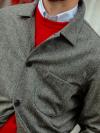
The Labura Shacket by Portuguese Flannel is a perfect blend of a classic chore coat and a contemporary overshirt. It is made from pure wool tweed in a salt-and-pepper herringbone, with corozo buttons, three outer patch pockets and one inside pocket. The interior is unlined, which keeps it light and easy to layer. One practical note: it runs small, so size up if you want a regular fit.

The chore coat has its roots in nineteenth-century Europe, and in France in particular, where workers wore loose, boxy blue cotton jackets known as bleu de travail on farms, in factories and on the railways. The jacket was cut for movement, with big patch pockets for tools and cheap, sturdy cloth that could take dirt and be washed again and again. Across the Atlantic, American workwear makers such as Carhartt, founded in 1889, developed their own versions in duck canvas and denim, often called barn coats. The pattern stayed remarkably consistent: a straight body, no-nonsense buttons and pockets exactly where you need them.

In the twentieth century, artists, craftspeople and eventually fashion designers adopted the work jacket as a symbol of honest simplicity. Portuguese Flannel’s take swaps utilitarian cotton for refined wool tweed. The result sits somewhere between jacket and shirt, which is how the word “shacket” was born. Wear it over a tee in early autumn, on top of a knit in November, or beneath a heavier overcoat when the frost arrives. It is humble work clothing, promoted to the wardrobe.

Shop Now

9. Navy Blue Water Repellent Pure Cashmere Gilet

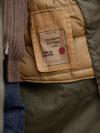
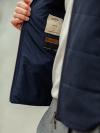
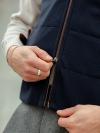
Maurizio Baldassari’s navy gilet blends two luxuries: a pure cashmere outer and a lightly padded interior. Elastic side panels let it slide over a blazer or knitwear without feeling restrictive, and the cashmere construction stays lightweight and water-repellent, offering three times the insulation of wool according to the brand. A ribbed collar and hem and a brown zip pull keep the look polished yet relaxed, and the labels inside confirm it was made in Italy. They also name the padding: Thermore.

Thermore is an Italian insulation specialist, founded in Milan in 1972 by Lucio Siniscalchi, and it has been supplying padding to outerwear brands ever since. Its material is a synthetic, built from ultra-fine polyester fibres and designed as an alternative to goose down. Unlike down, synthetic insulation keeps working when damp, dries quickly and does not migrate through seams, and it is easy to care for. Thermore was also among the first in the industry to make insulation from recycled PET bottles, starting in the 1980s, and in 2019 it launched Ecodown, made entirely from post-consumer plastic bottles. More recently it has focused on slim insulation such as Invisiloft, which is designed to deliver high warmth with minimal thickness.

That makes it ideal for a gilet, where bulk is the enemy. Thin padding keeps your core warm without adding volume under a coat or disturbing the line of a jacket, while the cashmere surface supplies the luxury. It is a smart layering piece for the colder months ahead: over a fine knit, under a tweed overcoat, or simply on its own in crisp morning air.

Shop Now

10. Black Nylon Parka with Detachable Vest

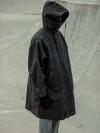
Inspired by the ECWCS, the US military’s modular cold-weather clothing system, the ECW Parka from Standardtypes offers adaptable protection for all conditions. It is a 2-in-1 design that comes with an attachable liner vest for extra insulation. The shell is water repellent and windproof, and the oversized fit ensures comfort, mobility and durability. With a hood, button front, drawstring collar and flap pockets, it is a reliable companion whether you face a mild autumn day or the depths of winter. Clip the vest in when it turns cold, take it out when it doesn’t.

The word “parka” travels from the Arctic. It reached English via Russian from the Nenets language of northern Siberia, and it describes the hooded garments that Arctic peoples, including the Inuit, made from caribou and seal skin, with deep hoods to shield the face from freezing wind. Explorers and whalers carried the design south, and in the twentieth century militaries adapted it. The US Air Force developed the N-3B in the 1950s for crews in sub-zero conditions, and the M-51 “fishtail” parka followed during the Korean War. That fishtail later became an emblem of British mod culture in the 1960s, worn over suits on scooters.

ECWCS applied a modular logic: instead of one enormous coat, soldiers layered lighter pieces as the weather demanded. The Standardtypes parka follows that thinking within a single garment. Nylon, long favoured in military outerwear for its strength and low weight, handles wind and weather, while the quilted vest adds warmth when you need it and comes out when you don’t.

Shop Now

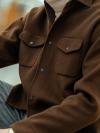
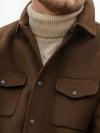
11. Dark Brown Wool Camicia 13 Dub Overshirt

Aspesi’s dark brown overshirt is crafted from a two-faced, incredibly soft pure wool fabric. It keeps the details of a shirt, with single cuffs, a shirt collar and a snap button closure, in a regular fit with two chest pockets. The double-faced wool adds great character and warmth, which makes it a perfect outerwear piece for the transitional period between autumn and winter, when a coat is too much and a shirt is too little.

The overshirt is a descendant of the working man’s wool shirt. In the nineteenth century, lumberjacks, miners and mill workers in North America and Europe wore heavy wool shirts as outer layers, because wool keeps insulating even when damp. Armies issued wool field shirts for the same reason. By the mid-twentieth century the style had drifted into casual wear as the plaid shirt-jacket, and later designers began reworking it into a refined staple that could be worn indoors and out.

Aspesi belongs to that Italian tradition of elegant utility. Founded in Milan in 1969 by Alberto Aspesi, the label built its name on understated outerwear with a technical sensibility and a distinctly Italian restraint. The Camicia 13 Dub shows why. Double-faced wool means two layers of cloth joined into one, which gives a soft hand on both sides and a clean finish without needing a lining. Wear it buttoned like a shirt, open over a tee or knit, or under a coat as a late-season layer. It is easy, relaxed and feels lived-in from day one.

Shop Now

Style Inspiration

Discover our curated collection of seasonal outerwear.

Browse the collection
Tags:Menswear, Style Guide, Lookbook, Outerwear

Related Articles

Autumn Textures: A Study in Color & Fabric

Lookbooks · October 18, 2026 · Christopher Gustafsson
There is a moment each year, usually in late September, when the light turns lower and more golden, and a man’s wardrobe seems to ask for something different. The crisp whites and pale blues of summer lose their appeal. What the season calls for is depth, warmth and texture, and above all a palette borrowed from the landscape itself: the rust of fallen beech leaves, the ochre of stubble fields, the deep green of moss and the brown of turned soil.
Read More