
Skip to content

Förlängd retur- och bytesrätt till 7 januari 2027.

Baltzar

Incotex: The Quiet Craft of the Perfect Trouser

Brand Stories · October 25, 2026 · Christopher Gustafsson

Origins: From Uniforms to Understatement

In the Veneto, the flat, industrious stretch of northern Italy around Venice, many successful brands began as small workshops doing one thing very well. Incotex is among the most admired of them. Its story starts in 1951, in the province of Venice, where a small production company began making work trousers for important Italian firms and uniforms for foreign armies.

The name Incotex is generally given as an abbreviation of Industrie Confezioni Tessili. The founder was Carlo Compagno, who set up the factory to specialise in trousers. His early business was practical and unglamorous, built on volume, reliability and precise cutting. Making uniforms and workwear for demanding clients taught the company habits it would never lose: durable fabrics, consistent patterns and clean construction.

From the 1960s, the founders’ entrepreneurial drive pushed the company toward a wider market and the end customer, and helped spread the “smart casual” style for which Incotex would become a reference point. That shift mattered. Men were moving away from rigid suiting but still wanted to look put-together. Incotex offered trousers that were relaxed enough for weekends and refined enough for the office.
Fabio Peroni, founder of Montecore

Craftsmanship: Sixty Hands, One Pair of Trousers

Trousers are harder to make well than they look. The fit has to work in motion, sitting, standing and walking, and the details can’t announce themselves. Incotex’s approach is a quiet obsession with the process. According to Slowear, a single pair involves more than 60 specialised machinists, tailors and treatment experts.

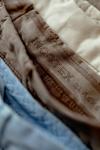
The work starts with fabric. Compagno explained that the company collaborates directly with fabric mills, and each product has its own specification, which allows a wider range of fabrics and finishing treatments than most competitors offer. That is why Incotex is known for technical cottons, wools, linens and blends, along with garment treatments that give cloth a soft, lived-in hand without sacrificing structure.

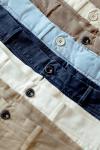
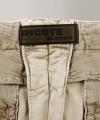
A small detail often noted by observers is the V-shaped split at the back of the waistband, which lets the trouser sit smoothly on the body. It’s a sartorial touch on a garment that is often worn casually.

Incotex

Founded in 1951 near Venice by Carlo Compagno, Incotex began by making work trousers and uniforms, and has today grown into an internationally recognized concept for refined, understated menswear.

Browse the collection

The Best Trousers in the World

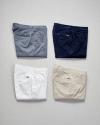
Incotex is best known for trousers, especially its refined chino and dress-casual pants. It is often described as making “the best trousers in the world.” That is marketing language, but the reputation behind it is real and backed up by its premium craftsmanship and meticulous focus on details.

Several qualities explain the standing:

  • Fit: a range of silhouettes that flatter without being trend-driven.
  • Fabric innovation: inventive textiles and treatments, often developed with mills.
  • Versatility: trousers that move between tailoring and casualwear.
  • Discretion: no loud logos, because the quality should show in how the garment hangs and ages.

The Slowear Connection

Incotex is the founding brand of Slowear, which is a company, not a rival label. Roberto Compagno launched the Slowear project in 2003, when Incotex acquired three specialist brands: Zanone for knitwear, Montedoro for jackets and urban macs, and Glanshirt for shirts. Each had long been part of the Compagno family’s own wardrobe, and together they form a complete menswear offering.

The name states the philosophy. Slowear borrows from “slow” movements in food and design and applies it to clothing: buy fewer, better things, made with care, designed to last years rather than seasons. Slowear presents this as a philosophy applicable to both life and purchasing.

Frequently Asked Questions

What does Incotex stand for?
It is generally given as Industrie Confezioni Tessili, a reference to the company’s origins in clothing manufacturing.

When and where was Incotex founded?
In 1951, in the province of Venice, Italy. Carlo Compagno was the founder.

What is Incotex best known for?
Premium men’s trousers, especially chinos and dress-casual styles, known for fit, fabric quality and fine construction.

Is Incotex the same as Slowear?
No. Incotex is a brand, and Slowear is the group that owns it. Slowear also includes Montedoro, Zanone and Glanshirt.

Who runs the company today?
Piero Braga became CEO in 2023, after founder Carlo Compagno’s son Roberto, who led the company for decades, died in 2021.

Tags:Incotex, Slowear, Trousers, Italy

Related Articles

Albert Thurston: Two Centuries Holding Things Up

Brand Stories · November 11, 2026 · Christopher Gustafsson
Since 1820, Albert Thurston has made braces for kings, presidents and Wall Street. This story traces the brand’s London beginnings, the hand-finished craft behind each pair, its core collection and limited editions, and why a two-century-old English maker still holds its place in modern menswear.
Read More

Kamakura Shirts: A Japanese Shirtmaker with Ivy League Roots

Brand Stories · November 2, 2026 · Christopher Gustafsson
In 1993, a family opened a small shirt shop above a convenience store in Kamakura. Three decades later, Kamakura Shirts is known worldwide for Ivy-style button-downs made in Japan with fine yarns, 21-stitch seams and shell buttons. This is the story of the brand’s heritage, craft, collection and future.
Read More

Filippo De Laurentiis: Italian Knitwear Built on a Family Loom

Brand Stories · October 29, 2026 · Christopher Gustafsson
Filippo De Laurentiis grew out of a family knitwear tradition in Italy’s Abruzzo region. This story traces the brand’s roots, its knitting craft and its choice of fibres, from merino and cashmere to cotton and linen. It also covers its core staples and where the label is heading after a major investment.
Read More