Skip to content

All taxes & duties included in the price.

Baltzar

Menswear Style Icons: Cary Grant

Editorials · June 27, 2026 · Christopher Gustafsson

Cary Grant in a suit leaning against a white wall

The Man Who Invented the Modern Suit

Ask any tailor or costume designer to name the single most influential man in the history of the business suit, and a vast majority of them will say the same name: Cary Grant. Not a designer. Not a monarch. An actor who, by most tellings, spent decades quietly rejecting the more extravagant version of himself in favour of a plainer one — and in doing so built the template that men's tailoring still measures itself against.

A man in a light jacket and cream trousers walking along a palm-lined street

From Archie Leach to Cary Grant

Cary Grant wasn't born Cary Grant. He was born Archibald Alexander Leach in 1904 in Bristol, England, into a working-class family marked by real instability — his mother was committed to a mental institution when he was a child, and he was told, falsely, that she had died; he wouldn't learn the truth for decades. At sixteen he left school to join a troupe of acrobats and stilt-walkers, touring music halls and eventually the United States. That background in vaudeville and physical comedy — timing, movement, control of the body in space — turns out to matter for the story of his clothes, because so much of what people praise in his style is really about how he moved inside it.

He arrived in Hollywood in the early 1930s, changed his name, and spent the next three decades becoming one of the defining leading men of American cinema: Bringing Up Baby, The Philadelphia Story, Notorious, To Catch a Thief, North by Northwest. Unusually for a star of his stature, he never signed an exclusive studio contract, which let him control his own image, choose his own directors, and — not incidentally — have real input into his own wardrobe, on screen and off. He was married five times, was famously private about his personal life, and in his later years became something of a recluse from the machinery of stardom he'd helped build. But across all of that, the wardrobe barely wavered. It's one of the most consistent things about him.

Cary Grant in a light shirt and trousers against a studio backdrop
Cary Grant in a denim shirt with his arms crossed
Cary Grant in a suit boarding a plane, carrying a leather duffle bag
Cary Grant in a grey suit on a film set, beside a director's chair marked Hitchcock

The Suit as a Discipline, Not a Display

Grant's reputation rests overwhelmingly on tailoring, and the details of how he approached it explain why. He favoured British tailoring houses — Kilgour on Savile Row among them, alongside Dunhill — and had suits cut with unusually long jacket vents, a practical fix that gave him more freedom of movement for an actor who'd trained as an acrobat, while also lengthening his silhouette. The trousers sat high on the waist and broke cleanly over the shoe. The shoulder was structured but not exaggerated. Nothing about the cut called attention to itself; it simply made the wearer look inevitable in it.

What separates Grant from a simple "well-dressed movie star" story is how deliberately unglamorous some of his choices actually were. He was known to send his shirts back to the tailor to have worn collars and cuffs replaced rather than buy new ones — not because he couldn't afford new shirts, but because he valued a garment that had been made properly enough to be worth repairing. He was just as happy in high-quality ready-to-wear as in bespoke, so long as the fit was exact; by his own account, and by the account of nearly everyone who has written about his style since, fit mattered to him more than provenance. A cheaper suit that fit perfectly beat an expensive one that didn't. That's a genuinely unglamorous piece of advice for a man whose job was glamour, and it's the piece of advice that's proven most durable.

Off the clock, the same logic carried over: tailored trousers, lightweight knitwear, a crisp white shirt, sometimes a cotton blazer thrown over the top. Nothing in his casual wardrobe was a departure from his formal one — it was the same vocabulary with the volume turned down. That continuity between his red-carpet self and his day-to-day self is part of what made the whole thing feel authentic rather than performed.

Cary Grant in a black tuxedo and bow tie, seated cross-legged on the floor

Why He's Still the Reference Point

He solved the central problem of the suit: making rigour look relaxed. The suit is, structurally, a constraining garment — precise measurements, matched components, a strict grammar of how things are supposed to fit together. Grant’s genius was in making that rigour invisible, so that the clothing read as an extension of the man’s ease rather than as armour he’d put on.

His silhouette hasn't dated because it was never extreme. He avoided the era's most exaggerated shoulders and widest lapels even when they were fashionable, staying closer to a lean, longer line that reads as contemporary today rather than as a costume. A lot of 1940s and '50s tailoring looks distinctly of its moment when you see it now; a surprising amount of Grant's doesn't.

He proved that fit outranks expense. In an era of logo-driven, price-signalled menswear, Grant's insistence that a correctly fitted, well-made garment matters more than its price tag or its label is arguably more radical now than it was in his own time. It's advice that costs nothing and requires only attention.

The persona and the clothes were inseparable, which made the clothes feel earned. Grant built an on-screen identity — wry, self-possessed, slightly bemused by his own charm — that the clothes reinforced rather than manufactured. Because the wit and the tailoring arrived as a package, the tailoring reads as character rather than costume, which is why people still reach for "a Cary Grant suit" as shorthand for confidence rather than just for cut.

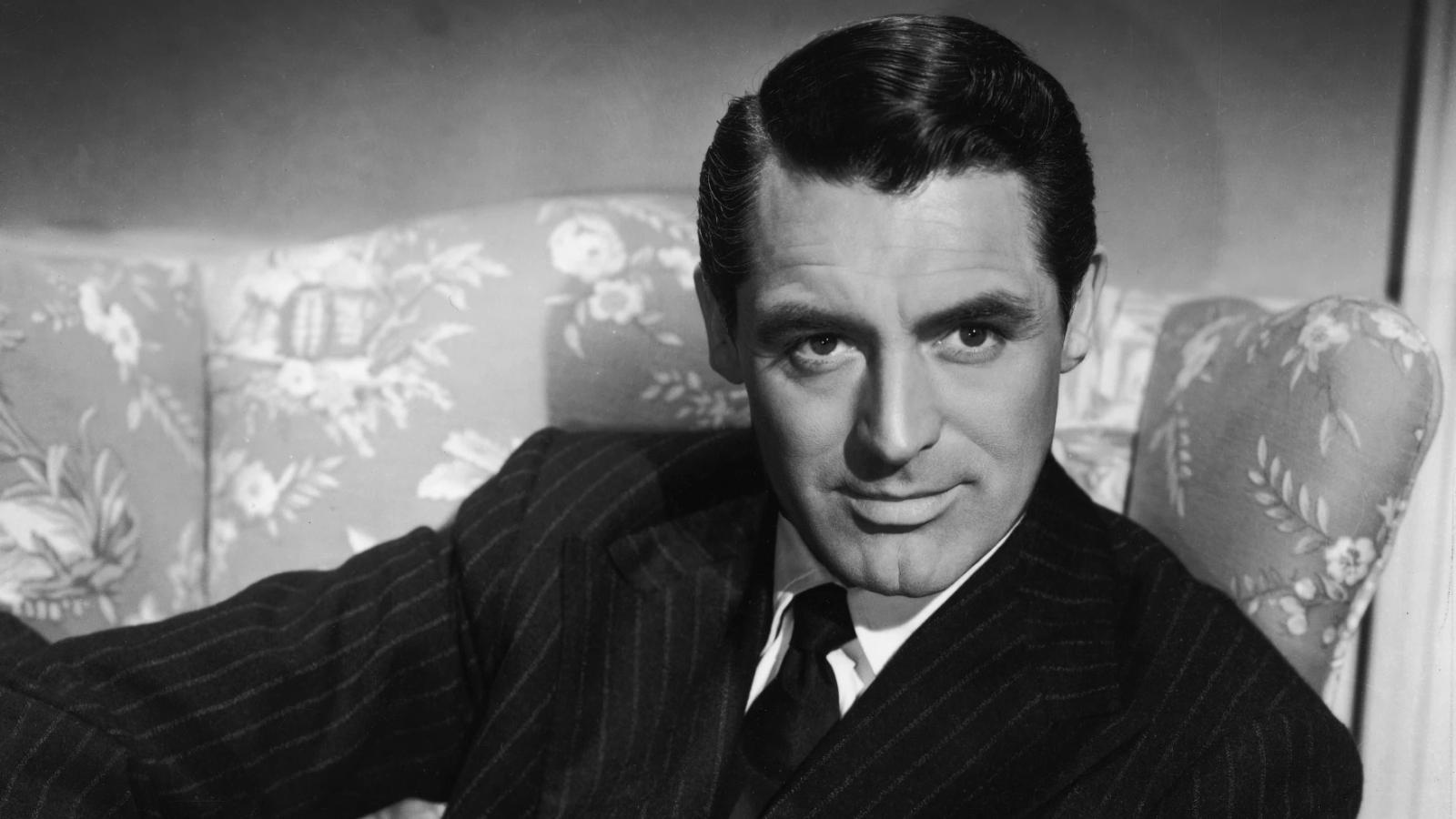
Style Inspiration

Cary Grant's style was built on impeccably fitted suits, crisp shirts and high-waisted trousers. He mixed British tailoring houses with sharp ready-to-wear, favoured brogues and always favoured quality over logos.

Tags:Menswear, Style Icon, Cary Grant