Skip to content

All taxes & duties included in the price.

Baltzar

Paraboot: a Century of French Shoemaking Heritage

Brand Stories · July 22, 2026 · Christopher Gustafsson

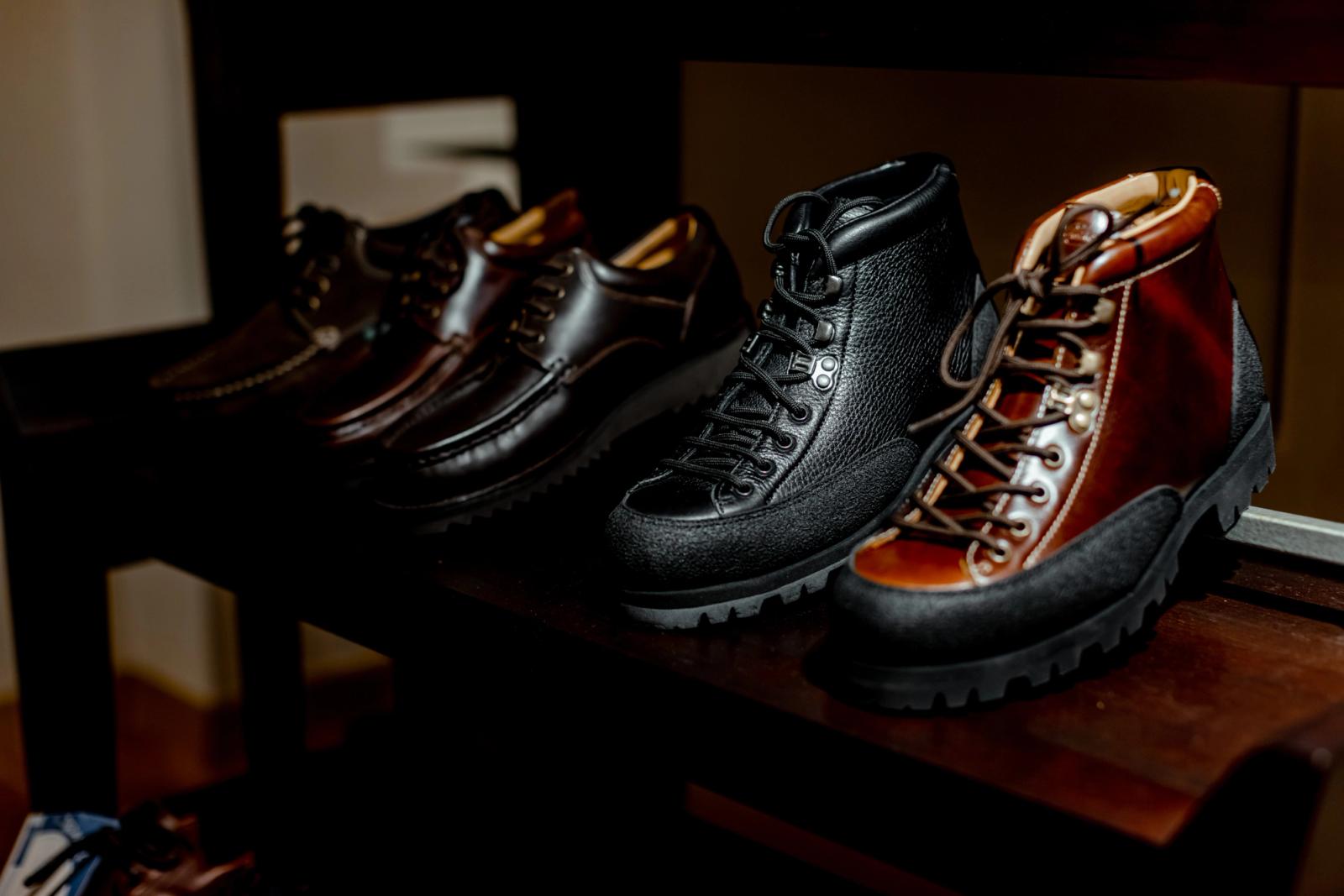
Black and brown leather boots and shoes displayed on a dark wooden shelf

Introduction

In a fashion world increasingly dominated by mass production and fast turnover, Paraboot stands as a quiet but formidable exception. This family-owned French shoemaker has been crafting footwear in the foothills of the Alps for over a century, building a reputation not through marketing spectacle but through sheer, stubborn dedication to quality. For those in the know, the little green Paraboot label has become shorthand for durability, authenticity, and understated French style.

Origins in the Alps

Paraboot's story begins in 1908, when Rémy Richard opened a small workshop in Izeaux, a town in the Isère region near the French Alps where shoemaking was already the backbone of local industry. Richard, a skilled cutter, initially made sturdy footwear for the workers and farmers of the region — practical shoes built to withstand hard labor and rough terrain.

The defining moment in the brand's history came in the late 1920s, when Richard traveled to the United States and encountered rubber-soled boots for the first time. Recognizing the potential of this material, he brought the idea back to France and began developing his own rubber compounds and soling techniques. This innovation — melding rugged American practicality with French shoemaking tradition — effectively gave birth to the Paraboot identity, and the name itself is thought to reflect that fusion of rubber ("para," evoking the rubber-producing regions of Brazil) and "boot."

The company also built a parallel reputation through its Galibier mountaineering line, which for a time became the leading name in French technical climbing footwear, exported as far as Japan, the United States, and Italy. The business passed to Richard's son Julien, who joined in 1937, steering the company through the difficult years of the Second World War, when material shortages forced the workshop to experiment with wooden soles and other stopgap solutions just to keep production alive.
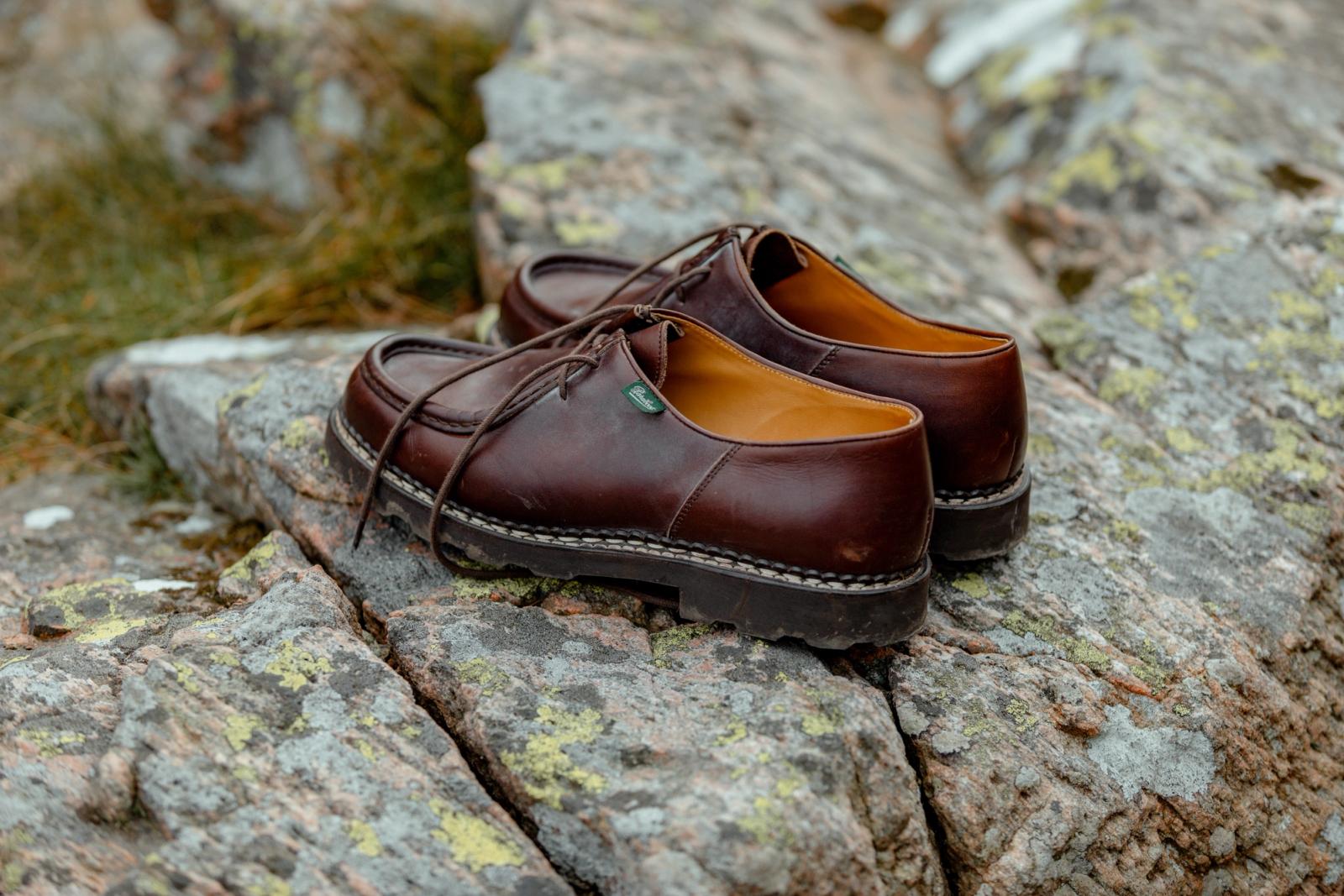
A pair of brown leather derby shoes resting on a moss-covered rock

The Michael and Postwar Revival

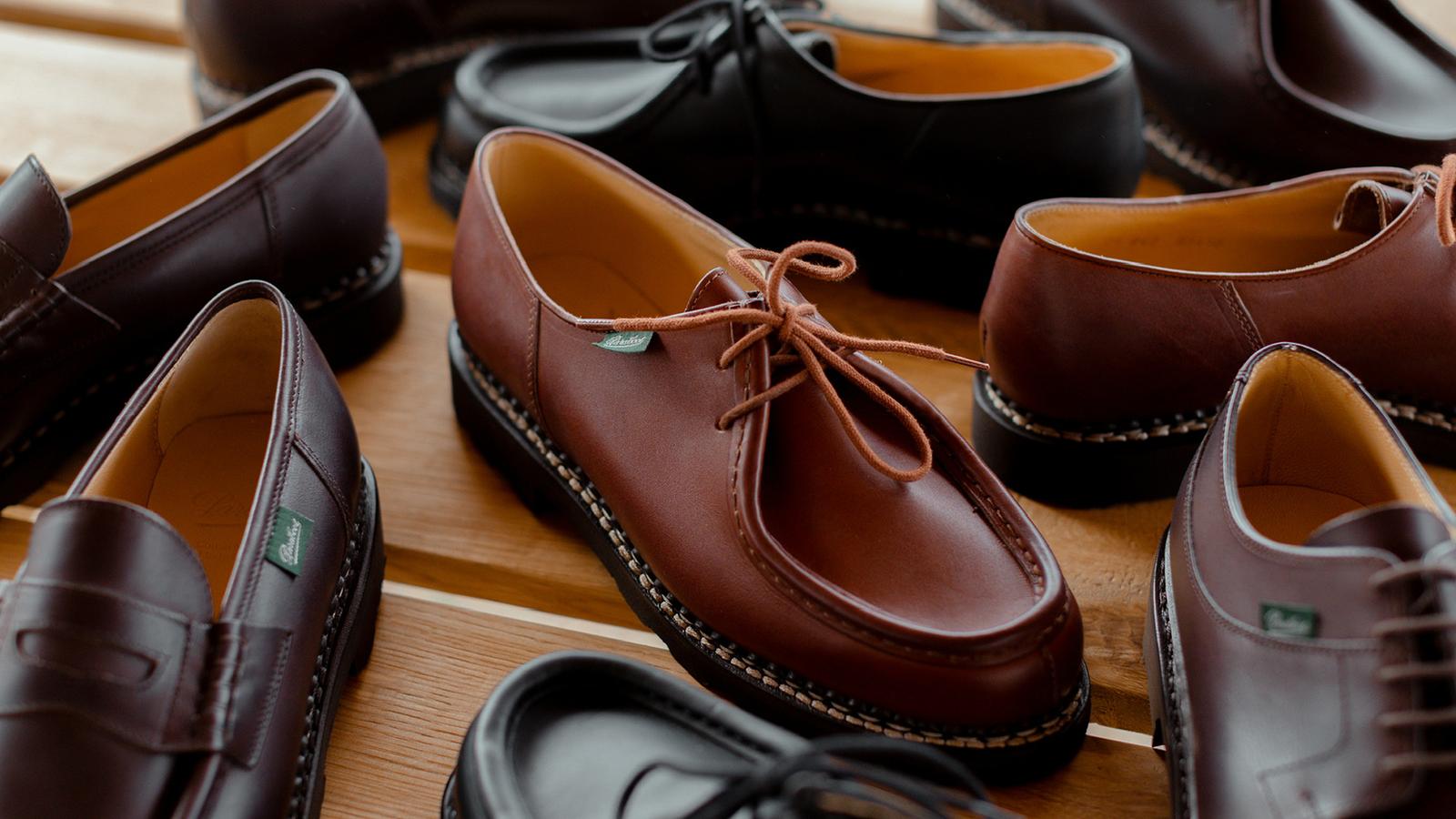
Paraboot's fortunes were transformed in 1945 with the launch of the Michael, a chunky, Tyrolean-inspired derby shoe that would go on to become the brand's signature model. The Michael found unexpected admirers among Italian tastemakers, and its distinctive silhouette — part rugged hiking boot, part gentleman's shoe — helped restore the company's financial footing after the war. Nearly eight decades later, the Michael remains Paraboot's most recognizable design, so influential that GQ once described it as one of the most important shoes in modern menswear.

Paraboot

Paraboot is a French shoemaker founded in 1908 in Izeaux, near the Alps, by Rémy Richard. The brand became famous for the Michael, a Tyrolean-style derby launched in 1945.

Browse the collection
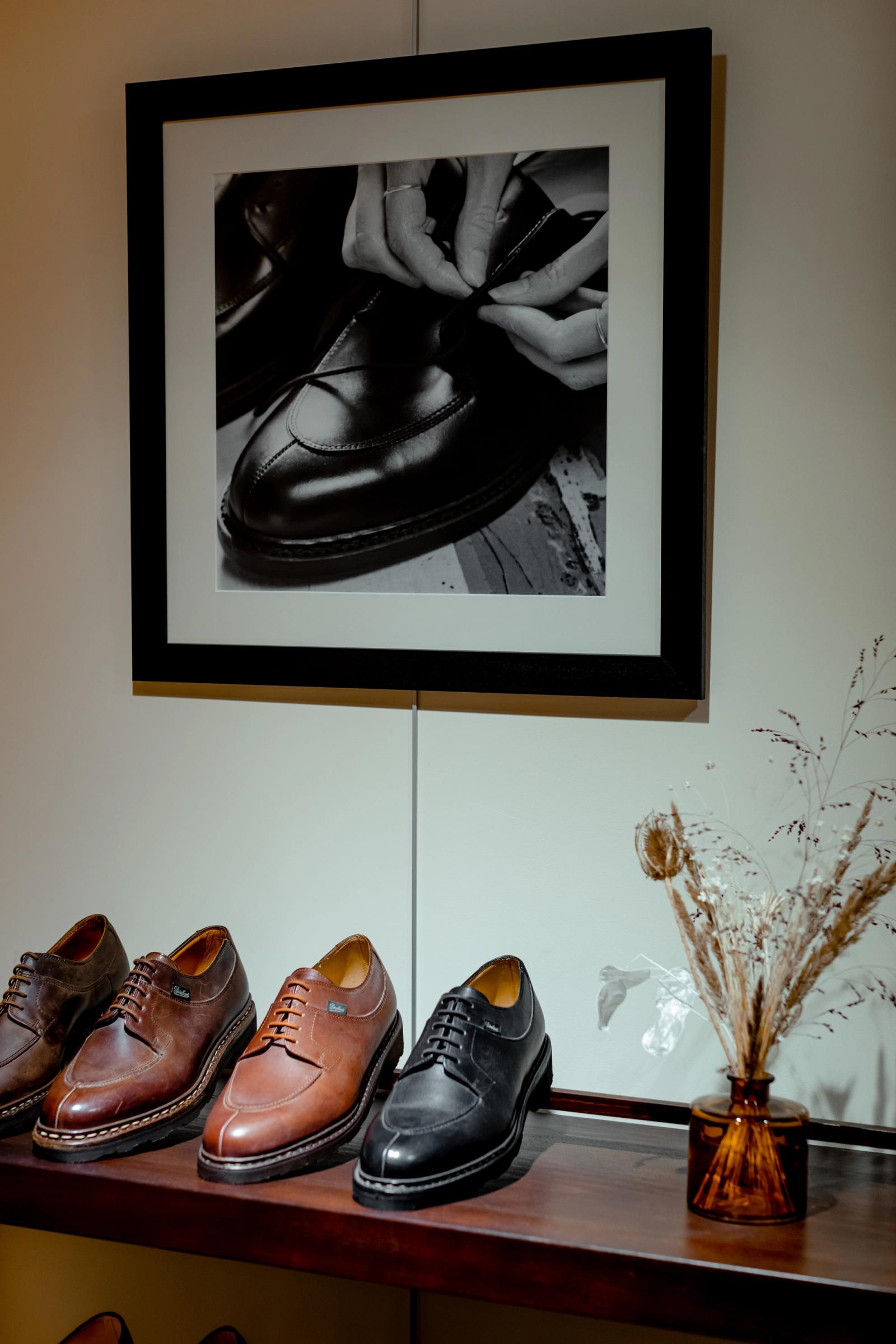
A shop display shelf of leather shoes beneath a framed black-and-white photograph

Craftsmanship that Refuses to Compromise

What separates Paraboot from countless heritage brands trading on nostalgia is that it still manufactures almost everything in France, largely at its factory in Saint-Jean-de-Moirans, not far from Romans-sur-Isère — historically the heartland of French shoemaking, though many of its neighboring ateliers have long since closed.

The brand's construction method is central to its appeal: many Paraboot models use the Norwegian welt, a labor-intensive stitching technique that creates a visible, decorative seam around the shoe while making it exceptionally sturdy and water-resistant. Combined with thick leather uppers and Paraboot's own rubber soling, the result is a shoe built to be resoled and repaired for decades rather than discarded after a season or two. It's a philosophy that rewards patience: a new pair can feel stiff and utilitarian, but with wear, the leather softens into something closer to a lived-in wardrobe staple.

This commitment to traditional methods earned Paraboot recognition in 2013 as an "Entreprise du Patrimoine Vivant," or Living Heritage Company, a French designation honoring businesses that preserve rare artisanal expertise. The company has since remained in the hands of the founding family, now on its fourth generation, with descendants overseeing production much as their forebears did.

Still, the brand's roots remain firmly planted in the Alps, and its approach to business has changed little: build shoes that last, sell them without excessive fanfare, and let quality do the talking.

Close-up of a Paraboot shoebox with embossed gold lettering

Frequently Asked Questions

When was Paraboot founded?
Paraboot was founded in 1908 by Rémy Richard in Izeaux, France, near the French Alps.

What is Paraboot most famous for?
The brand is best known for the Michael, a Tyrolean-style derby shoe launched in 1945, along with its use of the Norwegian welt construction technique.

Are Paraboot shoes still made in France?
Yes. Paraboot continues to manufacture the majority of its footwear in France, primarily at its factory in Saint-Jean-de-Moirans, using traditional handcrafting methods.

What is a Norwegian welt, and why does it matter?
It's a construction method that stitches the upper, welt, and sole together in a way that creates a distinctive raised seam. It's more time-consuming than standard construction but produces shoes that are notably durable, water-resistant, and repairable over many years.

Is Paraboot still family-owned?
Yes, the company remains under the control of the Richard-Pontvert family, now in its fourth generation of leadership.

Tags:Paraboot, Made in France, Michael, Barth

Related Articles

Astorflex - Two Centuries of Italian Shoemaking Heritage

Brand Stories · September 1, 2026 · Christopher Gustafsson
Discover the 200-year history of this Italian family shoemaker, its handcrafted desert boots, sustainable materials, and stitchdown craftsmanship from Castel d'Ario.
Read More

William Lockie: the Enduring Legacy of Scottish Knitwear

Brand Stories · April 28, 2026 · Christopher Gustafsson
Discover William Lockie, Scotland's historic Hawick knitwear brand since 1874 — its heritage, craftsmanship, cashmere and lambswool jumpers, and family legacy.
Read More