Skip to content

Express delivery within 1-4 business days

Baltzar

The Shaggy Dog: Shetland Wool's Enduring Sweater

Style Guides · September 24, 2026 · Christopher Gustafsson

Introduction

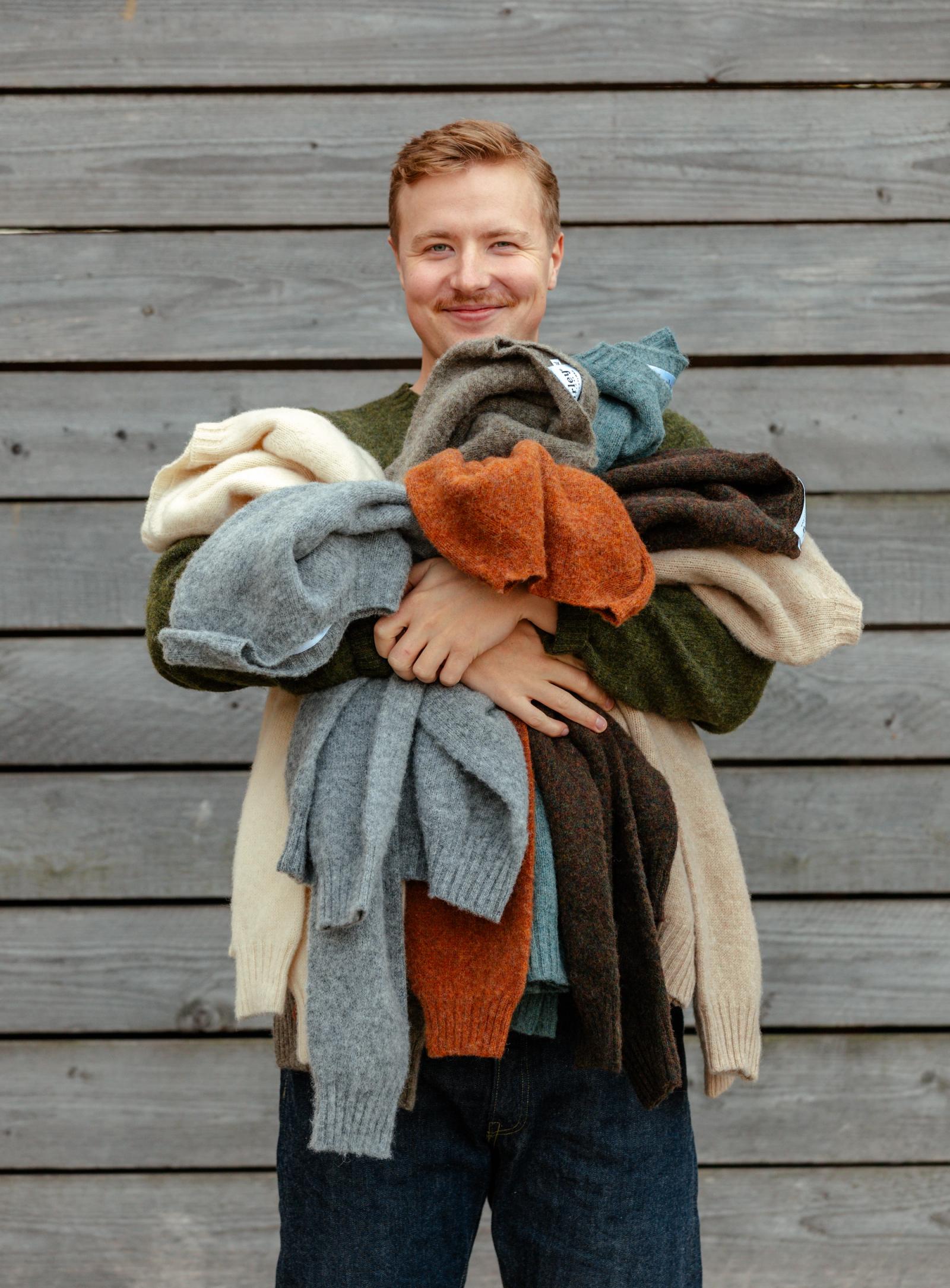
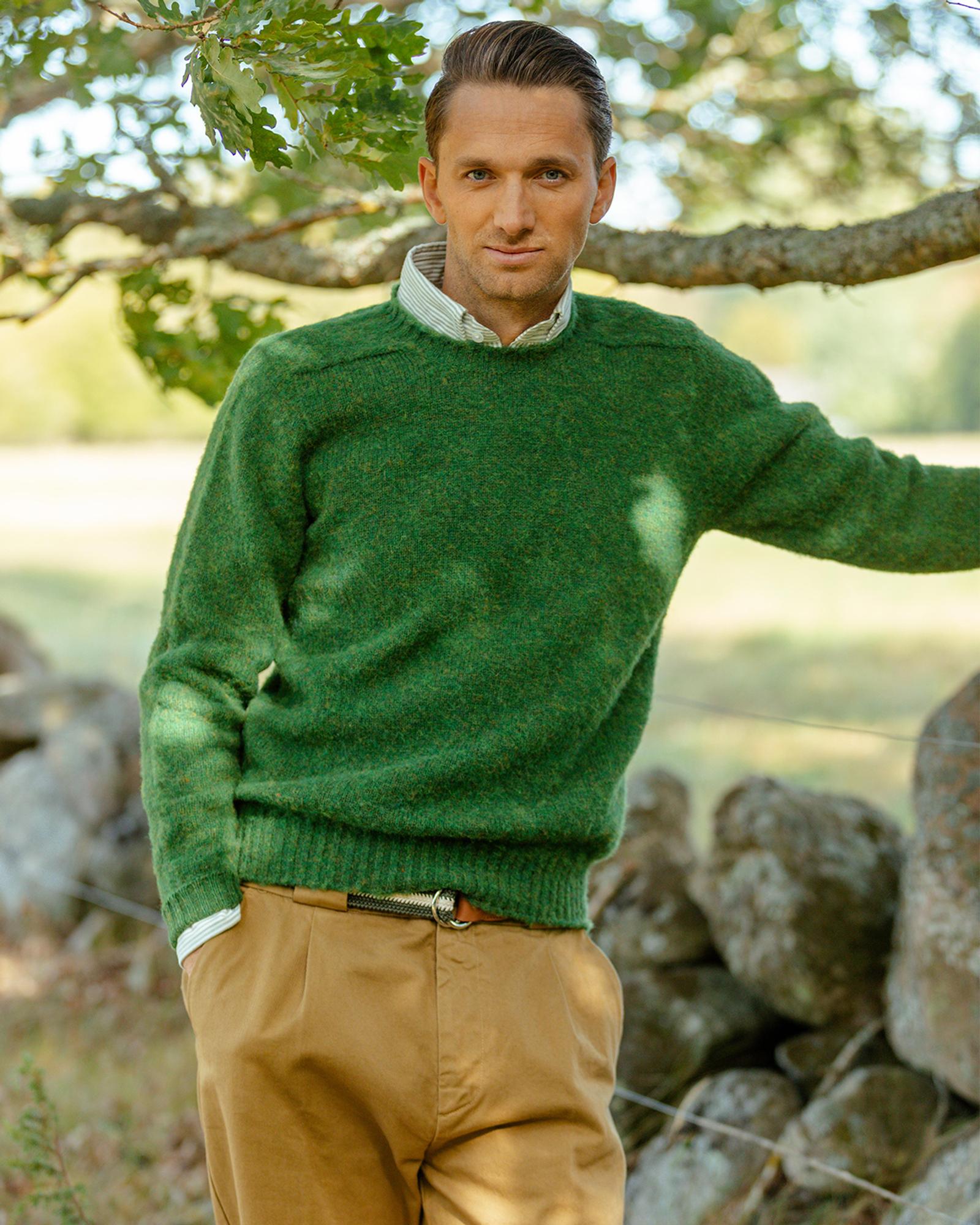
Few sweaters carry a nickname as unglamorous, or as accurate, as the "Shaggy Dog." It's an odd name for what is, in truth, one of menswear's most storied knits — a brushed Shetland wool crewneck with a texture so soft and fluffy it resembles the coat of an unkempt terrier. That slightly absurd name has stuck for the better part of a century, and the sweater underneath it has quietly outlasted almost every trend that's come and gone in that time.

The Shaggy Dog has never tried particularly hard to be fashionable, and that's precisely why it keeps coming back into fashion. It's a sweater built around a fairly narrow set of decisions — a specific breed of sheep, a specific mill technique, a brushing process that hasn't changed much in decades — and those decisions happen to produce a garment with real, tactile character in an era when a lot of knitwear is defined by neither. Whether it comes from a family mill in Shetland or a contemporary Italian workshop, the appeal is the same: a sweater that looks a little rough around the edges and feels considerably better than it looks.
Wool From the Edge of the World

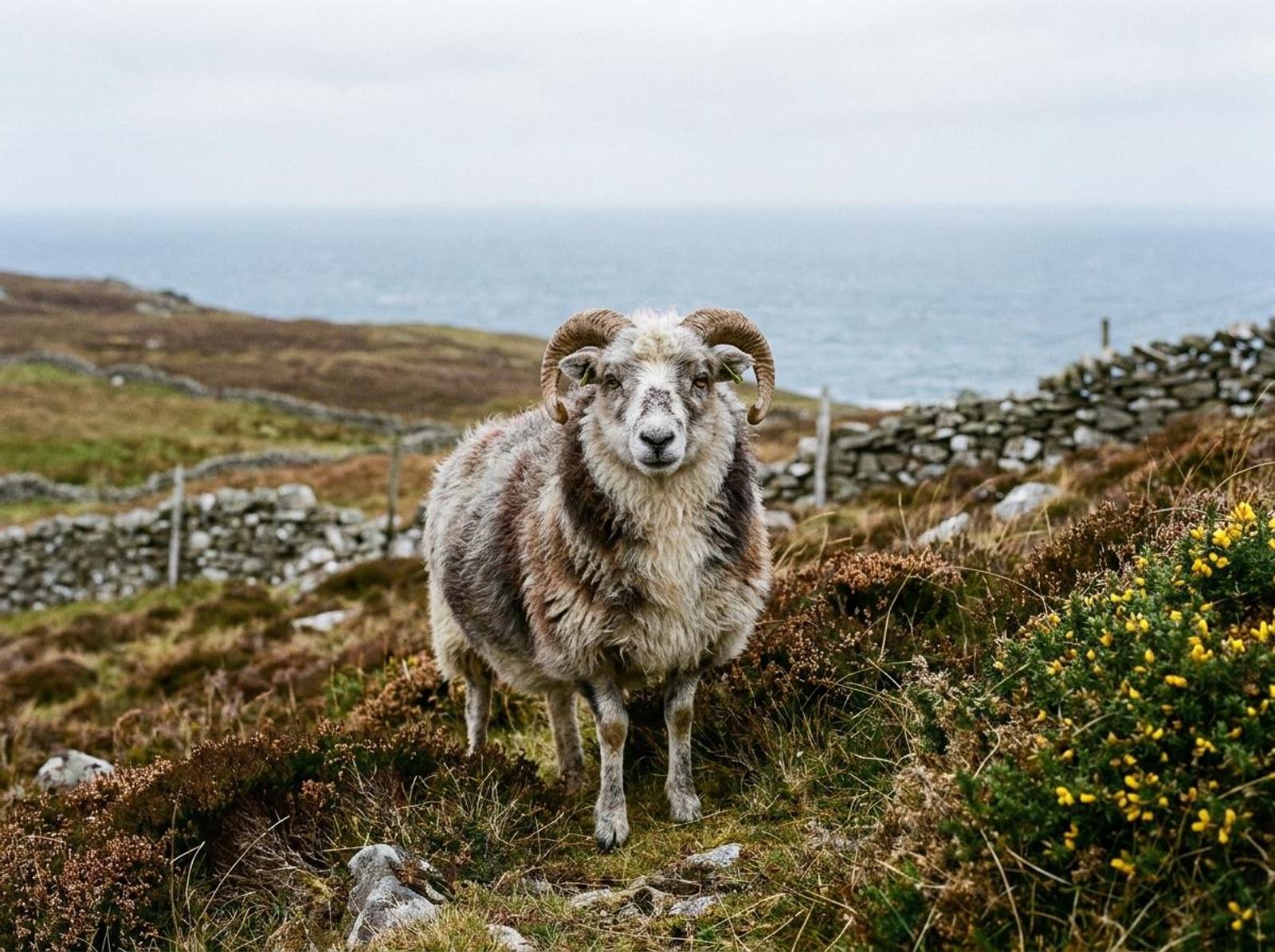
The story of the Shaggy Dog begins not in a design studio but on a windswept archipelago. The Shetland Islands sit roughly halfway between Scotland and Norway, a scattering of small islands with more sheep than people and a climate harsh enough to have shaped, quite literally, the wool that grows there. Shetland sheep produce a fleece that is naturally coarse on the outside and soft underneath, giving the resulting yarn a lofty, slightly hairy character that's structurally different from the smoother wools produced elsewhere in Britain.

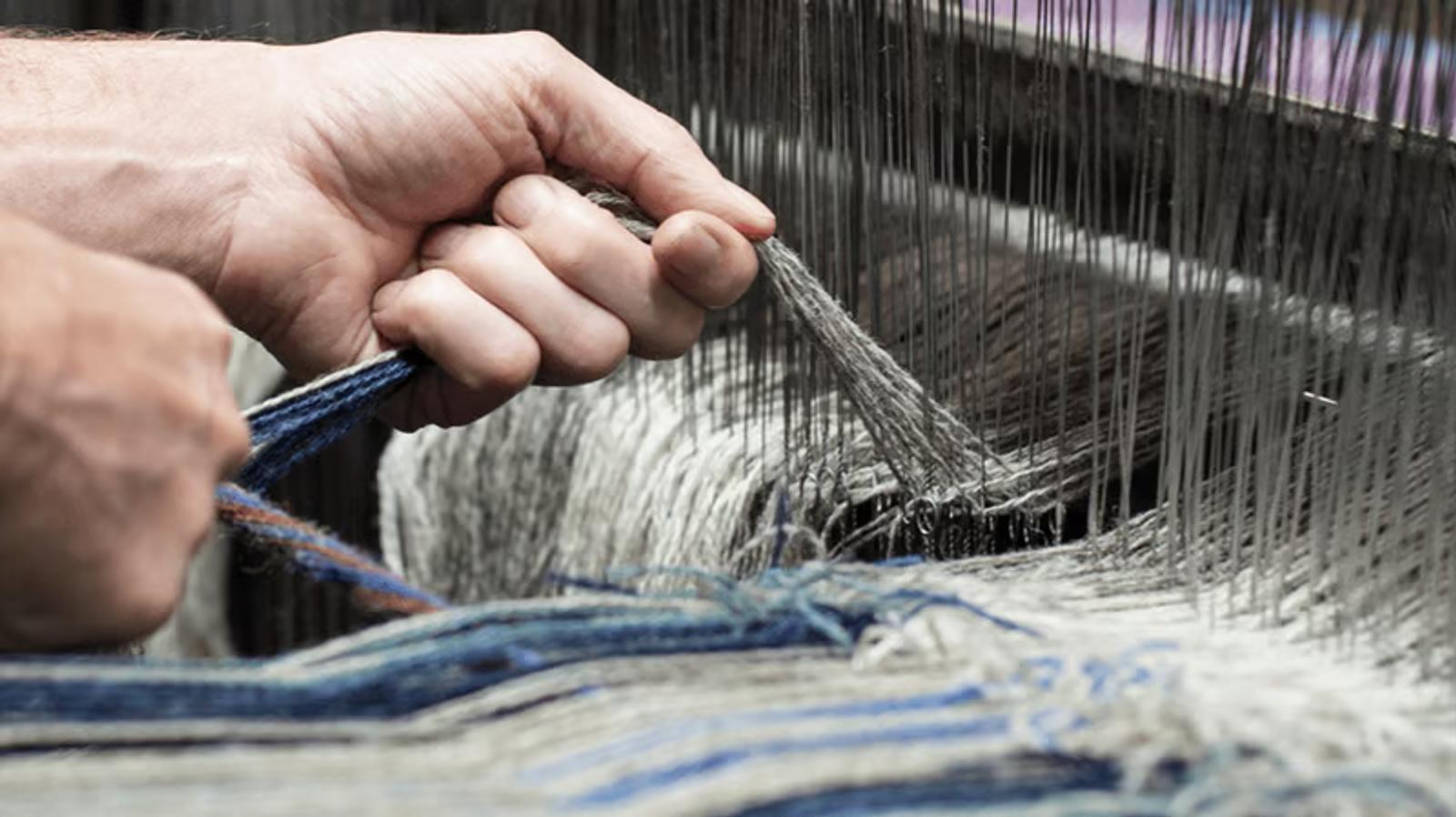
Knitting has been a part of life in Shetland for centuries, historically done by hand in croft houses as a supplement to farming income, with entire families involved in carding, spinning, and knitting the wool produced by their own flocks. By the late nineteenth century, this cottage industry had begun to formalize into proper mills, and it's here that names like Jamieson's enter the story. Founded in the 1890s, Jamieson's has spent five generations spinning, dyeing, and knitting Shetland wool under one roof — a rare case of a company controlling every stage of production, from the fleece on the sheep's back to the finished garment. That vertical control is a large part of why Jamieson's is still regarded as the benchmark against which every other Shaggy Dog is measured; the brand didn't invent the brushed Shetland crewneck, but it perfected it, and its sweaters are often referred to simply as "the original."

From Croft to Campus

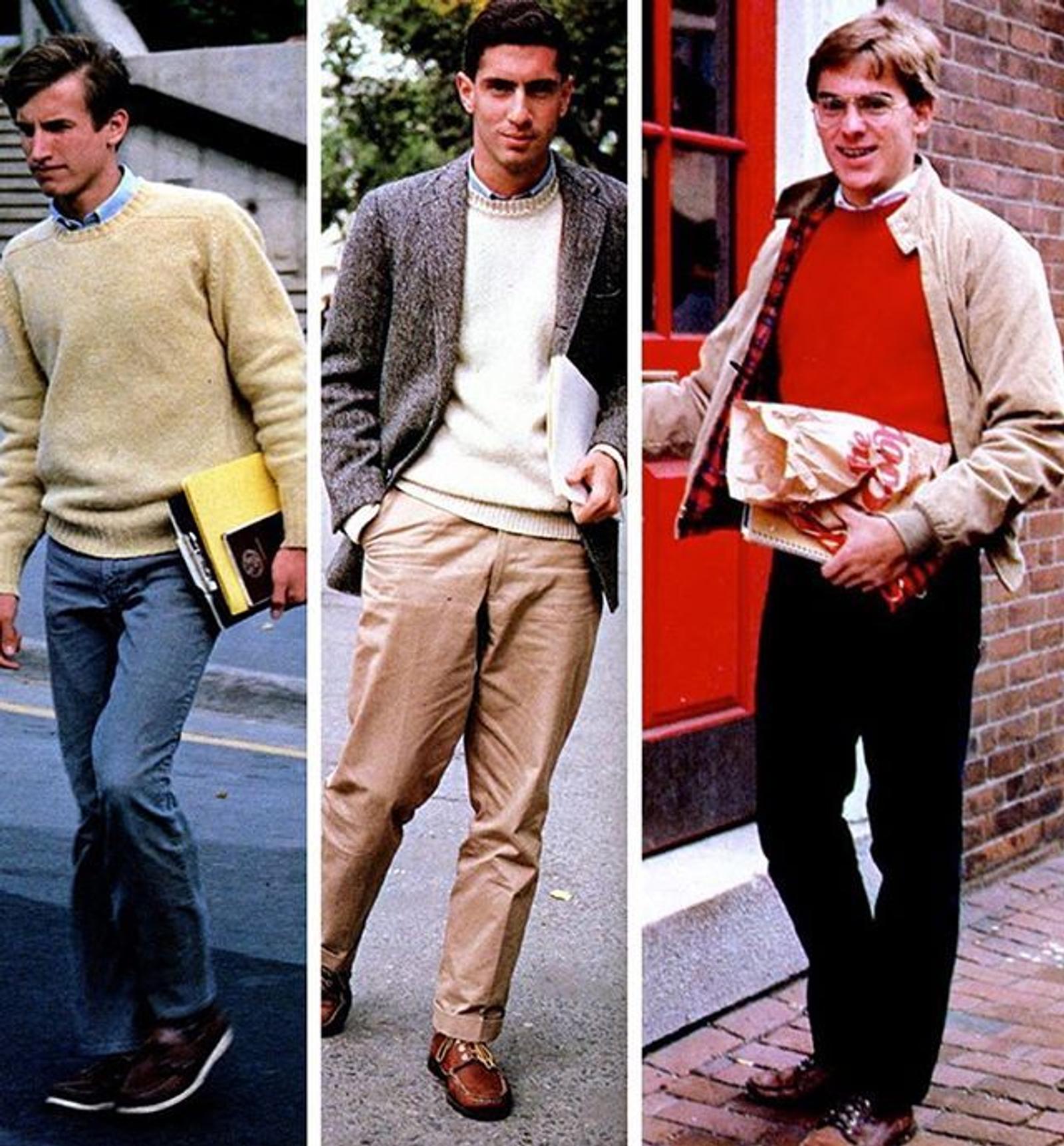
The Shaggy Dog owes its cultural rise to an unlikely audience: American university students. In the years following the Second World War, Shetland knitwear — including the brushed crewneck — was adopted wholesale by the Ivy League set, worn under tweed jackets, over button-down oxford shirts, and layered beneath duffle coats on campuses from New Haven to Cambridge, Massachusetts. The sweater's slightly rustic, heathered character fit naturally into the era's growing appetite for "shabby genteel" dressing, a studied nonchalance that borrowed heavily from British country and sporting wardrobes while carrying it off with an American ease.

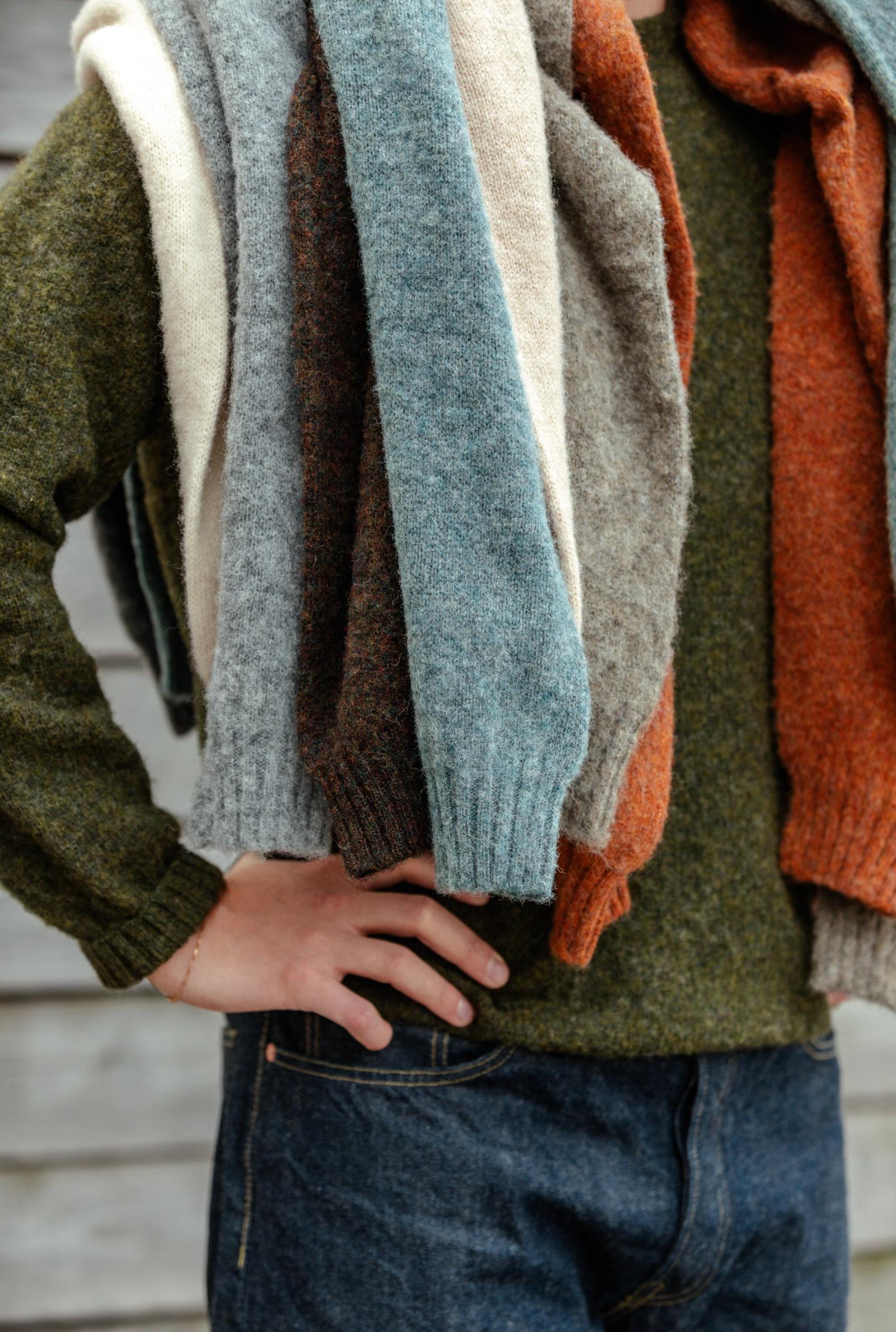
It was around this period that the "Shaggy Dog" nickname took hold, a reference to the sweater's brushed surface, which is created by a finishing process that raises the fibers of the knit to produce a soft, hazy nap. The effect is part texture, part optical illusion: from a distance, the sweater reads as a solid block of color, but up close, the brushed fibers give it a shifting, almost furry depth. Combined with the wide, saturated color palette Shetland mills have long specialized in — moss greens, mustard yellows, burgundy, and heathered greys among them — the Shaggy Dog became a signature piece of Ivy style, and it has remained associated with that world ever since.

The Craftsmanship Behind It

What separates a true Shaggy Dog from an ordinary crewneck is almost entirely down to process. The sweater typically begins with pure Shetland wool, or in some interpretations, a fine lambswool, spun into a yarn that retains some of its natural coarseness rather than being spun smooth. Many mills, Jamieson's among them, knit the body and sleeves as a single, seamless piece rather than knitting flat panels and sewing them together afterward — a technique that reduces bulk at the seams and gives the finished sweater a cleaner drape and greater flexibility across the shoulders.

The defining step, however, comes after knitting: the brushing. The finished garment is run through a process that lifts individual fibers from the surface of the knit using fine wire brushes or teasels, raising a soft nap across the whole sweater. This is what gives the Shaggy Dog its characteristic halo and its deceptively plush hand-feel, despite being knitted from a wool that starts out relatively hardy. It's a delicate process — brush too aggressively and the yarn weakens and pills; too lightly and the texture never develops — which is why mills with generations of accumulated technique, rather than modern shortcuts, tend to produce the most convincing result.

A Modern Wardrobe Staple

For a long stretch, the Shaggy Dog carried the same slightly old-fashioned, campus-and-country-house associations that kept other heritage knitwear out of step with contemporary menswear. That has changed considerably. As the broader Ivy and "trad" revival has taken hold over the last several years — alongside a wider appetite for workwear-adjacent, texture-forward pieces that reward being worn rather than merely looked at — the Shaggy Dog has found itself back at the center of a lot of well-considered wardrobes.

Part of its appeal is how little it asks of the wearer. Thrown over an oxford shirt with chinos, it looks collegiate; worn under a field jacket or over a t-shirt with denim, it reads as easy, textured layering. Its bulk and brushed surface do a lot of visual work on their own, meaning it rarely needs to be dressed up around — which is exactly why it has become such a reliable piece for men gravitating away from more formal knitwear toward something with a bit more character.

Jamieson's remains the reference point, its saddle-shoulder, Shetland wool crewnecks available in a genuinely wide run of traditional heathered colors, each one brushed to the soft, fluffy finish the sweater takes its name from. But the style has also found interpreters well beyond the Shetland Islands. Harley of Scotland, a knitwear specialist established in 1929, produces its own take with the same seamless, one-piece construction and a comparably vivid color sense — its amber yellow crewneck being a good example of how the brushed finish can carry a punchier, more contemporary shade without losing the sweater's rustic character. Italian knitwear house Drumohr, meanwhile, has translated the idea into a softer register, producing a brushed Geelong lambswool crew neck in a muted cappuccino tone that trades some of the wool's coarseness for a more refined, Italian-inflected hand, while keeping the same shaggy, textured surface at its core.

Style Inspiration

The "Shaggy Dog" is a brushed Shetland wool crewneck that takes its name from its soft, fluffy texture. Originating in Shetland's centuries-old knitting tradition, it was perfected by mills like Jamieson's, which has spun, dyed, and knitted the wool itself for five generations, yet several other brands have since then adopted the style and created their own unique creations.

Tags:Menswear, Style Guide, Shaggy Dog, Shetland Wool

Related Articles

The Shawl Collar Cardigan: a Timeless Classic in Menswear

Style Guides · September 20, 2026 · Christopher Gustafsson
The shawl collar cardigan is one of menswear's oldest ideas enjoying one of its biggest moments. Named in part after the 7th Earl of Cardigan and finished with a rolled, unnotched collar borrowed from Victorian smoking jackets, this knitwear staple has moved from golf courses and Ivy League campuses into everyday rotation.
Read More