Materials and Craftsmanship
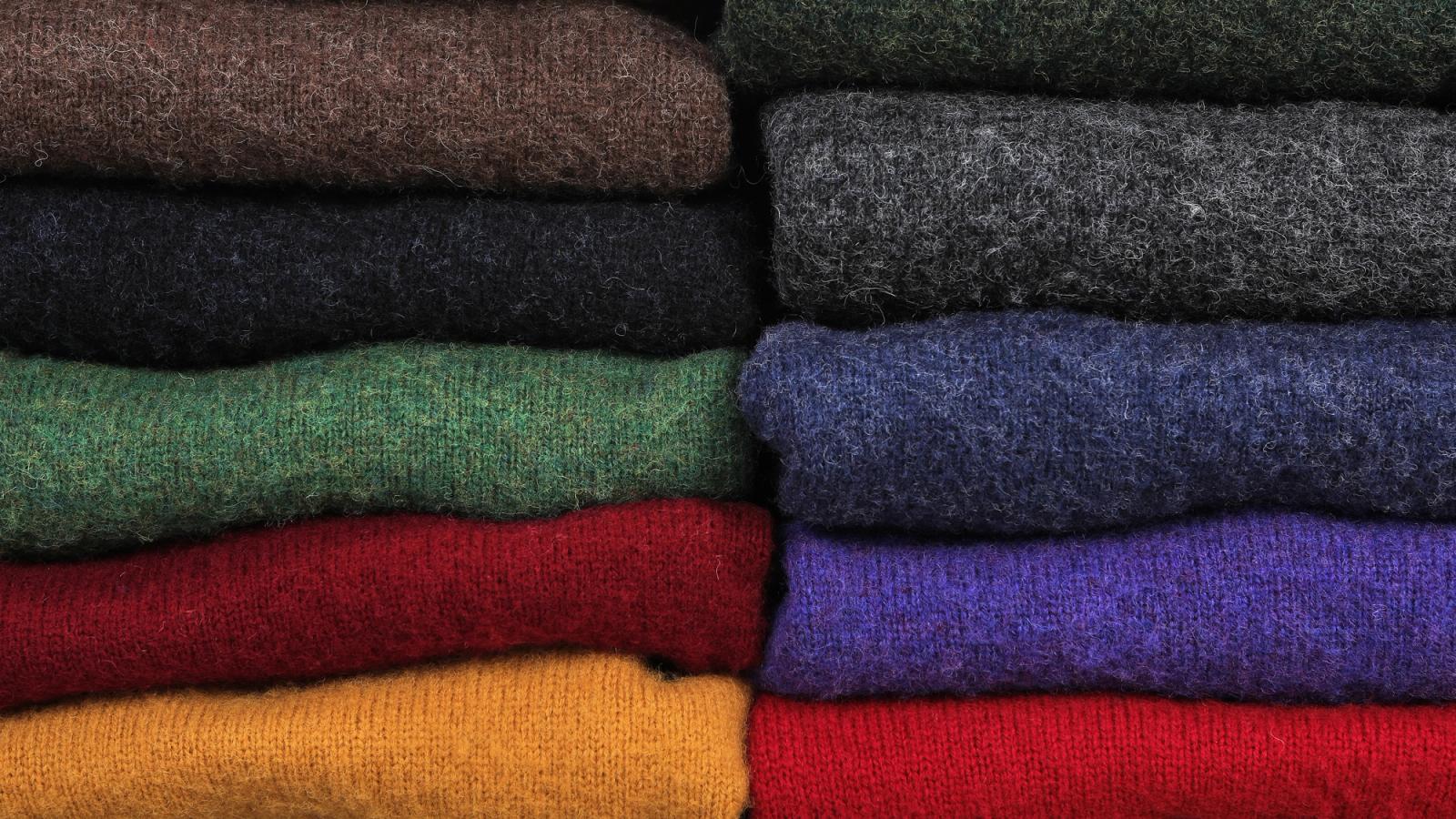
William Lockie's reputation rests on an insistence on sourcing only the finest natural fibres and processing them with old-fashioned care. The brand works primarily in four materials: pure cashmere, lambswool, Super Geelong (sometimes called virgin wool, taken from the first shearing of specially bred Australian lambs), and camel hair, sourced from the undercoat of the two-humped Bactrian camel and left in its natural, undyed colour. These raw fibres are spun and dyed by long-established British spinners, including Todd & Duncan in Kinross and Hinchcliffe & Sons in Yorkshire, before making their way to the Hawick mill.
Once the yarn arrives, William Lockie's approach is defined by generosity and precision rather than speed. The mill uses more yarn per garment than many competitors and knits at a tighter tension, producing knitwear that is noticeably denser, smoother, and better at holding its shape over years of wear. Garments are typically described by their "ply," referring to how many strands of yarn are twisted together: one-ply pieces, such as those in the brand's lightest cashmere lines, use a single thread for a fine, lightweight feel, while two-ply collections twist two threads together for a thicker, more substantial garment.
In 1991, the company introduced Shima Seiki knitting machines capable of producing intricate intarsia patterns and textures that would once have required painstaking handwork. Rather than replacing tradition, this technology was folded into it: garments still pass through the same hand-finishing processes as before, with panels for the front, back, sleeves, and any trims knitted individually before being carefully linked and finished by hand. The result is a hybrid of modern capability and old-world attention to detail that the brand argues cannot be replicated by mass manufacturers.