Skip to content

Express delivery within 1-3 business days

Baltzar

Fabric Focus: Cotton Corduroy

Style Guides · October 11, 2026 · Christopher Gustafsson

Victorian textile-workers. Manchester (c.1900)

From Mill Floor to Moodboard: The History of Cotton Corduroy

Run a thumb across a corduroy sleeve and you feel the whole story of the fabric: rows of soft, raised ridges separated by narrow channels, as orderly as a plowed field. Few textiles are so instantly recognisable by touch alone, and few have lived as many lives.

Corduroy's ancestry stretches back to fustian, a family of sturdy cotton and linen cloths that took their name, it is often said, from Fustat, the medieval Egyptian trading city. Pile-woven cotton fabrics were being made in Europe by the late Middle Ages, but it was in eighteenth-century England that corduroy as we know it took shape. The mills around Manchester, then the beating heart of the cotton trade, produced a heavy, ribbed fustian that was cheap, hard-wearing and warm. It was nicknamed "poor man's velvet" for its resemblance to the more luxurious cut-pile cloth worn by the wealthy.

The name itself is a favorite piece of fabric folklore. Many a tailor has claimed that corduroy comes from the French corde du roi, "cloth of the king," supposedly worn by royal servants. The story is charming, but there is no real evidence for it, and etymologists consider it a later invention. A more probable explanation is simply that the word combines "cord," for the ribs, with "duroy," an old name for a coarse woolen cloth. What is certain is that the fabric found its first loyal customers not in palaces but in fields, factories and mines. Farmers, gardeners, railway workers and laborers valued it because it resisted abrasion, blocked the wind and held up through relentless washing.

How It Is Made

What makes corduroy distinctive is the way it is built. A base cloth is woven in the usual manner from warp and weft threads, but extra weft yarns are added that float over groups of warp threads in long loops. These floats are what eventually become the ridges, known as wales.

Once the cloth is woven, the floats are cut by circular blades or guided knives, which slice precisely down the centre of each row. This leaves two tufts of cut yarn standing upright where each loop once lay. The fabric is then brushed to lift and separate the fibres, singed to remove stray fuzz, and often washed or finished to soften the hand. The pile is cotton as well, which gives corduroy its dense, almost velvety feel and its ability to take rich, saturated dye.

The width of the ridges is described by the wale count, the number of ridges per inch. Pinwale corduroy, at sixteen or more wales, is fine and drapes lightly, close to a ribbed velvet. The classic mid-range of around eleven to fourteen suits trousers and jackets. Wide-wale and jumbo cord, with only a handful of ridges per inch, is bold, chunky and unmistakably casual. Finer cord reads smart, broader cord reads rugged, and the choice shapes how a garment behaves.

Through the nineteenth and early twentieth centuries corduroy remained largely the cloth of work, though it slowly crept into country life. English sportsmen wore it for shooting and hacking, and the fabric turned up in hunting jackets and breeches. Its association with practical, no-nonsense dressing never quite left.

The Quiet Comeback: Corduroy in Menswear Today

If corduroy began as workwear, it earned a second identity in the twentieth century as the uniform of the thoughtful. By the 1950s and 60s, corduroy jackets with leather elbow patches had become shorthand for university lecturers, writers and artists. Ivy League style adopted corduroy trousers and sport coats as autumn staples, and the look traveled from campus to the wider preppy wardrobe.

The 1970s were corduroy's peak of cultural saturation. Flared cords, wide-wale suits and big collars turned up everywhere, in earth tones of rust, mustard, brown and olive that defined the decade. Then came the inevitable backlash. In the 1980s and 90s, as tailoring sharpened and denim and technical fabrics took over casualwear, corduroy came to feel dated, relegated to the school-teacher stereotype or the back of the wardrobe.

Yet over the last several years it has returned with real momentum. Part of the reason is a wider shift in how men dress. Casual and tailored clothing have blurred together, and the stiff suit has given way to softer, more relaxed pieces. Corduroy sits happily in that middle ground. A corduroy blazer feels like tailoring without the formality, and a pair of cords can be dressed up with loafers or down with trainers.

Texture Sets the Tone

Texture has also become central to modern menswear. After years of flat, minimal, often synthetic basics, many men are looking for clothing with visible character, and corduroy delivers depth and tactility that photographs and feels well. Its muted colors and gentle sheen fit naturally into the "quiet luxury" aesthetic, where quality of material matters more than logos.

The move toward comfort following the pandemic years helped too. Corduroy is soft, warm and forgiving, and a good pair of cords wears more easily than stiff chinos or raw denim. At the same time, the heritage and vintage movement has encouraged younger shoppers to rediscover fabrics with a past. For a generation raised on fast fashion, a durable natural-fibre cloth that improves with age carries real appeal, and it chimes with growing interest in buying fewer, better things.

The way corduroy is worn has changed as well. Where it was once the preserve of the professor, the modern wearer cuts the look more loosely. Wide-leg and relaxed-fit cords nod to 1990s skate and workwear influences, while slimmer, pleated styles feel closer to classic tailoring. Corduroy overshirts, chore coats and casual jackets have introduced it to men who would never have considered a cord suit. Designers now also play with color, pairing traditional browns and navies with pale creams, forest greens and even brighter shades.

The fabric's journey, from the mill towns of Lancashire to the racks of today's most stylish menswear labels, is in many ways a lesson in resilience. Corduroy has been the fabric of labor, learning, rebellion and, now, comfortable good taste. It endures because it works: it is warm, tough, tactile and endlessly adaptable. Whatever the trend cycle does next, its ridges seem likely to remain a familiar texture, and a welcome one, whenever the weather turns cold.

Style Inspiration

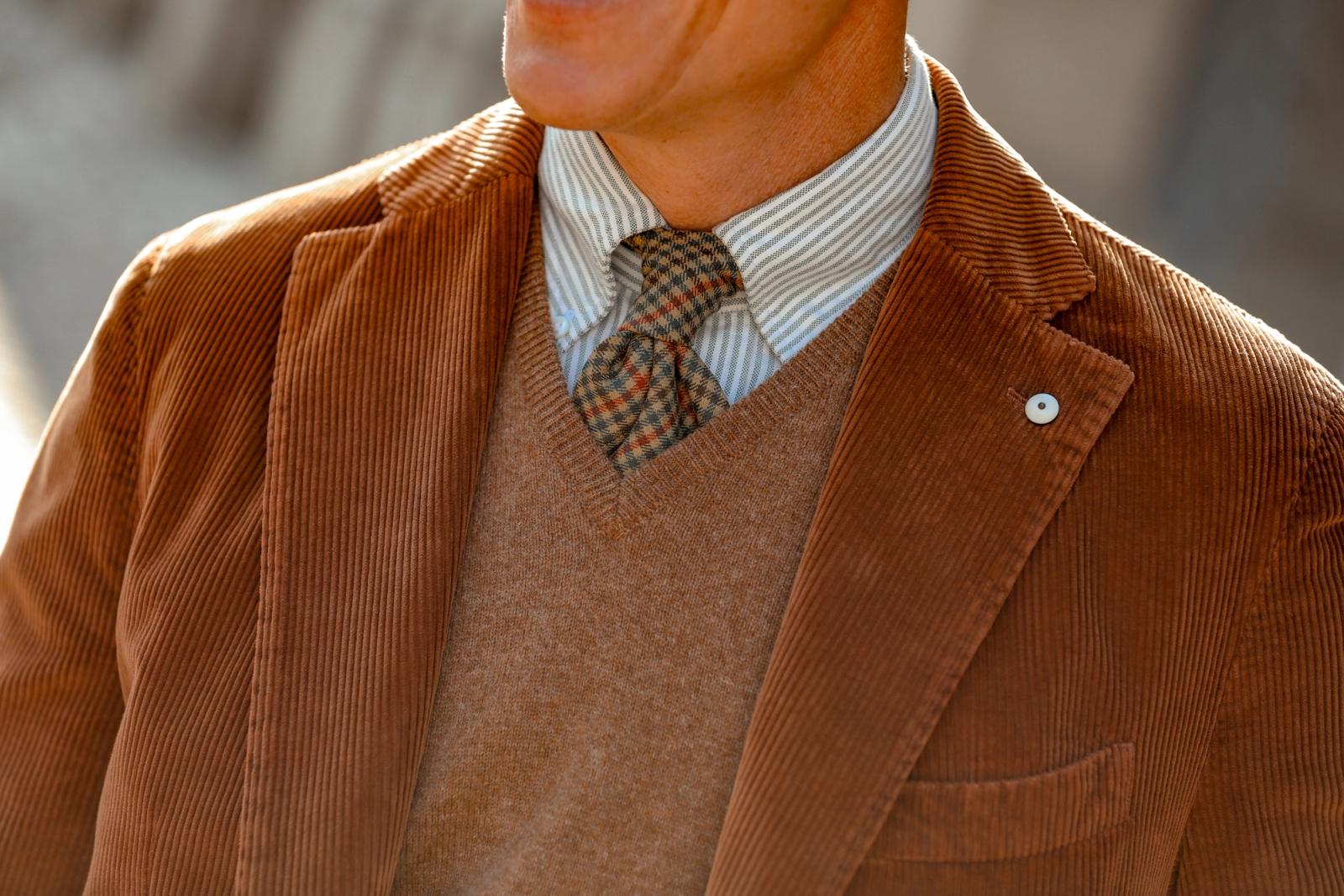
Once nicknamed “poor man’s velvet,” cotton corduroy has traveled from the mills of Manchester to the racks of today’s best menswear labels. Discover our assortment of seasonal overshirts, trousers and shirts in cotton corduroy.

Tags:Menswear, Style Guide, Cotton Corduroy, Fabric Focus

Related Articles

The Shaggy Dog: Shetland Wool's Enduring Sweater

Style Guides · September 24, 2026 · Christopher Gustafsson
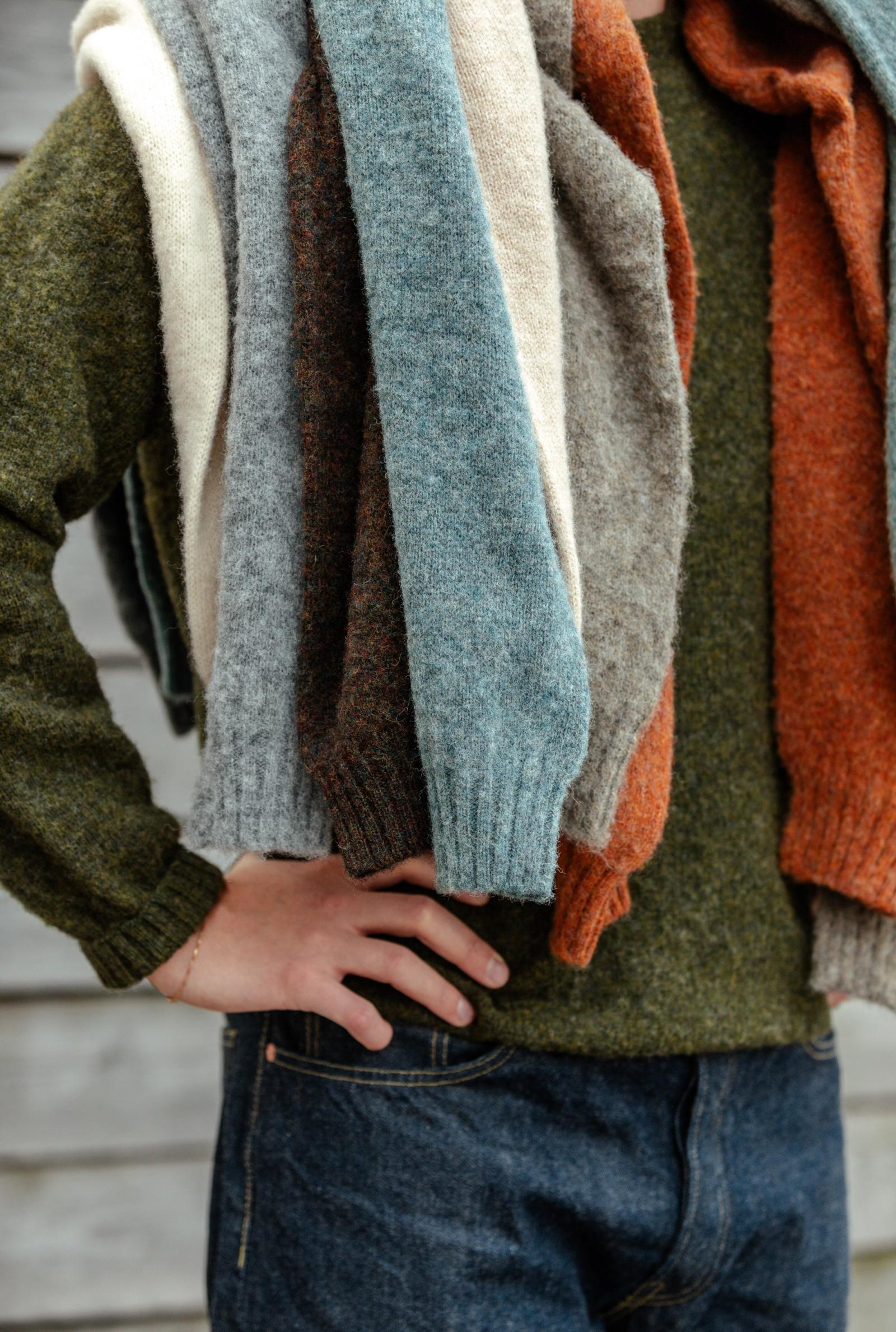
The "Shaggy Dog" is a brushed Shetland wool crewneck that takes its name from its soft, fluffy texture. Originating in Shetland's centuries-old knitting tradition, it was perfected by mills like Jamieson's, which has spun, dyed, and knitted the wool itself for five generations. The sweater rose to prominence through 1950s American Ivy League style, worn over oxford shirts and under tweed jackets.
Read More

The Shawl Collar Cardigan: A Timeless Classic in Menswear

Style Guides · September 20, 2026 · Christopher Gustafsson
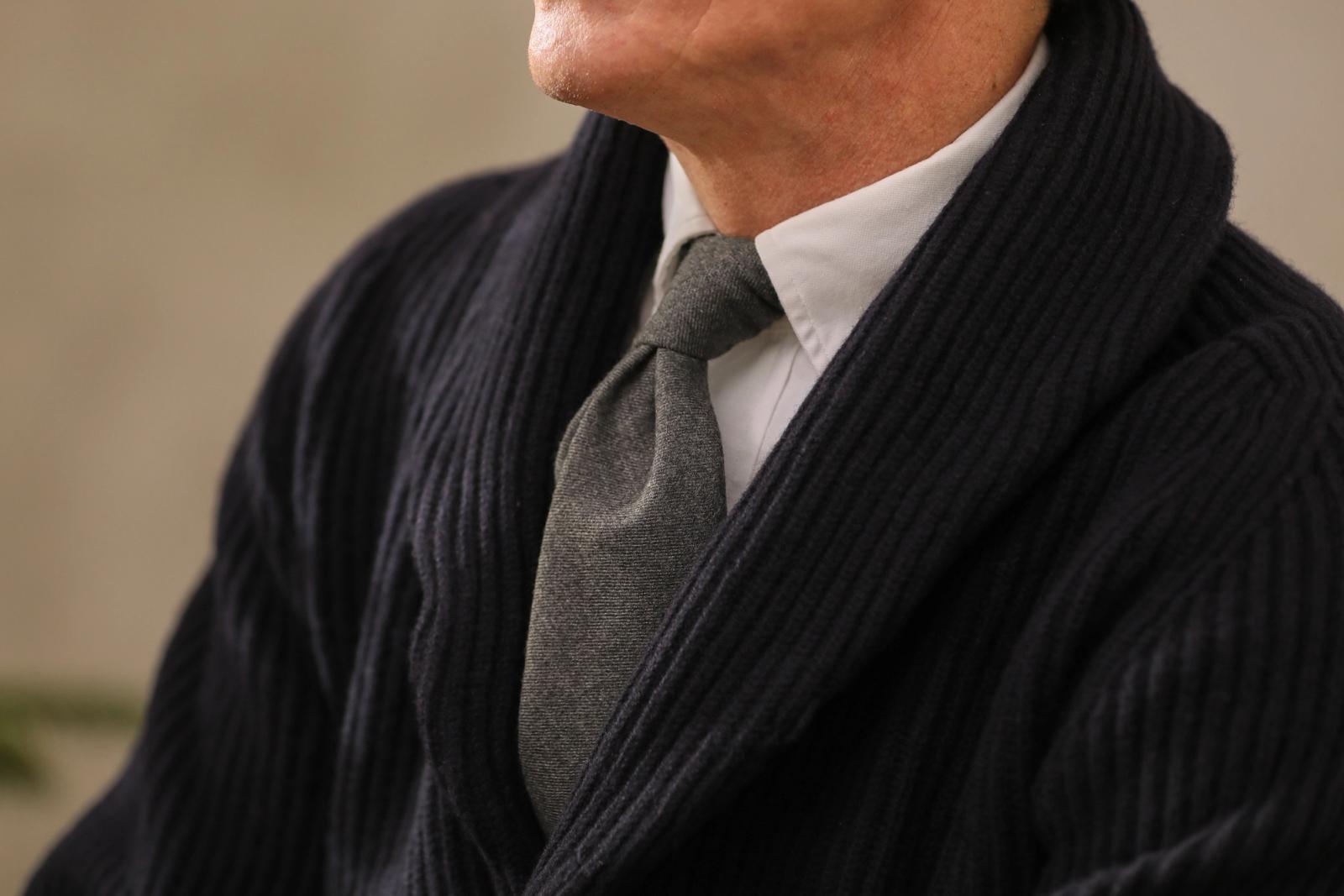
The shawl collar cardigan is one of menswear's oldest ideas enjoying one of its biggest moments. Named in part after the 7th Earl of Cardigan and finished with a rolled, unnotched collar borrowed from Victorian smoking jackets, this knitwear staple has moved from golf courses and Ivy League campuses into everyday rotation.
Read More