Skip to content
Baltzar

Menswear Style Icons: Alain Delon

Editorials · July 27, 2026 · Christopher Gustafsson

The Man Who Made Simplicity Look Like Genius

When Alain Delon died in August 2024 at the age of 88, the tributes that poured in from actors, directors, and heads of state were matched almost sentence for sentence by tributes from an entirely different world: menswear. GQ, Esquire and a dozen other fashion outlets ran essays not about his acting but about his shirts. That split reaction says something true about Delon. He was one of European cinema's great actors, but he has become, in the decades since his 1960s peak, something rarer: a permanent reference point for how a man should dress.

A Life Built on Contradiction

Alain Delon was born in 1935 in Sceux, a suburb of Paris, into a modest and unstable family — his parents divorced when he was young, and he spent much of his childhood being shuttled between relatives and boarding schools. He was expelled from several of them, ran away, and eventually joined the French Navy, serving as a marine during the First Indochina War. None of this suggested a future built on elegance. He arrived in the film world less through training than through sheer physical presence, discovered at the Cannes Film Festival in the mid-1950s while accompanying a girlfriend.

His breakthrough came in 1960 with René Clément's Plein Soleil (released internationally as Purple Noon), the first screen adaptation of Patricia Highsmith's The Talented Mr. Ripley. Delon's Tom Ripley — cold, beautiful, and dangerous — set the template for the rest of his career: characters who were morally ambiguous, often criminal, always immaculately put together. He went on to work with Visconti (Rocco and His Brothers, The Leopard), Melville (Le Samouraï, Le Cercle Rouge), and Antonioni (L'Eclisse), building a filmography of some 80-plus films across five decades. Off screen, his life was just as dramatic: a string of famous relationships (including with Romy Schneider), a long and lucrative side career in business (perfume, sunglasses, cigarettes all bore his name), and a real brush with scandal in the 1968 "Markovic affair," a murder case involving the former bodyguard that trailed him, unproven, for years.

He was, in other words, not a tidy man. Which makes it more striking that tidiness — precision, restraint, fit — is exactly what he's remembered for.

The Wardrobe: Doing Less, on Purpose

The received wisdom about 1960s menswear icons is that they were experimenting — Mod tailoring, paisley, flared trousers, the whole loosening of the postwar uniform. Delon didn't do any of that. While his contemporaries chased newness, his signature outfit barely changed for a decade: a soft-shouldered grey or navy wool blazer, a plain white or blue oxford or linen shirt worn open at the collar or with sleeves rolled to the forearm, high-waisted trousers cut close through the leg, and a pair of loafers or driving shoes. A knit tie sometimes. Tortoiseshell or Persol sunglasses. A Cartier Tank on the wrist. That was more or less the whole vocabulary, endlessly recombined.

What made it work wasn't invention — it was fit. Delon's clothes were cut close to the body in an era when a lot of menswear still hung loose, and that closeness did a specific job: it read as confidence rather than effort. A blazer that follows the line of the shoulder instead of padding it out, trousers that taper instead of pooling at the ankle, a shirt collar worn open instead of choked by a tie — each of these choices removes a layer of formality without removing any polish. The look is arranged, but it's arranged to look unarranged. That paradox — visible discipline that reads as no effort at all — is the whole trick, and it's much harder to pull off than adding more.

The Riviera setting of films like Plein Soleil and La Piscine mattered too. Delon dressed like old European money on holiday: linen instead of cotton, loafers instead of lace-ups, a tan instead of a tailored complexion. It gave the austerity a warmth that pure Savile Row severity doesn't have. He wasn't playing an aristocrat's dress code; he was playing someone who had absorbed it so completely he no longer had to think about it, which is a much more seductive performance.

A man in a navy double-breasted blazer, tie and grey trousers standing with his arms crossed

Why He Still Matters to Menswear Today

There are a few concrete reasons Delon's look has outlasted almost every other 1960s style reference.

It doesn't depend on trend. Nothing about his outfits is dated in the way that flares, wide lapels, or Nehru collars are dated. A well-cut blazer, an open-collar oxford shirt, tapered trousers, and loafers are not "in fashion" in 2026 in the sense of being new; they simply haven't left. Delon's style was never chasing the moment he lived in, so it never expired along with that moment.

It's a system, not a costume. Because the wardrobe was built from four or five interchangeable pieces worn with total consistency, it's legible as a set of principles — fit close, keep the palette narrow, remove one layer of formality, don't over-accessorize — rather than as a specific look tied to one film or one decade. That makes it copyable in a way that more theatrical style icons (a Bowie or an Elvis) simply aren't.

It rewards restraint at a moment obsessed with more. Menswear culture over the last decade has swung hard toward archive pieces, logos, and maximalist styling. Delon is the counter-argument: the idea that the most striking thing a man can do is wear four good, plain pieces with total conviction. In an oversaturated visual culture, that reads as confidence rather than absence.

The moral ambiguity adds a charge. Because so many of his best-remembered roles were killers, con men, and outsiders dressed with total correctness, the clothes carry a slight menace that keeps them from tipping into mere prettiness. The appeal isn't just "dress well" — it's the specific tension of danger wearing a beautifully cut jacket.

Put together, this is why menswear writers keep returning to him decades after his acting peak: he offers something closer to a philosophy than a look. Buy fewer things. Fit matters more than newness. Take off one layer of formality rather than adding decoration. Let the clothes disappear so the person wearing them doesn't have to try. It's a short list of rules, and Alain Delon spent forty years proving, on camera and off, that almost nothing else is required.

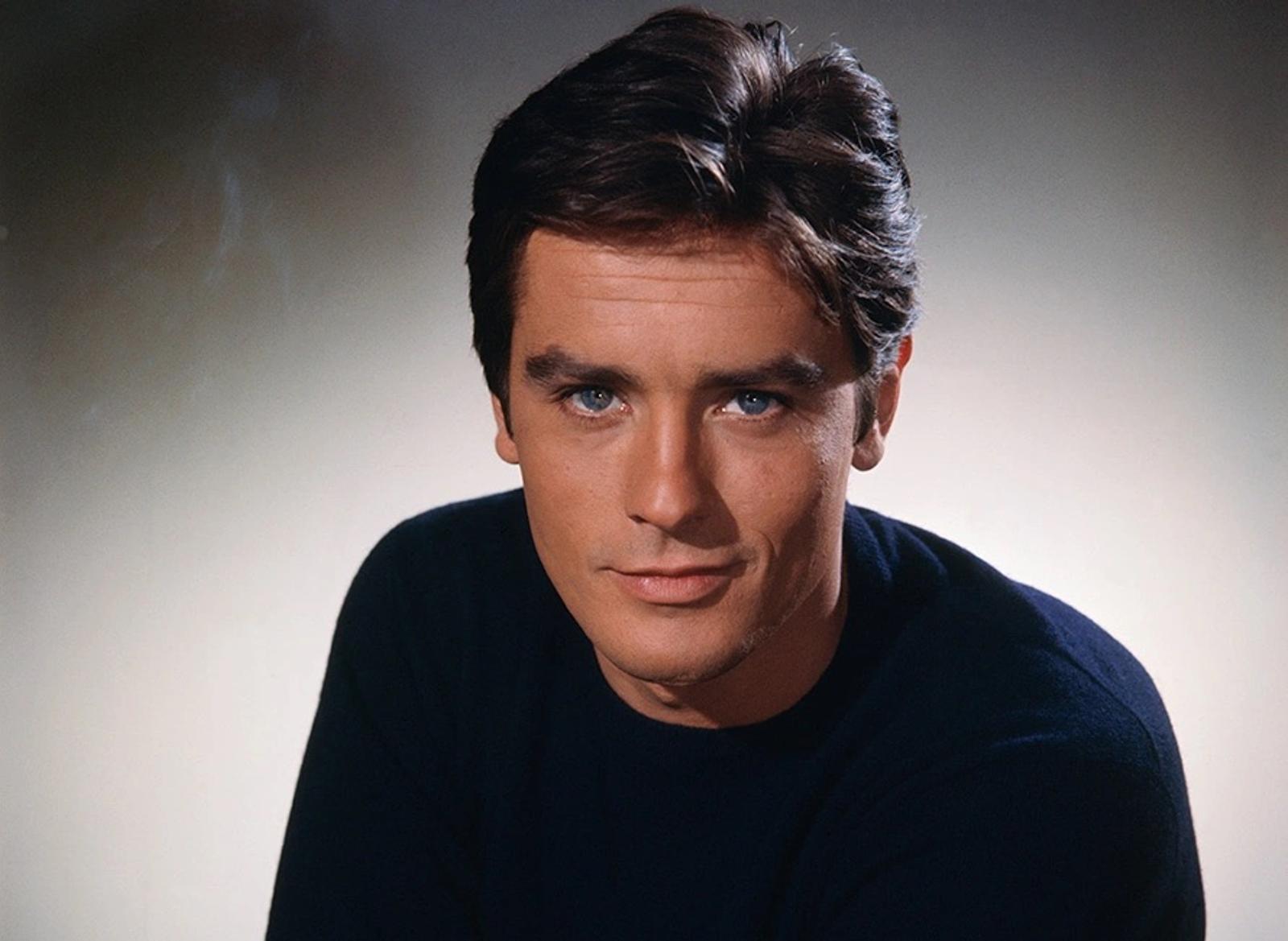
Style Inspiration

Simple, elegant and timeless - these are all characteristics of Alain Delon’s style. Effortlessly worn, yet always on point in terms of fit and colors.

Tags:Menswear, Style Icon, Alain Delon

Related Articles

Menswear Style Icons: Cary Grant

Editorials · June 27, 2026 · Christopher Gustafsson
How Cary Grant turned a well-fitted suit into a philosophy — and why his understated approach to tailoring still defines classic menswear nearly a century later.
Read More